
The Maras Moray tour from Cusco is a full-day Sacred Valley excursion that takes you to three of Peru’s most extraordinary archaeological sites. Specifically, this day trip covers approximately 130 km round-trip and lasts 8–10 hours, with hotel pickup in Cusco starting at 7:00 AM.
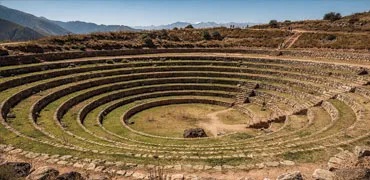
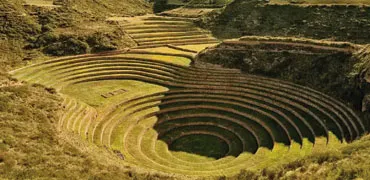
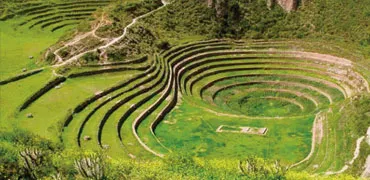
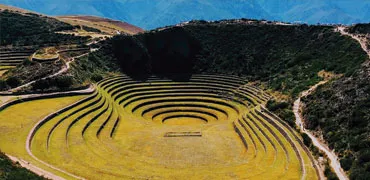
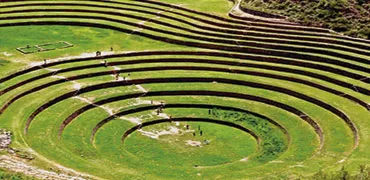
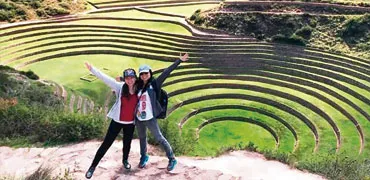
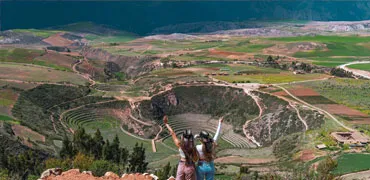
First, you will explore the Moray terraces, an Inca agricultural laboratory at 3,500 meters (11,500 ft) with concentric circular depressions that create a temperature difference of up to 15°C (27°F) between top and bottom. As a result, researchers believe the Incas tested over 250 crop species here across 20 simulated microclimates.
Next, visit the Maras salt mines (Salineras de Maras), where more than 3,000 salt pools have been carved into the mountainside at 3,200 meters (10,500 ft). For over 500 years, local families from the Maras and Pichingoto communities have harvested pink salt here using pre-Inca techniques. In fact, each pool yields 150–200 kg of salt per month through natural evaporation.
Finally, your Sacred Valley tour continues to Ollantaytambo, one of the best-preserved Inca fortresses and one of the few places where the Inca army defeated the Spanish conquistadors. Additionally, you can walk through the original Inca town grid, still inhabited today, and climb the terraces to the Temple of the Sun with its six monolithic stones weighing approximately 50 tons each.
Overall, this Maras Moray day trip is the best way to experience the Sacred Valley’s most unique sites with a local bilingual guide. Because we run small groups (max 12 travelers) with no commission stops and early departure, you beat the crowds at every site.
The Maras Moray tour is the perfect full-day introduction to the Sacred Valley’s two most photogenic wonders — the concentric agricultural terraces of Moray and the dazzling salt pans of the Maras salt mines. Peru Alive runs it as a private group service with the flexibility, comfort and local depth that big-bus operators simply cannot match.
Your tour runs for your party only — never a packed 40-seat coach. You travel at your own pace, linger for photos, and enjoy a genuinely personal Sacred Valley day trip from Cusco or Urubamba.
Officially licensed guides, fluent in English and Spanish, who grew up with Andean culture and bring Moray, the salt mines and Ollantaytambo to life as living heritage rather than a list of dates.
Modern private transport with an oxygen tank on board, flexible timing and a smooth route that beats the altitude sickness and rush of crowded group tours.
Add an exclusive Andean Cosmovision workshop with a paqo (Andean priest) — a real offering to Pachamama, turning a scenic tour into a meaningful cultural encounter.
USD 75.00 /per person
USD 85.00/per person
Every booking is a private group service. The per-person price covers modern private transport with an oxygen tank, your licensed bilingual guide, and (when available) the assistance of an Andean priest for the optional ceremony. The Cusco Tourist Ticket and lunch are paid separately so you keep full control of your budget. This is a complete, flexible Maras Moray tour from Cusco built around you.
Available any day of the week · Secure your date with a deposit, balance in Cusco.
$ 75.00/per person
$ 60.00/per person
Cusco/Urubamba → Moray First, we pick you up from your hotel. Meanwhile, your bilingual guide briefs you on the day ahead as you drive through the Andean highlands toward the Sacred Valley.
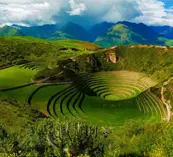
Moray Archaeological Site (3,500 m / 11,500 ft) Here, you explore the concentric Inca terraces that served as an agricultural laboratory. As a result of their unique design, you can feel the temperature change between levels. In addition, your guide explains how the Incas simulated 20 microclimates in this single location. Allow 45–60 minutes.
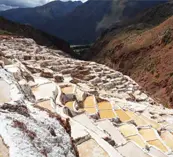
Salineras de Maras (3,200 m / 10,500 ft) Just 7 km from Moray, walk along the viewing paths above 3,000+ salt pools cascading down the Qaqawiñay mountainside. Furthermore, you can learn how local families harvest pink salt using the same techniques from pre-Inca times. Also, buy authentic Maras pink salt directly from local producers. Allow 45–60 minutes.
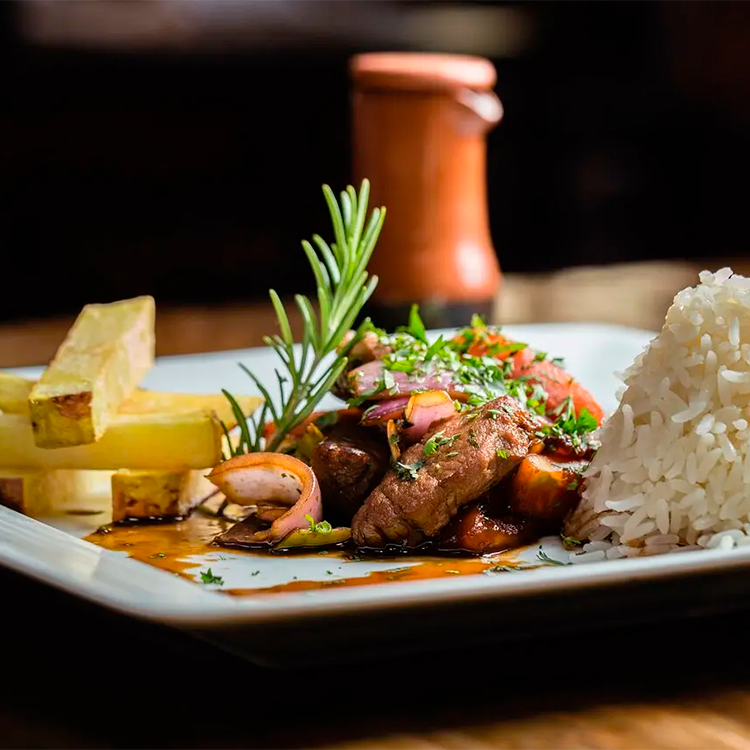
Urubamba Valley After the morning excursions, enjoy a traditional Peruvian lunch at a local restaurant in the Sacred Valley (not included in tour price). Specifically, both buffet and à la carte options are available, along with vegetarian, vegan, and gluten-free meals on request.
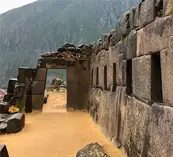
Ollantaytambo (2,792 m / 9,160 ft) Explore the imposing Inca fortress with its Temple of the Sun and six monolithic stones. Walk through the original Inca town, one of the oldest continuously inhabited settlements in the Americas. This site also serves as the gateway to Machu Picchu. Allow 1.5–2 hours.
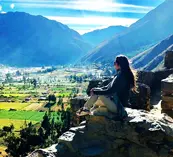
Cheqoq Inca Storehouses In addition, visit the lesser-known Inca storehouses where agricultural products were stored using natural ventilation and altitude-based refrigeration. Consequently, this is a hidden gem that most Maras Moray tours skip.

Drop-off at your hotel Finally, arrive back in Cusco with the evening free. Moreover, your guide can recommend restaurants, plan your next-day Machu Picchu trip, or help with any other arrangements.
Private or shared tourist transport with oxygen tank and first aid kit
Professional bilingual tour guide (English-Spanish) born in Cusco
Andean Priest / Shaman assistance (if available, for optional workshop)
Materials and supplies for the Andean Cosmovision workshop and practices
Buffet lunch in the Sacred Valley (S/ 25–45 PEN, ~$7–12 USD)
Cusco Tourist Ticket for Moray & Ollantaytambo (S/ 70 PEN, ~$19 USD) and Maras Salt Mines entrance (S/ 20 PEN, ~$5 USD). Cash only.
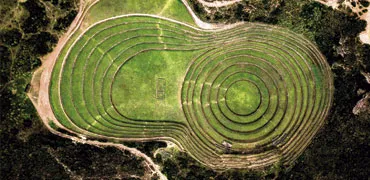
Moray is an Inca archaeological site located 50 km northwest of Cusco at 3,500 meters (11,500 ft) above sea level. It consists of three groups of concentric circular terraces known as muyus that descend up to 150 meters (490 ft) into natural sinkholes. The largest muyu has a diameter of approximately 180 meters (600 ft) with 12 terrace levels, each averaging 1.90 meters in height.
The temperature difference between the top and bottom terraces reaches up to 15°C (27°F). This engineered microclimate system allowed the Incas to simulate over 20 ecological zones within a single location, from high-altitude puna grasslands to warm Amazonian valleys. Soil analysis confirmed the Incas imported earth from different Peruvian regions to replicate specific growing conditions for over 250 plant species, including potatoes, quinoa, coca, corn, and medicinal herbs.
Anthropologist John Earls first proposed the agricultural laboratory theory in 1975 after documenting the irrigation system and sun-angle patterns. Archaeological evidence suggests the bottom six terraces were built by the pre-Inca Wari culture (6th–10th century), while the Incas expanded the complex between the 12th and 14th centuries.
Entry to Moray is included in the Cusco Tourist Ticket (Boleto Turístico), which costs S/ 70 PEN (~$19 USD) for foreign visitors. The site is open daily from 7:00 AM to 6:00 PM.
The Salineras de Maras are one of the largest pre-Hispanic salt extraction centers in Peru, located at 3,200 meters (10,500 ft) above sea level in the Urubamba Province. Specifically, more than 3,000 individual salt pools are carved into the hillside of the Qaqawiñay mountain, each measuring approximately 5 square meters.
A natural underground spring called Qori Pujyu feeds hypersaline water through a network of Inca-era canals into each pool. In practice, workers fill them to a depth of 5 centimeters and let the Andean sun evaporate the water over 3 days. After repeating this cycle for about a month, a layer of 7–10 cm of crystallized salt forms. As a result, each pool yields between 150 and 200 kg of salt per month.
Notably, Maras is one of only four places in the world where naturally occurring pink salt can be found. Its distinctive color comes from mineral content, including magnesium, calcium, potassium, and silicon present in the spring water. Currently, around 400 families organized under the Marasal S.A. cooperative own the salt pools, with ownership passing from generation to generation.
Furthermore, archaeological evidence dates the mines to between 200 BC and 700 AD, well before the Inca Empire. In 2019, Peru initiated the process to nominate the Maras salt mines as a UNESCO World Heritage Site. The entrance fee is S/ 20 PEN (~$5 USD), separate from the Tourist Ticket, and the site is open daily from 6:00 AM to 5:00 PM.
Part of what makes the Maras Moray tour so satisfying is that both sites are not just beautiful — they are masterpieces of Andean engineering, each solving a different problem of life at high altitude. Understanding how they work turns a photo stop into a genuine appreciation of Inca and pre-Inca ingenuity. Here is the story behind the two wonders you will explore.
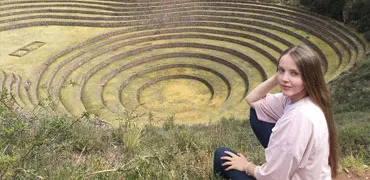
Moray is one of the most ingenious sites the Inca ever created. Its concentric circular terraces descend like a green amphitheatre into three large natural depressions, the deepest dropping about 30 metres. Each ring sits at a slightly different temperature, and the difference between the top and the centre can reach as much as 15°C — effectively stacking many microclimates into a single site.
Most archaeologists interpret Moray as an Inca agricultural laboratory: a place to acclimatise and adapt crops such as maize, potatoes and quinoa before distributing them across the empire’s vast range of altitudes. The terraces also show remarkable engineering — irrigation channels, layered soil profiles and drainage so effective that the lowest level rarely floods, even in heavy rain. Standing at the centre of the largest circle, the acoustics and stillness make it easy to feel why many also regard Moray as a sacred, ceremonial space.
The Salineras de Maras are even older than the Inca empire. A natural underground spring (Qoripujio) emerges from the mountainside carrying water five times saltier than the sea. Local families channel this flow into more than 3,000 shallow terraced pools that cling to the hillside. As the strong Andean sun evaporates the water, layers of salt crystallise and are hand-harvested — exactly as they have been for over 500 years.
The colour of each pool reveals its stage of evaporation, from clear water to pink and brilliant white, creating the breathtaking mosaic that makes the Maras salt mines so photogenic. The famous pink salt owes its hue to the mineral-rich spring. Crucially, the salineras are still run as a community cooperative: each pool belongs to a local family, and buying salt on site supports a tradition that has sustained these communities for generations.
While the Maras Moray salt mines tour is named for its two star attractions, the full-day itinerary weaves in more of the Sacred Valley’s history and scenery. Here is what else makes the day so rewarding.
One of the most impressive living Inca towns in Peru and a rare site of Inca victory over the Spanish. Its colossal terraced temple-fortress, built from precisely fitted megalithic stones, rises above a town whose streets and water channels still follow the original Inca plan. On the Maras Moray from Cusco route it is the perfect cultural counterpoint to the morning’s natural wonders — and a logical gateway if you continue to Machu Picchu by train.
An off-the-beaten-path highlight most tours skip entirely. The Qolqas of Cheqoq are restored Inca storehouses, ingeniously built to preserve food using altitude, ventilation and shade. Visiting them reveals the sophisticated logistics that fed the Inca empire and rewards curious travelers with a quieter, crowd-free stop on the Moray and Salineras tour.
The whole day unfolds within the Sacred Valley of the Incas (Willka Qhichwa), the fertile heartland the Inca prized above all others. Between the sites you travel through patchwork fields, traditional villages and dramatic mountain views, pausing for a buffet lunch in Urubamba. It is the ideal way to grasp why the Inca considered this valley sacred.
At the salt mines you can buy genuine Maras pink salt — hand-harvested from the same terraced pools for over 500 years — directly from the local families who work them. It is one of the most authentic and useful souvenirs in Peru, and your purchase supports the community cooperative that still manages the salineras today.
Cusco sits at 3,400 m (11,155 ft), and Moray reaches 3,500 m (11,500 ft). Therefore, spend at least 1–2 full days in Cusco before taking this tour. In addition, drink coca tea (mate de coca), stay hydrated, and avoid heavy meals the night before. If needed, over-the-counter remedies like Sorochi pills are available at any Cusco pharmacy. Moreover, our vehicles carry oxygen tanks for emergencies.
First, pack sunscreen SPF 50+ and a hat, because UV radiation is intense at high altitude. Additionally, bring layers of clothing since mornings can be 5°C (41°F) while afternoons reach 20°C (68°F). Also, wear comfortable walking shoes with grip for the uneven paths at Moray and Ollantaytambo. Finally, carry at least 1 liter of water per person, cash in Peruvian soles for entrance fees, and a rain jacket if you visit between November and March.
The dry season (April–October) offers clear skies and the best photography conditions. During this period, the salt pools look white and crystalline against the green valley, while May through September brings the warmest daytime temperatures. On the other hand, the rainy season (November–March) brings occasional afternoon showers but also fewer crowds and greener landscapes. Regardless, the Maras Moray tour operates every day, year-round.
The Cusco Tourist Ticket (Boleto Turístico) is required for Moray and Ollantaytambo. You can purchase it at the entrance of either site or at the COSITUC office on Avenida El Sol 103 in Cusco. Specifically, it costs S/ 70 PEN for foreign visitors and also covers Pisac and Chinchero, valid for 2 days. However, the Maras salt mines have a separate entrance fee of S/ 20 PEN. Importantly, both must be paid in cash.
If the first list sounds like you, this is one of the best-value days you can spend in the Sacred Valley.
Before booking your Maras Moray day trip from Cusco, here are the most common questions travelers ask. Below, you will find direct and practical answers for each one.
The full-day Maras Moray tour takes 8–10 hours from hotel pickup to drop-off. Specifically, you spend approximately 45–60 minutes at each major site (Moray, Maras, and Ollantaytambo), plus 1 hour for lunch and driving time between stops. Alternatively, half-day versions covering only Moray and Maras take 5–6 hours.
Yes, absolutely. The tour involves moderate walking on mostly flat or gently sloping paths. At Moray, for instance, you walk along the upper terraces without descending into the circles. Similarly, at Maras, a paved viewing path runs above the salt pools. Although Ollantaytambo has steeper stairs, you choose how far to climb. Overall, children ages 5+ and seniors in reasonable health enjoy this tour regularly. Additionally, we carry oxygen on board for altitude-related discomfort.
The highest point is Moray at 3,500 meters (11,500 ft). Meanwhile, Maras sits at 3,200 meters (10,500 ft), and Ollantaytambo is lower at 2,792 meters (9,160 ft). By comparison, Cusco itself is at 3,400 meters. Therefore, spend at least 1–2 days acclimatizing in Cusco before taking this tour.
The dry season (April–October) offers the clearest skies, best photography conditions, and the most visually striking salt pools. Conversely, the rainy season (November–March) has fewer visitors and greener landscapes, though occasional afternoon showers may occur. Regardless, this tour operates year-round, every day of the week.
Yes, the Cusco Tourist Ticket (Boleto Turístico) is required for Moray and Ollantaytambo. It costs S/ 70 PEN (approximately $19 USD) for foreign visitors and is valid for 2 days. In addition, it includes entry to Pisac and Chinchero. However, the Maras Salt Mines have a separate entrance fee of S/ 20 PEN (~$5 USD). Importantly, both must be paid in cash in Peruvian soles.
Yes, definitely. Local producers sell authentic Maras pink salt at stalls along the pathway to the salt pools. For instance, prices start at around S/ 5 PEN ($1.50 USD) for a 1 kg bag of coarse salt. Additionally, you can find flavored salts, bath salts, and artisanal chocolate made with Maras salt. Above all, buying directly supports the local families who maintain the pools.
No, lunch is not included in the base price. However, we stop at a restaurant in the Sacred Valley where you choose from buffet or à la carte options. Typically, a lunch costs S/ 25–45 PEN ($7–12 USD). Furthermore, vegetarian, vegan, and gluten-free options are available if you notify us when booking.
Moray and the Maras salt mines are approximately 7 km (4.3 miles) apart. Consequently, the drive takes only about 15–20 minutes on a gravel road. Because of this proximity, they are almost always visited together, which is why the excursion is commonly called the Maras Moray tour.
Yes, many travelers do exactly that. For example, you can do the Maras Moray tour one day and take the train to Machu Picchu the next. Since the tour passes through Ollantaytambo, where the Machu Picchu train departs, we can therefore help you coordinate both excursions for a seamless itinerary.
The tour operates rain or shine. During the rainy season (November–March), brief afternoon showers are common but rarely last more than 30–45 minutes. Therefore, bring a lightweight rain jacket. Interestingly, rain can actually enhance photography at the salt mines by creating reflective surfaces on the pools.
Every Peru Alive booking is a private group service — you travel only with your own party, with a minimum of two participants, on any day of the week. This means a flexible pace, personal attention from your guide, and time to photograph Moray and the salt mines without the crowds of a large coach tour.
Yes. You can add an exclusive Andean Cosmovision workshop led by a paqo (Andean priest) for an additional fee per person. It includes a real offering to Pachamama and an introduction to Andean spiritual tradition, transforming the scenic tour into a meaningful cultural experience. Let us know when you book so we can arrange the shaman.
Send your preferred date and group size through the contact form on this page. Because the tour is private, it can run any day of the week. We confirm availability within 24 hours, hold your date with a deposit and settle the balance in Cusco. A few days’ notice is usually enough, though we recommend booking earlier in high season.
Tell us your dates and group size. We confirm your private departure, arrange your guide and transport and hold your place — any day of the week. No payment required to enquire.
Questions first? Message us on WhatsApp — same-day reply.
| Feature | Maras Moray Tour | Sacred Valley Full Day |
|---|---|---|
| Main Sites | Moray, Maras Salt Mines, Ollantaytambo | Pisac, Ollantaytambo, Chinchero |
| Duration | 8–10 hours | 10–12 hours |
| Best For | Photography, unique landscapes, salt mines | Inca ruins, markets, traditional textiles |
| Highest Altitude | 3,500 m (Moray) | 3,700 m (Chinchero) |
| Crowd Level | Lower — fewer tour buses | Higher — popular route |
Our recommendation: if you have 2 days in the Sacred Valley, do both tours. However, if you only have 1 day and want a more unique, less-crowded experience with stunning photo opportunities, then choose the Maras Moray tour from Cusco.
If your priority is dramatic scenery, unique photography and a relaxed, flexible pace, the Maras Moray tour is the clear choice — and it pairs perfectly with a Machu Picchu visit the following day.