
Treks in Cusco, Peru — Multi-Day Andean Trekking Tours
- Five routes, from a 2-day Inca hike to an 8-day pilgrimage to Machu Picchu
- From $295 per person · Minimum two participants on every departure
- Licensed Quechua-speaking guides born in these mountains
Multi-Day Treks in Cusco, Chosen by Route Rather Than by Brochure
Peru Alive operates five multi-day treks in Cusco, and they are genuinely different journeys — not the same walk sold at five lengths. One climbs to a 5,050 m pass beneath a sacred glacier. One drops from Andean grassland into Amazon cloud forest. One crosses one of the deepest canyons on the continent. One is a two-day introduction along a real section of Inca road. One is an eight-day pilgrimage that ends at Machu Picchu.
Two things they all share. First, none of them requires an Inca Trail permit — so none of them can be sold out from under you six months before your flight. Second, they are run by our own crew: licensed guides born in these communities, our own chefs, our own porters and muleteers, with health insurance and fair pay, not subcontracted crews you meet at the trailhead.
This page is built to help you pick correctly the first time. The comparison below is honest about which routes are hard, which are hot, which need acclimatisation and which will disappoint you if you came for Machu Picchu.
Every Trek We Operate from Cusco
Each card opens the full trek page with the complete day-by-day itinerary, everything included, current prices and the packing list.
2 days · From $295 pp · Easy to moderate · Year-round
The short one, and the one most people underestimate. Tambomachay to the royal Inca estate of Huchuy Qosqo at 3,600 m, then down to Chinchero — walking a genuine section of the Qhapaq Ñan, the Royal Inca Road. The best acclimatisation trek in the region and the cheapest way to sleep under canvas in the Andes with a full crew.
4 days · From $445 pp · Demanding · April to December
The hardest route we run, and the one trekkers are proudest of. 64 km down into and back out of the Apurímac canyon to reach Choquequirao — the Cradle of Gold, sister city of Machu Picchu, which receives a tiny fraction of its visitors. Requires genuinely good fitness. Rewards it completely.
6 days · From $995 pp · Grade 3, high altitude · April to November
The high-altitude circuit around Apu Ausangate (6,385 m), crossing the Arapa Pass at 4,865 m and the Palomani Pass at 5,050 m. Turquoise lakes, glaciers, rainbow geology, alpaca herders, natural hot springs and a closing Pachamanca in the Tinky community. Prior acclimatisation is not optional here.
7 days · From $1,195 pp · Moderate · April to November
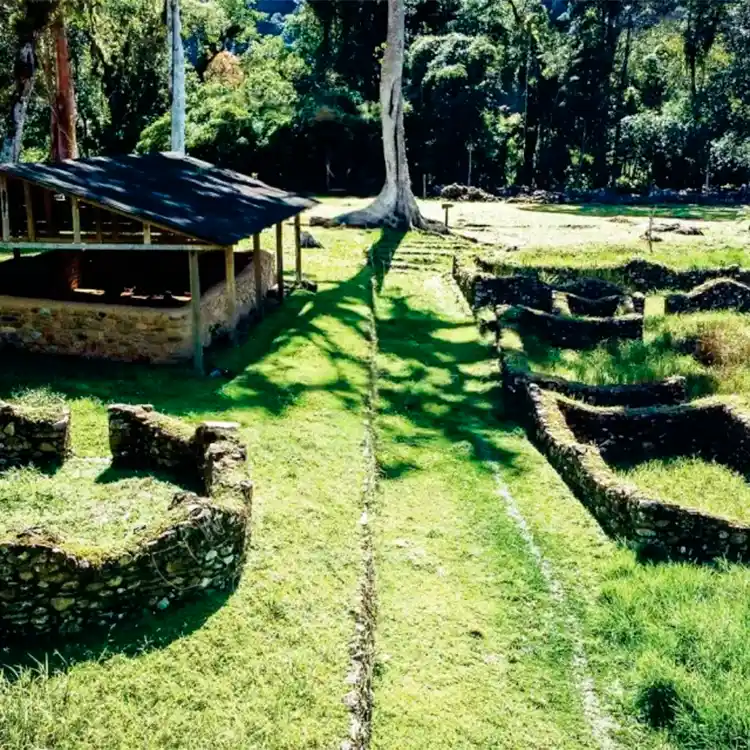
Andes to Amazon on the route of the last Inca. From 3,860 m of high grassland down to 700 m of cloud forest, past Rosaspata (Vitcos) and Ñusta Hispana, to Espíritu Pampa — the actual final refuge of Inca resistance, and the city Hiram Bingham walked past on his way to fame. Mostly flat and downhill. Almost no other trekkers.
8 days · From $1,195 pp · Moderate · Fixed departures
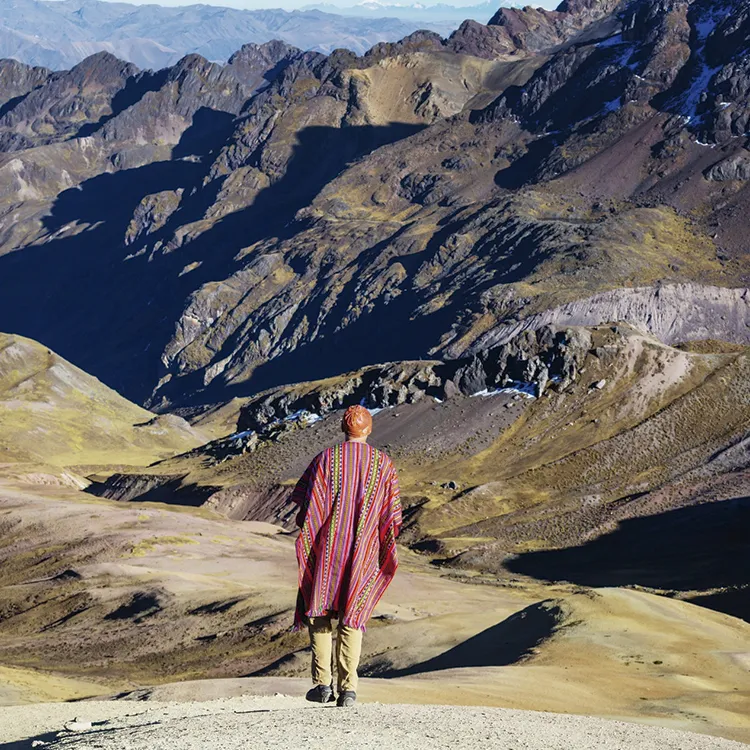
The complete pilgrimage, and the answer when Inca Trail permits are gone. Cusco city, the Sacred Valley, the Puma Path pass at 4,250 m, nights beside the sacred Lake Manto Qocha, a purification ceremony with a paqo, days with the Challwa Q'ocha community — and finally Machu Picchu. Departs the 3rd and 18th of each month.
Which Trek in Cusco Should You Choose? A Straight Comparison
Difficulty, altitude, season and price are the four things that actually decide whether a trek becomes the highlight of your trip or the part you endure. Here they are, unsoftened.
| Huchuy Qosqo | Choquequirao | Ausangate | Vilcabamba | Alt. Inca Trail | |
|---|---|---|---|---|---|
| Duration | 2 days / 1 night | 4 days / 3 nights | 6 days / 5 nights | 7 days / 6 nights | 8 days / 7 nights |
| Difficulty | Easy to moderate | Demanding | Grade 3 — high altitude | Moderate to easy | Moderate |
| Highest point | ≈ 4,300 m | 3,050 m at the ruins | 5,050 m — Palomani Pass | 3,860 m at the start | 4,250 m — Puma Path |
| Lowest point | 3,600 m | 1,550 m — canyon floor | 3,800 m | 700 m — cloud forest | 2,040 m — Machu Picchu |
| Walking distance | Short — 2 half days | 64 km / 40 mi | Circuit, 5 walking days | ≈ 60 km / 37 mi | 2 trekking days of 8 |
| Price — 2 participants | $350 pp | $595 pp | $1,295 pp | $1,495 pp | $1,495 pp |
| Price — 3 or more | $295 pp | $445 pp | $995 pp | $1,195 pp | $1,195 pp |
| Season | Year-round | April – December | April – November | April – November | Year-round except March |
| Ends at Machu Picchu | No | No | No | Optional extension | Yes — included |
| Inca Trail permit needed | No | No | No | No | No |
| Acclimatisation required first | Helpful | Helpful | Essential | Helpful | Built into the itinerary |
| Departures | Private, any day | Private, on request | Private, on request | Private, on request | Fixed: 3rd & 18th monthly |
| Best for | Short time, acclimatising, families | Fit trekkers wanting a real challenge | High-mountain scenery and sacred landscape | History, solitude, jungle descent | One complete trip ending at Machu Picchu |
Prices are 2026 rates per person and assume double or triple occupancy where accommodation is included. Confirm current availability on each trek page before booking.
Not Sure Which Trek Fits? Find Your Situation
Eight situations we hear constantly, and what we would honestly book if it were our own trip.
I only have two or three spare days
Huchuy Qosqo. It is the only trek short enough to slot into a tight Cusco itinerary without displacing Machu Picchu or the Sacred Valley, and it still gives you a night camping with a full crew.
I have never done a multi-day trek
Huchuy Qosqo first, or the Alternative Inca Trail if you have the time. Both build gradually. Choquequirao and Ausangate are poor first treks — one is punishing, the other is very high.
I want the hardest thing you have
Choquequirao. 64 km, down to 1,550 m in the Apurímac canyon and back up again. Requires good physical condition and rewards it more than any other route we run.
I want glaciers and high mountains
Ausangate. The Palomani Pass at 5,050 m is the highest point of anything we operate, beneath a 6,385 m sacred peak. Acclimatise in Cusco for two to three days first — this is not negotiable.
Machu Picchu is the whole point of my trip
The Alternative Inca Trail. It is the only route that includes Machu Picchu itself, plus Cusco city, the Sacred Valley and a ceremony with a paqo. The Vilcabamba trek can add Machu Picchu as an extension.
I want to see almost nobody
Vilcabamba to Espíritu Pampa. Where the classic Inca Trail moves hundreds of walkers a day, you may cross paths with almost no one for a week — and you end at the genuine last city of the Incas.
I can only travel in January or February
Huchuy Qosqo, or the Alternative Inca Trail. Choquequirao, Ausangate and Vilcabamba close over the heaviest rains. Huchuy Qosqo runs year-round; the 8-day route runs every month except March.
I want ceremony as well as walking
The Alternative Inca Trail includes a purification ceremony with an Andean priest; Ausangate closes with a Pachamanca in the Tinky community. Both treat the mountains as living Apus, not scenery.
Inca Trail Permits Are Sold Out. Here Is What That Actually Means.
The classic Inca Trail runs on a strictly limited daily permit quota that is released months in advance and, in peak season, disappears within days. Travellers routinely discover this after booking flights. It is the single most common reason people arrive on this page.
The good news is unambiguous: not one of the five treks on this page requires an Inca Trail permit. None of them can be sold out from under you by a government quota. You are limited only by the season and by our own availability — and because every departure is private with a minimum of two participants, we are not waiting for a group to fill before we confirm you.
If reaching Machu Picchu on foot is what you wanted from the Inca Trail, the 8-day Alternative Inca Trail is the direct replacement: it crosses the Puma Path at 4,250 m and finishes at the citadel. If what you actually wanted was Inca ruins without crowds, Choquequirao and Espíritu Pampa both deliver more solitude than the Inca Trail ever could.
What Comes With Every Trek We Operate
You carry a daypack. We carry everything else. This is the baseline on all five routes — the exact inclusion list for each trek is on its own page.
Licensed bilingual guide
An officially licensed guide fluent in English and Spanish, and in most cases a native Quechua speaker born in these communities. A second guide joins groups over eight.
Porters, horses and duffle
Porters and pack animals carry the camp and your duffle bag, so you walk with a daypack only. Our porters carry a maximum of 20 kg in total and have health insurance.
Chef, assistant and full camp
A trained chef and assistant, quality tents, dining and kitchen tents, tables and chairs, afternoon tea service, morning wake-up tea and daily snacks. Special diets catered on request.
Safety cover
First-aid kit and oxygen, 24-hour emergency assistance, radio or phone contact on route, and staff trained in altitude and emergency response.
Not included on any route: personal trekking gear, sleeping bag and poles (both available to rent), travel insurance, personal expenses and tips. Entrance fees are included on most routes — check the individual trek page.
Altitude, Fitness and Getting Ready
Cusco sits at roughly 3,400 m. Most travellers feel it — shortness of breath, a headache, poor sleep for the first night or two. That is normal. What is not normal, and what we plan against, is starting a high-altitude trek before your body has adjusted.
Arrive early
Two to three days in Cusco or the Sacred Valley before any trek. Before Ausangate this is essential rather than advisable — the route crosses 5,050 m on day four.
Train for hours, not speed
You should be comfortable walking five to seven hours a day on uneven ground. Hill walking with a daypack in the months beforehand matters far more than gym fitness.
Dress for two climates
Ausangate can freeze at night; Vilcabamba descends into humid jungle with mosquitoes. Layers, a proper rain shell, sun protection and broken-in boots are non-negotiable on every route.
If you would like to acclimatise while already trekking, the 2-day Huchuy Qosqo trek is designed for exactly that — a genuine night at altitude with a full crew, early in your trip, before a longer route later. Several travellers each season book it as a warm-up for Ausangate.
Tell us at the enquiry stage about any medical condition, medication or physical limitation. Our guide may limit participation at any point during a trek if continuing would put your health or the group’s safety at risk — a policy we apply because these routes are remote, not because we expect to use it.
Add Ceremony, or Choose a Journey Instead of a Trek
A trek is a physical journey through a landscape the Andean world considers alive. Many travellers want the inner journey alongside it.
Our Andean ceremonies — Despacho, San Pedro and Ayahuasca — can be scheduled before or after any trek, and the Despacho in particular pairs well with a rest day in the Sacred Valley. If you would rather have ceremony woven through the whole trip than added to it, our multi-day spiritual journeys of six to fifteen days carry that work across Cusco, the Sacred Valley, Ausangate and Lake Titicaca.
And if you are not sure you want to camp at all, our day tours from Cusco reach the Sacred Valley’s temples, Maras and Moray without a single night under canvas.
Choosing a Trek in Cusco — Frequently Asked Questions
Questions travellers ask while deciding between routes. For questions about a single trek — its itinerary, packing list or exact inclusions — see that trek’s own page.
Which trek in Cusco is the hardest?
Choquequirao, without much debate. The 4-day route covers 64 km and drops to 1,550 m on the floor of the Apurímac canyon before climbing back out — the ascent out is the hardest sustained effort on any of our routes. Ausangate is less steep but sits far higher, crossing the Palomani Pass at 5,050 m, so it is harder in a different way: altitude rather than gradient.
Which trek is easiest for a first-timer?
Huchuy Qosqo. Two days, easy to moderate, available year-round, from $295 per person for three or more. It gives you a genuine night camping at altitude with a full crew before you commit to anything longer, and it walks a real section of the Qhapaq Ñan royal Inca road.
Do any of these treks require an Inca Trail permit?
No. None of the five routes on this page uses the permit-controlled classic Inca Trail, so none can be sold out by the government quota. That is exactly why travellers who lose out on Inca Trail permits end up walking with us instead.
Which trek actually ends at Machu Picchu?
The 8-day Alternative Inca Trail is the only route with Machu Picchu included — you finish the trek and visit the citadel with a guided tour. The 7-day Vilcabamba trek to Espíritu Pampa can be extended to Machu Picchu at the end instead of returning directly to Cusco; tell us when you book and we will arrange it.
How much acclimatisation do I need before trekking?
Two to three days in Cusco or the Sacred Valley before any route. Before the Ausangate trek this is essential rather than recommended, because day four crosses 5,050 m. A good strategy is to book the 2-day Huchuy Qosqo trek early in your trip as active acclimatisation before a longer route later.
What is the best time of year to trek in Cusco?
The dry season, roughly April to October, gives the most reliable conditions on every route. Choquequirao runs April to December, Ausangate and Vilcabamba April to November, and the 8-day Alternative Inca Trail operates all year except March. Huchuy Qosqo is the only route available year-round, which makes it the default choice for January and February travellers.
Do I have to carry my own bag?
No. On every route porters and pack animals carry the camp and your duffle bag — you walk with a daypack holding water, layers, camera and snacks. Our porters carry a maximum of 20 kg in total, including their own belongings, and are insured members of our own crew rather than day labour hired at the trailhead.
What is the minimum group size, and will I be put with strangers?
The minimum is two participants and every departure is private to your own party. You are never merged with strangers unless you specifically ask us to. The only fixed-date route is the 8-day Alternative Inca Trail, which departs on the 3rd and 18th of each month.
Can I combine two treks in one trip?
Yes, and it is a strong itinerary if you have the time. The usual sequence is Huchuy Qosqo early for acclimatisation, then Ausangate or Choquequirao once your body has adjusted, with two or three rest days in between. Send us your total number of days in Peru and we will build the sequence around them.
How much do the treks cost in total?
Per person, for three or more participants: Huchuy Qosqo from $295, Choquequirao from $445, Ausangate from $995, and both the Vilcabamba trek and the Alternative Inca Trail from $1,195. For two participants the rates are $350, $595, $1,295, $1,495 and $1,495 respectively. All are 2026 rates in US dollars and include the guide, full crew, camping equipment, meals on route and most entrance fees.
Tell Us How Many Days You Have. We Will Tell You Which Trek.
Send us your dates, your group size and an honest description of your fitness. We reply within 24 hours with a route recommendation — including, when it is the right answer, telling you that the trek you had in mind is not the one you should book.
No payment required to enquire. A 20% deposit confirms your departure; the balance is settled in Cusco before you set out.