
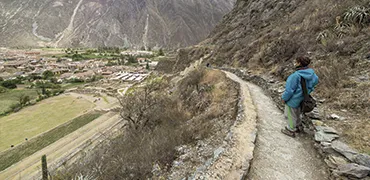
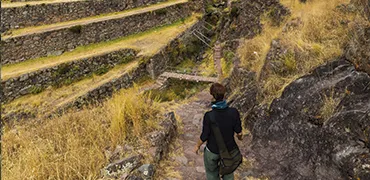
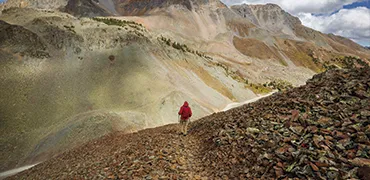
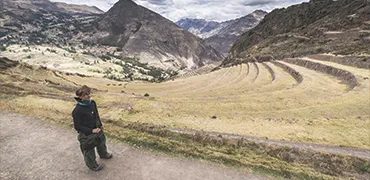
The Choquequirao trek is a 4-day / 3-night hike to one of the most remote Inca ruins in Peru, located 30 km from the village of Cachora and nearly 1,500 m above the Apurímac River. Choquequirao is often called “the other lost city of the Incas” and stays a true hidden gem — seldom visited compared to Machu Picchu.
This alternative Machu Picchu trek Peru reaches 3,050 m at its highest point and crosses some of the most dramatic scenery in the southern Andes: the Apurímac canyon, the Choqetacarpo, Yanama, Padreyoc, Huanipaca, Surusuru and Sarasara snowcapped mountains, and long sections of untouched Inca trail.
The site itself is believed to be the place where Tupac Amaru, the last Inca, was raised among Incan priestesses. Its architecture — split into the Hanan (upper) and Urin (lower) sectors — reflects the ceremonial importance that Andean culture has given this place for centuries.
Legend tells that, above the Apurímac, a bridge once connected two mountains high over the canyon. The Inkas destroyed it to keep the Spaniards from reaching Choquequirao, and that isolation is exactly why the site survived. Today, a trek to the lost city of the Incas is the only real way in — and the reason this route still feels like a genuine discovery, not a tourist line.
The Choquequirao trek leads to one of the most remote and least-visited Inca sites on Earth — the so-called sister city of Machu Picchu, reachable only on foot. Peru Alive runs this route as an exclusive small-group program with a full crew and a genuine spiritual dimension, turning a demanding hike into a true pilgrimage to a lost city.
While Machu Picchu draws thousands daily, Choquequirao receives only a handful of trekkers. You may explore its temples, terraces and plazas in near solitude — a privilege almost impossible at any other major Inca site.
An exclusive Peru Alive program with a minimum of just two participants. The pace, the route and the spiritual focus stay personal — never a crowded commercial convoy.
Bilingual guide, chef and assistant, porters and horses, quality tents, dining tent, sleeping pads, daily snacks and tea service. You carry only a daypack while we handle the rest.
We treat Choquequirao as the sacred site it is — the last refuge of Tupac Amaru and a place of Andean spiritual power, woven into your journey rather than rushed past.
$ 595.00
$ 445.00
This is a fully private, exclusive Peru Alive program. The per-person price covers your bilingual guide, full chef and porter crew, horses, all camping equipment, transport from Cusco, the Choquequirao entrance ticket and most meals across 4 days and 3 nights. It is a complete, all-inclusive Choquequirao trek from Cusco — you simply arrive ready to walk.
Available April to December · Secure your date with a deposit, balance in Cusco.
Road Trip: Start between 2900m / 9515ft, highest altitude - 3050 m / 10,005 feet.
Walking distance: 64 km / 40 miles.
Duration time: 4 days / 3 nights
Type of effort: Requires good physical condition - moderate difficulty.
Availability: April to December
Type of Activity: Spiritual, ecological- adventure, and cultural.
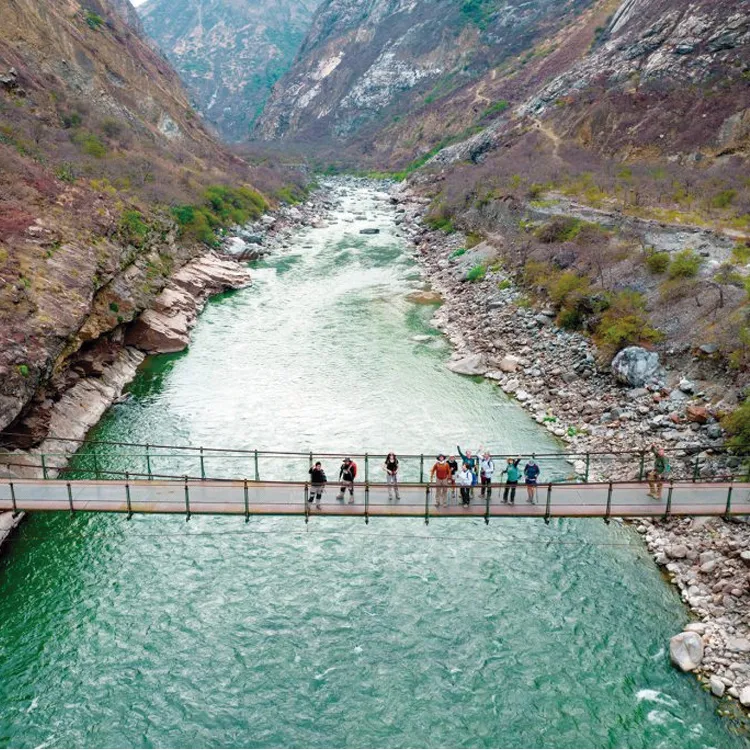
Day 1 of this hike to Choquequirao starts early: we board the bus to the town of San Pedro de Cachora at 2,850 m, traveling for approximately 4 hours along an ancient route. Once we arrive, we meet our muleteers and horses — they will carry all personal luggage so you walk light.
From Cachora we begin the sacred journey toward the Capulichayoc Pass (2,880 m). From this viewpoint you get the first real look at Choquequirao in the distance, standing above the Apurímac canyon. This opening section puts you right in the heart of Andean culture, walking the same paths once traveled by the Inkas.
From the pass, the route drops to the area known as Coca Masana (2,330 m) and then descends for another 4 hours to Rosalinas Beach camp (1,550 m). This is where we set up tents for the first night of our cusco multi day trekking adventure.
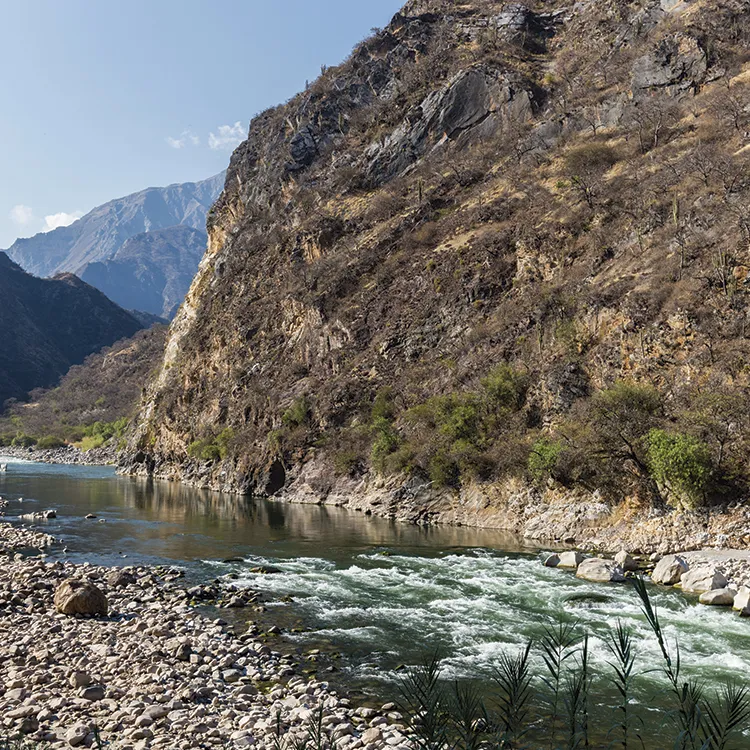
Day 2 is the hardest day of the choquequirao trek Peru. We start the sacred journey at 6:00 a.m. to beat the heat, crossing the powerful Apurímac River early in the morning.
From the river we begin a long ascent to Santa Rosa, zigzagging up a steep slope. This climb takes roughly 2 hours and is the reason an early departure is essential — the sun gets intense here fast. From Santa Rosa, the trail keeps rising until we reach the Choquequirao complex itself at around 3,050 m, the highest point of this choquequirao trek 4 day route.
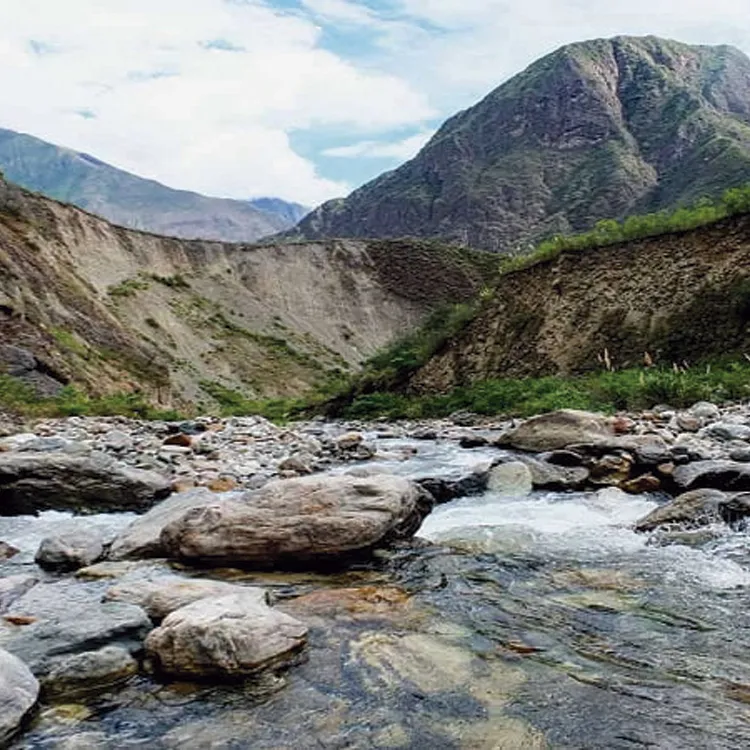
Day 3 is the core of this remote Inca ruins trek Peru. We spend the morning exploring the Choquequirao archaeological complex with our guide, covering both the upper sector (Hanan) and the lower sector (Urin). This is one of the few major Inca sites where you can walk the terraces and ceremonial platforms without crowds — most days, you will have whole sections to yourself.
After an early lunch, we begin the return along this ancient route, descending back to Rosalinas Beach camp for the night. Day 3 is the section most travelers remember as the real reason for doing this choquequirao trek: the combination of the site itself and the silence around it.
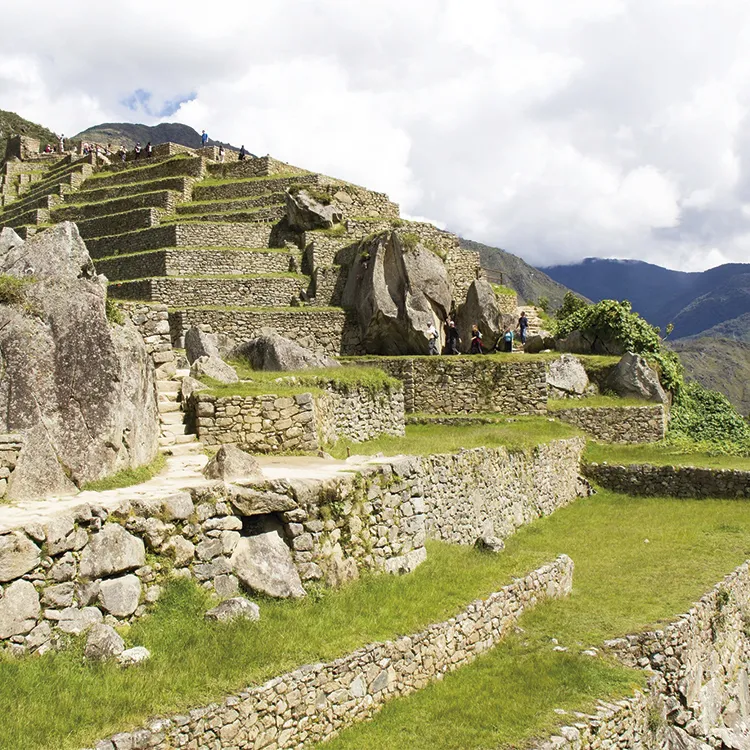
Day 4 closes this choquequirao trekking tour Cusco with the return route. After breakfast, we begin a 2 to 3 hour ascent to Chiquisca, walking along ancient Inca trail through dramatic canyon landscapes.
From Chiquisca we continue to the Capuliyoc Pass, where we stop for lunch with panoramic views of everything we just walked. From there, it is another 2 hours of trekking until we reach San Pedro de Cachora.
At Cachora we board the return bus — and this is where travelers choose: back to Cusco, or straight on to the sacred valley long distance trek region for extra days of exploration. Either way, you close a transformative experience rooted in Andean culture and spiritual exploration.
Understanding what you are walking toward transforms the Choquequirao lost city trek from a hard hike into a genuine encounter with Inca history. Here is what makes this site one of the most extraordinary — and most searched-for — destinations in the Peruvian Andes.
Choquequirao — Quechua for “Cradle of Gold” — is widely called the sister city of Machu Picchu. Built in the same era and architectural style, it is thought to be roughly three times larger, yet only around 40% has been excavated from the cloud forest. Where Machu Picchu receives thousands of visitors a day, Choquequirao often sees fewer than a dozen — which is exactly why those who make the journey describe it as the Inca experience Machu Picchu once was.
Choquequirao is believed to have been one of the final strongholds of Inca resistance after the Spanish conquest — connected to Tupac Amaru, the last Inca. Its famous llama terraces, where white stones form the shapes of llamas across the hillside, are unique in the Andean world. Standing among its temples and ceremonial plazas, high above the Apurímac canyon, you feel the weight of a civilization that retreated here to keep its sacred traditions alive.
The route’s signature challenge and reward is the descent and ascent of the Apurímac canyon — one of the deepest in the Americas. You drop nearly 1,500 m to the roaring Apurímac river (the “great speaker” in Quechua, considered a sacred being) and climb back up the far side to reach Choquequirao. It is demanding, but the canyon’s scale and silence are unforgettable and form the heart of why this trek feels so remote.
Many travelers ask about the longer Choquequirao to Machu Picchu trek that links both lost cities over 7–9 days. Our 4-day program focuses on Choquequirao itself — the most rewarding and accessible way to experience the site — and we can advise on extending toward Machu Picchu if you have more time. Either way, you stand in the presence of an Inca city most travelers to Peru never see.
Our Tour Leader / Guide will provide you with all the information regarding the Trek or other services that you. contract, information that will normally be given on the night before the service start date.
Our company will provide you with the service of a Professional Bilingual Guide, to accompany you and provide all the information during all the services provided by our agency. In case the group is larger than 8 people we will have a second Guide, to support the work of the Main Guide.
To transport you to the starting point of the Trek
Entrance tickets to the places visited.
To the archaeological park of Choquekirao.
(A bag) provided by our agency so that, the traveler keeps his personal implements, for the trip, which will be loaded by our carriers, (each Duffle Bag must contain a maximum of 7 kilos-15 pounds).
Tents with a capacity of 4 people, which will be occupied by two people, to provide enough space and greater comfort when camping.
Consisting of; a kitchen tent, dining tent, tables, chairs, utensils, etc.
To carry your Duffle Bag, the traveler, the food species, and other implements of the travel team, and Horse Service to carry the logistics of the group.
To prepare the food to be eaten by the group, during the service.
Tea time, when the camp arrives our chef will provide you with a hot tea service, Coffee, Chocolate, Cookie, Pop-Corn, etc., to kill hunger or warm the body while finishing with the preparation of dinner.
Every morning at the camp, we will provide you with tea in your tent or tent to wake you up and start the day with a hot drink for your body or soul.
Every morning before starting our daily activity or Trek itself, we will provide you with a Snack, which consists of local fruit, candies, chocolate, Coca leaves, etc.
Every morning at the camp our agency will provide you with a hot water container for brief personal cleanliness.
Our Staff will be available to assist you in any serious emergency situation that may jeopardize your well-being
Consisting of; 4 breakfasts, 5 lunches 5 dinners
Our Staff will provide you with a first aid kit, for any emergency case, this includes an oxygen balloon for emergencies.
Transfer and transport service, To take you to your hotel, this on the last day.
(Walking Sticks) (you can rent it from our company.
if you do not bring it with you, you can rent it from our Agency
Other personal expenses not specified, in relation to the item “THE INCLUDED”
we warn our clients that, our staff has a good remuneration above the standard salary of other similar; so, it is your complete decision and willingness whether or not to give tips; however, the tip will be welcome for the person who receives it.
Make no mistake: the hike to Choquequirao is physically demanding. The canyon crossing means thousands of metres of steep ascent and descent in hot, dry conditions. Good preparation is what lets you enjoy the lost city rather than simply survive the trail.
This is a moderate-to-challenging trek of 64 km over 4 days, with long days of steep up-and-down on exposed canyon trails. Train with regular cardio and hill walking beforehand. You do not need to be an athlete, but real fitness makes the difference between joy and struggle.
Spend at least 1–2 days in Cusco or the Sacred Valley before departure. The canyon itself is lower and hotter than Cusco, so heat and hydration matter as much as altitude — carry and drink water constantly, and start early to beat the midday sun.
Broken-in hiking boots, layered clothing for hot days and cold nights, sun protection (the canyon is intense), a refillable water bottle, a headlamp, trekking poles (hireable from us) and a cold-rated sleeping bag. We send a full packing list after you book.
Our crew carries a first-aid kit with an emergency oxygen bottle and provides 24-hour assistance throughout the trek. If you have any heart or respiratory condition, please tell us in advance so we can advise you honestly.
If the first list sounds like you, Choquequirao may be the most memorable trek of your life.
Tell us your dates and group size. We confirm your departure, arrange your full crew and hold your place on this exclusive 4-day journey. No payment required to enquire.
Questions first? Message us on WhatsApp — same-day reply.
The Choquequirao trek is a 4-day / 3-night hike to the Inca archaeological site of Choquequirao, located 30 km from the village of Cachora, nearly 1,500 m above the Apurímac River. The site sits at approximately 3,050 m above sea level, on a high ridge spur.
Choquequirao is known as “another lost city of the Incas” and is believed to have been the place where Tupac Amaru, the last Inca, was raised among Incan priestesses.
The 4-day itinerary covers 64 km (40 miles) on foot over 4 days and 3 nights of camping. The route descends and climbs the Apurímac canyon, reaching its high point at Choquequirao (3,050 m) before returning the same way to Capuliyoc and back to Cusco or the Sacred Valley.
The choquequirao trekking tour Cusco has two pricing tiers, with a minimum of 2 participants:
The price includes guide, transport, camping equipment, muleteers with horses, chef, entrance tickets and all meals during the trek.
The hike to Choquequirao is rated as moderate difficulty and requires good physical condition. The route covers 64 km with significant elevation changes — starting around 2,900 m, dropping to 1,550 m at Rosalinas Beach, and climbing up to 3,050 m at Choquequirao.
The most demanding section is Day 2, with a steep ascent from the Apurímac River to Santa Rosa that takes approximately 2 hours of zigzag climbing. An early 6:00 a.m. start is essential to avoid the intense canyon heat.
The choquequirao trek Peru is available from April to December, which matches the dry season in the Apurímac canyon and the southern Peruvian Andes.
Outside this window the trails become more difficult to cross due to rain, so Peru Alive does not run the tour during January to March.
This remote Inca ruins trek Peru visits 10 key points across 4 days:
Along the way, you see the Choqetacarpo, Yanama, Padreyoc, Huanipaca, Surusuru and Sarasara snowcapped mountains.
Choquequirao earns the “alternative Machu Picchu trek” label for three reasons: it is built in the same Inca era and style and is considered the sister city of Machu Picchu; it is reached only on foot through remote, untouched terrain; and it offers near-solitude at a major Inca site, recreating the sense of discovery Machu Picchu had decades ago.
The tour includes: pre-trek briefing, professional bilingual guide, hotel pickup and return transfer, the Choquequirao entrance ticket, duffel bags, tents and full camping equipment (kitchen and dining tents, tables, chairs), porters and horses, a chef and kitchen assistant, daily snacks, tea and wake-up tea service, hot water, a first-aid kit with emergency oxygen, 24-hour assistance, and most meals (4 breakfasts, 5 lunches, 5 dinners).
The cusco multi day trekking adventure price does not cover:
For this choquequirao trek Peru, travelers are responsible for their personal clothing and equipment. Items that are NOT included — but that you can rent directly from Peru Alive — are trekking poles (walking sticks) and a sleeping bag.
Travel insurance is also not included, so travelers should arrange it before arrival. Everything else needed on the trail — tents, camping equipment, meals, porters, first aid kit with oxygen — is provided by the agency.
Yes — Choquequirao is widely called the sister city of Machu Picchu. It was built in the same era and architectural style and is believed to be roughly three times larger, though only about 40% has been excavated. The key difference is solitude: while Machu Picchu sees thousands of visitors daily, Choquequirao often receives only a handful, so you experience a major Inca city almost alone.
Yes, there is a longer 7–9 day route that links Choquequirao and Machu Picchu over the mountains. Our 4-day program focuses on Choquequirao itself — the most rewarding and accessible way to experience the lost city — but if you have more time we can advise on extending your trek toward Machu Picchu.
We recommend spending at least 1–2 days in Cusco or the Sacred Valley first. Unlike many Andean treks, the main challenge here is not extreme altitude (the high point is 3,050 m) but the steep, hot Apurímac canyon crossing. Good fitness, early starts and constant hydration matter as much as acclimatization.
Send your preferred dates and group size through the contact form on this page. The trek operates April to December (the dry season). We recommend booking a few weeks ahead to secure your crew and dates; we confirm availability, hold your place with a deposit and settle the balance in Cusco before departure.