Executive Summary
Quick answer: What is Pachamama? Pachamama is the Quechua and Aymara name for Mother Earth, a living female presence that feeds, shelters and judges all beings. In Andean culture, people repay her through offerings, reciprocity and respect for the land. Peru Alive Tours explains how to meet this tradition responsibly in the Sacred Valley.
Key takeaways:
- Pachamama means “world-mother,” not only “earth” as soil
- Andean families feed her with coca leaves, chicha and despacho offerings
- Ayni, sacred reciprocity, governs the relationship between people and land
- Ceremonies need authentic, authorized practitioners, never improvised performers
- Pachamama is a living tradition, not a ruin or a museum piece
Article data:
- Read time: 26 minutes
- Level: Beginner to Intermediate
- Verified by Peru Alive Tours, Sacred Valley specialists
- Based on 5 authoritative sources
Most travelers arrive in Cusco hearing the word Pachamama everywhere and finding no clear explanation. Guides mention her, shops sell her name on postcards, and ceremonies invoke her before every meal. Without context, the word becomes decoration instead of meaning.
What is Pachamama? The question has a short answer and a very long one. The short answer names a Mother Earth worshipped across the Andes. The long answer covers language, farming, mountain spirits, Inca state religion, Catholic mixing and a modern movement that grants legal standing to nature. Experienced Sacred Valley operators report that travelers who learn this background connect far more deeply with every site they visit.
This guide gives you the full picture in plain language. You will learn the Pachamama meaning in Quechua, how she differs from Inca sky deities, how families honor her today, and how to take part without disrespecting the people who keep the tradition alive. You will also find a step-by-step approach, a comparison table, illustrative traveler scenarios and 12 detailed answers to the questions visitors ask most. If a section raises a question about your own itinerary, you can message Peru Alive Tours directly at any point.
Table of Contents
- What Is Pachamama? Definition and Context
- Core Beliefs and Benefits of Understanding Pachamama
- Step-by-Step Guide: How to Honor Pachamama Respectfully
- Key Factors to Evaluate Any Pachamama Experience
- Illustrative Traveler Scenarios in the Sacred Valley
- Best Practices and Mistakes to Avoid
- Current Trends
- Frequently Asked Questions
- Common Voice Search Queries
- Conclusion and Next Steps
1. What Is Pachamama? Definition and Context
Quick answer: Pachamama is the Andean Mother Earth, a living deity in Quechua and Aymara belief. The name combines “pacha,” meaning world, time and space, with “mama,” meaning mother. Andean communities offer her coca leaves, food and drink to keep the relationship between people, land and mountains in balance.
Mother Earth in Andean culture is not a metaphor for nature. It is a person-like presence with moods, appetites and obligations. Pachamama is a type of earth deity found across the central Andes, and she differs from the Inca sun god Inti because she belongs to every farming family, not to the state or the emperor. She includes the soil, the seasons, the water, the animals and the dead who return to the ground.
The word itself carries the first lesson. “Pacha” does not translate into one English word. Quechua speakers use it for the planet, for a moment in time, and for a place in the order of things. Pachamama therefore means something closer to “mother of all worlds and times” than “mother of the dirt.” Linguists and anthropologists who study Andean cosmovision, including researchers at the Smithsonian National Museum of the American Indian, describe the Andean world as a web of living relationships rather than a collection of objects.
That web has layers. Pachamama holds the earth beneath your feet. The Apus, the sacred mountain spirits around Cusco and the Sacred Valley, watch from above and protect the communities below them. Together they form a partnership: mountains guard, Pachamama feeds. Peru Alive Tours guides explain this pairing at the start of every cultural program, because it reframes the landscape from scenery into relatives.
Historical Background
Pachamama predates the Inca. Farming peoples of the highlands worshipped earth and fertility long before Cusco became an imperial capital, and Aymara-speaking communities around Lake Titicaca preserved the cult strongly. When the Inca expanded across the Andes, they placed Inti and the royal ancestors at the top of state religion. Ordinary farmers kept honoring Pachamama in the fields, because the sun could not plant a potato but the earth could grow one.
Spanish chroniclers recorded the practice with suspicion, and Catholic priests tried to replace it. The tradition survived by adapting. Many communities now blend Pachamama with the Virgin Mary, and August celebrations of the earth often sit beside Catholic feast days. Think of the tradition as a river that changed course around obstacles without ever drying up.
Why It Matters Today
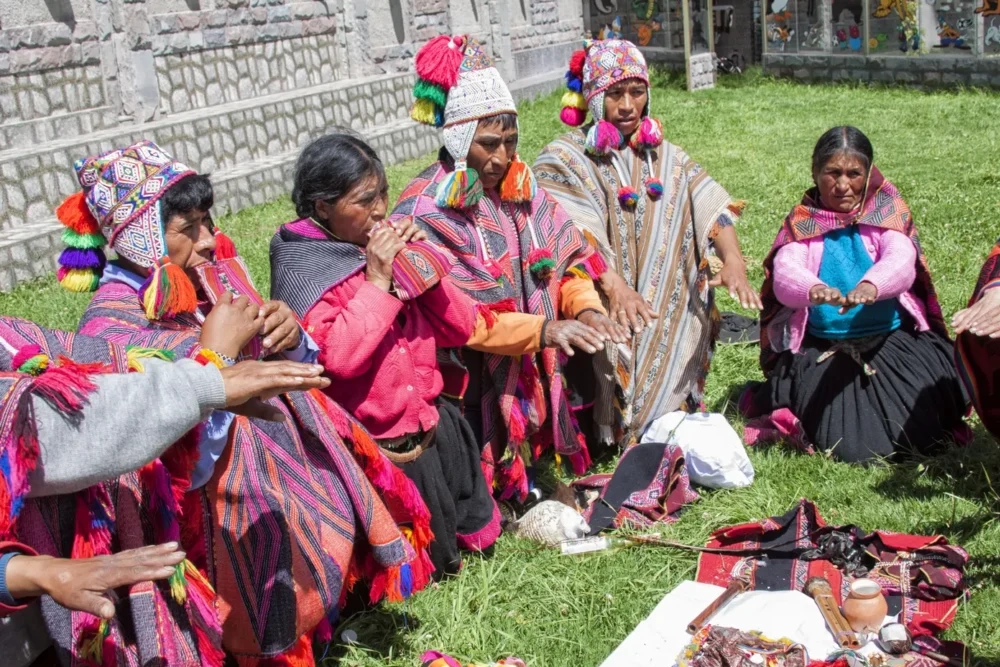
Pachamama matters today because she shapes how Andean families farm, build, travel and even drink. Before a farmer opens a field, a family lays a foundation stone or a group begins a trek, someone usually feeds the earth first. Visitors who watch this routine without understanding it often mistake it for a show.
A non-obvious point most guides skip: Andean reciprocity runs in both directions. People do not worship Pachamama from fear alone. They also believe she can be “hungry” or “offended” when neglected, which is why offerings in August, when the earth is considered open, carry special weight. Ollantaytambo, Maras and Moray each sit in landscapes where terraces, water channels and offerings still work together as one agricultural system.
The Sacred Valley and Cusco Context
The Sacred Valley is where Pachamama is easiest to observe in daily life. The Urubamba River feeds the terraces below Ollantaytambo, the salt pans of Maras draw on mountain springs, and the circular terraces of Moray function as an Inca agricultural laboratory. Local tourism analyses indicate that most visitors see these sites as ruins, while neighboring communities use the same fields every season.
Altitude adds a practical layer. Cusco sits at roughly 3,400 meters above sea level, and the Sacred Valley floor is lower, which is why many travelers sleep in Urubamba before higher stops. Peru Alive Tours, founded by guide Wilbert Yucra Choqqucunsa (official guide card No. 627, issued by DIRCETUR Cusco), operates from offices in Urubamba and San Blas, so the team sees these cultural and altitude questions every week.
Key fact: Pachamama is honored as a living being in Quechua and Aymara communities, and her offerings are made by local families, not staged for visitors. Standard practice among certified Sacred Valley operators is to ask the community or the officiating master before photographing any offering.
Want to explore how Pachamama fits your specific travel plans? Check the FAQ section or ask Peru Alive Tours on WhatsApp.
2. Core Beliefs and Benefits of Understanding Pachamama in Andean Culture
Quick answer: Understanding the Pachamama meaning gives travelers seven practical benefits: richer site visits, respectful behavior, better ceremony choices, safer altitude habits, deeper local connections, a clearer view of Andean ethics and a more responsible footprint. Each benefit improves both the trip and the community you visit.
Benefit 1: Every Site Becomes Readable
The terraces at Moray stop looking like a geometric curiosity once you know they were built to be fed and thanked. Travelers who learn the Pachamama framework read the landscape as a system: water, soil, altitude and offering. A guide can then point out which terrace faces the morning sun and why a stone was placed where it was.
Benefit 2: You Avoid Offending Local Families
Small gestures carry weight in the Andes. Stepping on an offering, laughing during a libation or treating a coca leaf as a souvenir can hurt the people hosting you. Knowing the basics prevents these errors before they happen.
Benefit 3: You Choose Authentic Ceremonies
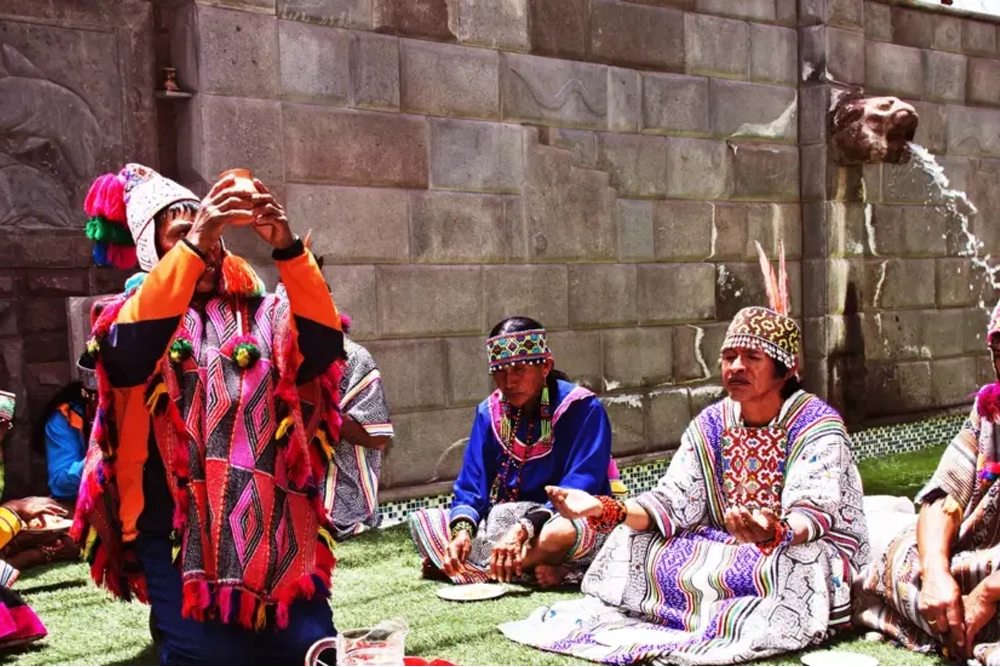
Many travelers receive offers of “shamanic experiences” within an hour of landing in Cusco. Understanding Pachamama helps you recognize who works inside a tradition and who performs for tips. Peru Alive Tours works with a Q’ero master, an Aymara master or a Machiguenga healer, depending on the type of ceremony, and the operator explains each lineage in advance.
Benefit 4: Altitude Habits Make More Sense
Andean communities treat the body as part of the land. Coca tea, slow walking and early rest are not trends. They are long-standing responses to soroche, or altitude sickness. Pachamama thinking reinforces a practical rule: do not rush the mountains.
Benefit 5: Local Conversations Open Up
A traveler who asks “What do you offer Pachamama in August?” gets a different answer than one who asks “Is this a tourist ritual?” Curiosity based on knowledge invites stories. Many Sacred Valley farmers share planting customs with visitors who show they have listened first.
Benefit 6: You Understand Ayni
Ayni is the Andean principle of reciprocity: what you receive, you return. It governs field labor, hospitality and sacred offerings. Travelers who grasp ayni tend to tip fairly, buy directly from weavers and treat guides as partners rather than service staff.
Benefit 7: Expert Insight, the Relationship Is Not Transactional
The least obvious benefit is psychological. Western travel often follows a consume-and-leave pattern, while the Pachamama model asks for a return gesture. Visitors who adopt this logic, even in small ways such as carrying out their trash or offering a few coca leaves with guidance, report feeling less like spectators and more like guests. Experienced operators like Peru Alive Tours observe this shift in nearly every group that stays more than two days in the valley.
Verified data: Machu Picchu is inscribed as a UNESCO World Heritage Site, and the surrounding Sacred Valley landscape remains in active agricultural use by Quechua-speaking communities. Details on the inscription appear at the UNESCO World Heritage Centre.
Want to maximize these benefits on your trip? Let Peru Alive Tours plan your experience.
No commitment · Offices in Urubamba and Cusco
3. Step-by-Step Guide: How to Honor Pachamama Respectfully
Quick answer: The six steps to honor Pachamama respectfully are: 1. learn the basics, 2. choose an authentic guide, 3. prepare a simple offering, 4. observe before acting, 5. take part in reciprocity, 6. leave the place cleaner than you found it. Each step protects both the tradition and your own experience.
Step 1: Learn the Basics Before You Land
Goal: Arrive with enough context to ask good questions.
- Read this guide and one academic source
- Learn five terms: pacha, ayni, Apu, despacho, k’intu
- Note the August calendar of earth offerings
Estimated time: 45 minutes. Tools: the Smithsonian National Museum of the American Indian and your tour operator’s briefing.
Expert tip: Learn the Quechua greeting “Allinllachu” (How are you?) before you arrive. Families notice the effort, and the conversation that follows is warmer than any scripted tour talk.
Step 2: Choose an Authentic Guide or Operator
Goal: Work only with people who belong to the tradition or serve it with permission.
- Ask who leads each ceremony and from which community
- Request the guide’s official license number
- Confirm the operator’s DIRCETUR registration
Estimated time: 30 minutes of messaging. Tools: DIRCETUR Cusco, the Peruvian Ministry of Foreign Trade and Tourism (MINCETUR) and direct operator questions. Peru Alive Tours, for example, publishes that its founder, Wilbert Yucra Choqqucunsa, holds official guide card No. 627 issued by DIRCETUR Cusco.
Step 3: Prepare a Simple Offering
Goal: Bring something meaningful instead of something decorative.
- Ask your guide what the local custom requires
- Buy coca leaves, flowers or food from local vendors
- Carry them in natural materials, not plastic
Estimated time: 20 minutes at a market in Urubamba or Cusco. Tools: a local market and your guide’s advice.
Expert tip: A despacho is a layered offering wrapped in paper and burned or buried by an officiating master. You do not assemble one alone. Ask your guide to explain each layer before it is lit.
Step 4: Observe Before You Act
Goal: Read the room and follow the host’s lead.
- Stay quiet during libations and prayers
- Ask permission before taking photographs
- Wait for an invitation before participating
Estimated time: The first ten minutes of any ceremony. Tools: patience and a guide who translates.
Step 5: Take Part in Reciprocity
Goal: Return something, in the spirit of ayni.
- Pour a few drops of drink on the ground if invited
- Offer coca leaves in a k’intu of three leaves
- Support local weavers, farmers and guides fairly
Estimated time: 15 to 30 minutes per offering. Tools: your guide and the officiating master.
Step 6: Leave the Place Cleaner Than You Found It
Goal: Honor the land after the ceremony ends.
- Pack out all trash, including biodegradable items
- Stay on marked paths around terraces
- Do not remove stones, plants or soil
Estimated time: 10 minutes. Tools: a small bag and a respectful attitude.
Common mistake: Treating an offering site as a photo backdrop. Solution: ask your guide who owns the place and whether photography is welcome. If the answer is no, put the camera away and keep the memory.
Need help choosing the right tour for your trip?
Skip the trial and error. Peru Alive Tours designs cultural itineraries around authentic masters and local communities.
Contact Peru Alive Tours on WhatsApp
We explain everything before you decide · Offices in Urubamba and Cusco
4. Key Factors to Evaluate Any Pachamama Experience
Quick answer: Evaluate any Pachamama experience on seven factors: who leads it, community permission, group size, safety protocols, transparent pricing, cultural framing and insurance coverage. Operators that answer all seven clearly, in writing, are far more likely to offer an authentic and responsible experience.
| Key Factor | Importance | How to Evaluate | Expected Impact |
|---|---|---|---|
| Ceremony leader | Critical | Ask for the master’s name, lineage and community | Authentic tradition instead of staged performance |
| Community permission | High | Ask whether the host community agreed to visitors | Respectful access and fair local benefit |
| Group size | High | Request the maximum number of participants in writing | More personal attention and less disruption |
| Safety protocols | Critical | Ask about altitude plans, medical screening and emergency contacts | Lower risk of altitude problems and medical surprises |
| Price transparency | High | Confirm what is included per person and for which group size | No hidden costs at the end of the trip |
| Cultural framing | Medium | Check whether the operator avoids exotic or sensational language | Content that respects Andean worldview |
| Insurance coverage | High | Read what the operator covers and what you must buy yourself | Clear expectations if something goes wrong |
How to Prioritize Based on Your Situation
If you are a first-time visitor, put ceremony leadership and safety first. A Q’ero master leading a small group in the Sacred Valley is a different experience from a rushed demonstration beside a bus stop, and the difference is visible in the answers an operator gives to the first two rows of this table.
If you travel with family or older relatives, weight altitude planning and group size more heavily. Some Peru Alive Tours programs include rafting or horseback riding, and the operator’s insurance does not cover adventure activities, so you should buy personal travel insurance that explicitly covers them. Ask for the full inclusions list before paying a deposit. Peru Alive Tours confirms program prices in US dollars per person, with a lower per-person price for larger groups. For example, the 10-day Andean Mystical Pilgrimage costs US$2,795 per person for 3 participants and US$2,475 per person for 4 or more.
Need a personalized recommendation for your trip? Request a consultation from Peru Alive Tours.
No commitment · Offices in Urubamba and Cusco
5. Illustrative Traveler Scenarios in the Sacred Valley
Quick answer: Three common traveler profiles show how Pachamama shapes a Sacred Valley trip: the first-time cultural visitor, the solo spiritual seeker and the multi-generation family. These are illustrative scenarios based on typical situations, not individual testimonials or guaranteed outcomes.
Scenario 1: The First-Time Cultural Visitor
Context: A couple in their forties plans ten days in Peru and wants Machu Picchu plus “something meaningful.”
Challenge: They find dozens of ceremony offers online and cannot tell which are authentic. The Urubamba River and Ollantaytambo sit on their route, but they have no framework for understanding either.
Solution: They contact an operator before booking, ask who leads each ceremony and spend their first day in the valley learning basic Andean concepts at lower altitude.
Results:
- Clear list of questions to ask any operator
- Ceremony choice based on lineage, not marketing
- Better altitude adjustment before higher stops
Key lesson: Spending the first night in the Sacred Valley rather than Cusco gives the body and the mind a gentler entry into Andean thinking.
Scenario 2: The Solo Spiritual Seeker
Context: A solo traveler in their thirties is interested in plant medicine and has read about ayahuasca and San Pedro.
Challenge: The traveler expects an instant transformation and has not considered medical screening, medication interactions or the cultural background of each plant.
Solution: The traveler speaks with a responsible operator, learns that ayahuasca is an Amazonian tradition rather than an Andean one, and decides to consult a doctor before making any commitment.
Results:
- Realistic expectations about what a ceremony involves
- Medical consultation completed before booking
- Respect for the difference between Amazonian and Andean practice
Key lesson: The safest ceremony decisions begin with a conversation with your own doctor, not with an operator’s brochure.
Scenario 3: The Multi-Generation Family
Context: Three generations travel together, including a grandparent who is sensitive to altitude.
Challenge: They want one shared cultural experience, but physical limits differ widely between family members.
Solution: They choose a short offering ceremony at a lower-altitude site near Urubamba, with seating and slow pacing, and keep high-effort activities optional.
Results:
- Everyone participated at their own comfort level
- Younger members asked deeper questions of the master
- No one needed to skip the main experience
Key lesson: Pachamama traditions scale well to families because the heart of the ritual is attention, not exertion.
Common mistakes observed:
- Booking on price alone. Compare leaders and inclusions first.
- Skipping acclimatization. Sleep low in the valley first.
- Ignoring medical history. Consult your doctor in advance.
- Treating ceremonies as entertainment. Ask what the ritual means.
- Assuming insurance covers everything. Read adventure-activity exclusions.
Want a similar experience? Discover how Peru Alive Tours can help you.
We explain everything before you decide · No hidden fees
6. Best Practices and Mistakes to Avoid
Quick answer: Respectful engagement with Pachamama rests on eight habits: ask first, listen longer, offer simply, dress modestly, pace your body, pay fairly, protect the land and verify credentials. The main mistakes are treating offerings as photo props, mixing traditions carelessly and ignoring medical or legal advice.
What You SHOULD Do
- Ask before you photograph. Offerings belong to families and masters. Permission turns a snapshot into a shared moment.
- Listen more than you speak. Andean teaching often unfolds slowly. Questions at the end land better than interruptions during prayer.
- Offer simple, natural items. Coca leaves, flowers or food respect the tradition more than elaborate purchased kits.
- Dress for the mountains and for modesty. Layers handle cold mornings and strong sun, and plain clothing signals respect.
- Pace your body at altitude. Drink water, eat lightly and rest. Pachamama ceremonies reward calm attention.
- Pay fairly and directly. Support weavers, farmers and local guides with reasonable prices rather than aggressive bargaining.
- Protect the landscape. Stay on paths, keep trash with you and do not collect stones or plants.
- Verify credentials. Ask for guide license numbers and operator registration, as Peru Alive Tours does for its own guides.
What You Should NOT Do
- Do not call Pachamama a “goddess of nature” and move on. The term flattens a living relationship. Ask how local families describe her.
- Do not buy a ceremony from a street seller. You cannot verify the leader or the setting. Book through a registered operator.
- Do not mix traditions casually. Andean offerings, Amazonian ayahuasca and Wachuma ceremonies are different lineages. Ask each practitioner what they do.
- Do not skip medical advice. Plant ceremonies can interact with medications and health conditions. Consult your own doctor.
- Do not assume legal rules. Peru Alive does not provide legal advice. Rules on traditional plant medicines differ from country to country, so check your home country’s regulations, including what you may carry or bring back.
- Do not rely on operator insurance for adventure activities. Peru Alive’s insurance does not cover adventure activities such as rafting or horseback riding, so buy personal travel insurance that does.
Advanced strategy: Schedule your offering ceremony early in the trip, not at the end. Experienced Sacred Valley operators note that travelers who begin with a Pachamama offering read Moray, Maras and Ollantaytambo more attentively for the rest of the journey.
Health and safety notice: Plant medicine ceremonies, including ayahuasca and San Pedro (Wachuma), require medical screening, experienced facilitators and personal responsibility. Nothing in this article diagnoses, prescribes or replaces professional medical advice. Ayahuasca is an Amazonian tradition. Peru Alive Tours ayahuasca ceremonies are led by a Kuraq Hampiq, an Amazonian healer of the Machiguenga tradition, from the Machiguenga native community.
Quick Checklist
- Ceremony leader named and lineage explained
- Guide license number confirmed
- Doctor consulted before any plant ceremony
- Personal travel insurance covers adventure activities
- Offering prepared with natural materials
Want expert guidance for your Sacred Valley itinerary? Request a review from Peru Alive Tours.
Confidential · Offices in Urubamba and Cusco
7. Current Trends
Quick answer: Current trends around Pachamama include growing legal recognition of nature’s rights in the Andes, a shift toward small-group community-led cultural travel, and stronger demand for transparency about who leads ceremonies. Travelers increasingly ask operators for credentials, community benefit and responsible plant-medicine screening.
Innovations in Adventure and Spiritual Tourism
Currently, the most visible innovation is the move from large, generic ceremony shows to small groups led by named masters. Travelers read reviews, compare lineages and ask for written descriptions before booking. Sacred Valley operators have responded by publishing who leads each ceremony and from which community that person comes.
A second shift concerns legal and ethical framing. Ecuador’s constitution recognizes rights for nature using the name Pacha Mama, and Bolivia has passed national legislation on the rights of Mother Earth. These laws show how Andean concepts now influence environmental policy far beyond the valley. The Urubamba River, Ollantaytambo and the terraces at Moray sit inside a region where that conversation feels close to home.
Market Evolution in Cusco and the Sacred Valley
Cusco and the Sacred Valley now host a wider mix of travelers than a decade ago. Some come for Machu Picchu and add a single cultural day. Others plan entire journeys around Andean spirituality, from offering ceremonies in the valley to multi-day programs that reach Lake Titicaca. Local tourism analyses indicate that visitors increasingly want itineraries that combine adventure, culture and rest rather than checklists of sites.
Peru Alive Tours has adapted by offering multi-day programs that blend ceremony, hiking and community visits, with offices in Urubamba and San Blas so travelers can meet the team in person before departure.
Short- and Medium-Term Outlook
- More transparency. Travelers will expect named leaders and license numbers in every ceremony description.
- More community ownership. Quechua and Aymara communities will negotiate how visitors enter sacred places.
- More attention to altitude. Operators will build acclimatization into itineraries instead of treating it as an afterthought.
- More caution around plant medicine. Medical screening and clear expectations will become standard questions.
- Expert insight: Rights-of-nature language will keep spreading into travel marketing, so travelers should check whether an operator’s actions match its words. Fair pay, local hiring and trash management reveal more than any slogan.
Strategic advice: Choose an operator that explains its ceremony leaders, its safety plan and its community relationships in writing before you pay a deposit.
Expected Impact in Cusco and the Sacred Valley
If these trends continue, Cusco and the Sacred Valley will likely see slower, longer visits with deeper local contact. The World Tourism Organization (UN Tourism) promotes sustainable and community-based tourism as a global priority, and Andean destinations are natural candidates for that model. Pachamama thinking, with its emphasis on reciprocity, fits this direction well.
Ready to experience the latest in Sacred Valley tourism? Let Peru Alive Tours design your trip.
No commitment · Offices in Urubamba and Cusco
Frequently Asked Questions
Peru Alive Tours compiled the most common questions about Pachamama in the Sacred Valley and Cusco:
What is Pachamama?
Short answer: Pachamama is the Andean Mother Earth, a living female presence revered by Quechua and Aymara communities.
She is not only soil. She is the source of food, water, weather and the cycle of life and death. Families honor her with coca leaves, food, drink and despacho offerings, especially before planting, building or traveling. The Pachamama Andean culture connection explains why many Sacred Valley farmers still make an offering before opening a field.
What does Pachamama mean in Quechua?
Short answer: Pachamama means “world-mother” or “mother of time and space” in Quechua.
“Pacha” covers earth, world, time and place, while “mama” means mother. The word shows that Andean thought links land and time together. A harvest, a season and a field all belong to the same Pachamama Quechua concept, which is why translations like “Earth Mother” only capture part of the meaning.
Who is Pachamama in Inca religion?
Short answer: In Inca religion, Pachamama was the earth deity of farmers, while Inti, the sun, held the highest state role.
The Inca state emphasized the sun and the emperor, but rural families kept Pachamama central to daily life. Her worship predates the empire and continued after it. Anyone asking about Pachamama Inca beliefs should note that her cult belonged to the land and the household more than to the royal court.
Is Pachamama the same as the Virgin Mary?
Short answer: No, but many Andean communities blend Pachamama with the Virgin Mary in their devotions.
After the Spanish conquest, Catholic and Andean practices merged in many villages. Some families greet both the Virgin and Pachamama during festivals. Anthropologists describe this as religious blending rather than replacement. Ask your guide how the local community understands the relationship, because answers vary from village to village.
How do Andean people honor Pachamama?
Short answer: Andean people honor Pachamama with coca leaves, food, drink, despacho offerings and daily gestures of respect.
A common gesture is pouring a few drops of a drink on the ground before drinking, known as a ch’alla. Farmers offer her the first fruits of the harvest, and families bury or burn offerings at important moments. These acts follow the principle of ayni, or reciprocity, and they connect directly to the Pachamama traditions that guide village life.
When is the Pachamama festival in Peru?
Short answer: Offerings to Pachamama are most intense in August, when many Andean communities consider the earth especially open.
Communities in the Cusco region and across the Andes make special offerings during this month, and some begin on the first day of August. Exact customs vary by village, so confirm dates with your guide or the host community. Peru Alive Tours can advise whether a visit during this period fits your itinerary.
How can a visitor make an offering to Pachamama?
Short answer: Join a guided offering led by an authorized master and bring simple natural items such as coca leaves or flowers.
Do not improvise on your own at archaeological sites or in private fields. Ask your guide to explain each step, follow the master’s instructions and keep photographs to a minimum. A visitor who participates quietly and with permission usually receives a warm welcome from local families.
Is Pachamama still worshipped in Peru today?
Short answer: Yes, Pachamama remains an active part of life in many Quechua and Aymara communities across Peru.
Her presence appears in farming, construction, travel and everyday speech. Urban Cusco residents often greet her at home, and rural families make formal offerings. Visitors to the Sacred Valley are seeing a living tradition, not a reconstruction, which is why respect matters so much.
How much does a Pachamama ceremony cost in Cusco?
Short answer: Prices vary by ceremony type, group size and duration, and Peru Alive Tours quotes them in US dollars per person.
For multi-day programs, the 10-day Andean Mystical Pilgrimage costs US$2,795 per person for 3 participants and US$2,475 per person for 4 or more. The 15-day Spiritual Connection Tour (15 days and 14 nights) costs US$3,775 per person for 3 participants and US$3,395 per person for 4 or more. The price of a single stand-alone ceremony is [TO BE CONFIRMED BY CLIENT]. Under the cancellation policy, no refund applies when 30 days or fewer remain before the start date.
What is a despacho ceremony?
Short answer: A despacho is a layered offering of coca leaves, flowers, grains and other items, prepared by an Andean master for Pachamama and the Apus.
The master arranges each element with a prayer, wraps the bundle and burns or buries it. Depending on the ceremony, Peru Alive Tours works with a Q’ero master, an Aymara master or a Machiguenga healer. Travelers can usually observe and take part under guidance, but the master leads every step.
Is it safe to join a plant medicine ceremony in Peru?
Short answer: Safety depends on medical screening, an experienced facilitator and your own health, so consult your doctor first.
Peru Alive Tours does not provide legal advice, and rules on traditional plant medicines differ from country to country. Check your home country’s regulations, including what you may carry or bring back. Ayahuasca and San Pedro ceremonies with the operator include various herbal teas before the ceremony and a light breakfast at dawn. They do not include lunch or dinner the following day.
What is the difference between Pachamama and the Apus?
Short answer: Pachamama is the Mother Earth who nourishes life, while the Apus are mountain spirits who protect communities.
The two work together in Andean cosmovision. Offerings often address both, with Pachamama thanked for fertility and the Apus asked for protection. Around Cusco and the Sacred Valley, specific peaks hold particular Apu status, and local guides can name the mountain that watches over each community.
Don’t see your question here?
The Peru Alive Tours team is ready to answer your specific questions.
Message Peru Alive Tours on WhatsApp
We explain everything before you decide · Offices in Urubamba and Cusco
Common Voice Search Queries
Hey Google, who is Pachamama?
Quick answer: Pachamama is Mother Earth in Andean tradition. Quechua and Aymara families honor her as the giver of food, water and life, and they thank her with coca leaves, food and drink before planting, building or traveling.
Spoken questions often skip the cultural background, so remember that her name means “world-mother,” not “earth goddess” in a Western sense. You can hear her mentioned at almost every Andean gathering, from village festivals to ceremonies near Ollantaytambo.
What does Pachamama mean in simple words?
Quick answer: In simple words, Pachamama means Mother Earth. “Pacha” stands for world, time and place, and “mama” means mother. Together they describe a living earth that cares for people and expects respect and gratitude in return.
This is the easiest way to explain the pachamama goddess idea to a child or a first-time visitor. Add that Andean people treat her as a relative, not a statue, and the concept becomes much clearer.
Where can I learn about Pachamama in the Sacred Valley?
Quick answer: You can learn about Pachamama in the Sacred Valley through guided cultural visits near Urubamba, Ollantaytambo, Moray and Maras. A registered operator can arrange time with a master or a local family so you hear the tradition from the people who keep it.
Peru Alive Tours operates from Urubamba, in the heart of the valley, and from San Blas in Cusco. Ask for a program that includes community time rather than only site visits.
Can tourists take part in a Pachamama ceremony in Peru?
Quick answer: Yes, tourists can take part in Pachamama offering ceremonies when an authorized master or host community welcomes them. Join through a registered operator, follow the master’s instructions and ask permission before taking photographs.
Participation works best when you arrive with questions and patience. Avoid unsupervised ceremonies offered by unverified sellers. If a plant medicine ceremony interests you, speak with your doctor first and check the rules of your home country.
What should I bring as an offering to Pachamama near Cusco?
Quick answer: Bring coca leaves, flowers or a small portion of food, carried in natural materials. Ask your guide before the ceremony what the local custom requires, because offerings differ between communities and between ceremony types.
Markets in Cusco and Urubamba sell the usual items at fair prices. Skip plastic, glitter and imported decorations. A simple k’intu of three coca leaves, presented with respect, carries more meaning than an elaborate purchased kit.
Conclusion: Your Next Step
Pachamama connects the terraces of Moray, the river below Ollantaytambo and the mountains above Cusco into one relationship. Once you understand that relationship, every stop in the Sacred Valley changes from a sight into a conversation.
Think of Pachamama as a host who has fed this valley for centuries. Visitors who arrive with curiosity, a small offering and a willingness to listen are treated like guests, while those who arrive only to photograph leave with pictures and little else.
Reach out to Peru Alive Tours, share your dates and interests, and ask who would lead each ceremony and how your itinerary handles altitude and safety. The answers will tell you quickly whether a program fits.
Recommended action for today: Message Peru Alive Tours with your dates and questions.
Mother Earth in Andean culture is a living tradition, and Peru Alive Tours, a DIRCETUR-registered operator in Urubamba and Cusco, introduces travelers to it through authorized masters and local communities. Pachamama is honored today by Quechua and Aymara families across the Andes, and respectful visitors are welcome to learn from them.
Ready to Take the Next Step?
Peru Alive Tours operates from offices in Urubamba and San Blas (Cusco), with a team of local Sacred Valley specialists ready to design your experience. Reach out today and receive a personalized itinerary tailored to your interests and schedule.
Start Your Sacred Valley Adventure with Peru Alive Tours
Our local team will help you plan the right experience from Cusco or Urubamba.
Chat with Peru Alive Tours on WhatsApp
No commitment · No hidden fees · Offices in Urubamba and Cusco
+51 999 878 807 · info@perualive.com · www.perualive.com
Facebook · Instagram · YouTube · X