Executive Summary
Quick answer: Andean cosmovision is the Quechua and Aymara understanding of reality as one living, interconnected whole divided into three worlds: Hanan Pacha, the upper world of sun, moon and stars; Kay Pacha, the world of the living; and Ukhu Pacha, the inner world of ancestors, seeds and water.
Key takeaways:
- Pacha means both space and time, not only “world.”
- Ukhu Pacha is a source of life, not a hell.
- Ayni, reciprocity, connects all three worlds.
- Mountains, rivers and ruins mark each world in the Sacred Valley.
- Guided, respectful visits turn sightseeing into understanding.
Article data:
- Read time: 27 minutes
- Level: Beginner to intermediate
- Reviewed by Peru Alive Tours, Sacred Valley specialists
- Based on 6 authoritative source types: UNESCO, MINCETUR, Smithsonian, colonial chronicles, ethnographic research and local guides
Standing in Ollantaytambo at dawn, most travelers sense that the stones, the river and the peaks mean something more than the guidebook says. Andean cosmovision explains what that something is. It is the framework that organized Inca cities, agricultural calendars, pilgrimages and daily offerings, and it remains a living belief in Quechua and Aymara communities today.
The problem is that most visitors meet Andean cosmovision in fragments: a word like Pachamama on a tour sign, a mention of “three worlds” in a museum label, a condor carving with no explanation. Without the full picture, the Sacred Valley looks like a set of beautiful ruins instead of a coherent sacred landscape. This guide gives you the complete andean cosmovision explained in practical terms, so every site you visit around Cusco has a place in the larger map. Experienced operators in the Sacred Valley report that travelers who learn Andean cosmovision before arriving ask better questions and connect more deeply with their guides. Read on, and use the table of contents to jump to the part you need.
Table of Contents
- What Is Andean Cosmovision? Definition and Context
- Proven Benefits of Understanding the Andean Worldview
- Step-by-Step Guide: Experiencing the Three Worlds
- Key Factors to Evaluate Before You Go
- Real Traveler Scenarios in the Sacred Valley
- Best Practices and Mistakes to Avoid
- Current Trends in Cultural and Spiritual Travel
- Frequently Asked Questions
- Common Voice Search Queries
- Conclusion and Next Steps
1. What Is Andean Cosmovision? Definition and Context
Quick answer: Andean cosmovision is the worldview of Quechua and Aymara peoples in which humans, mountains, water, ancestors and stars form one relational system. It organizes existence into three levels: Hanan Pacha above, Kay Pacha here and now, and Ukhu Pacha within. Balance between them depends on reciprocity.
Inca cosmovision explained starts with a simple idea: nothing in the Andean world is inert. Apus, the mountain spirits, watch over valleys. Water carries the memory of the glaciers. Fields are relatives, not property. Andean cosmovision is a type of relational philosophy rooted in the highlands of Peru, Bolivia and Ecuador. It differs from Western cosmology by treating humans as participants in the cosmos rather than observers standing outside it.
The word that holds the system together is pacha. In Quechua and Aymara, it means earth, world, space and time at once. When someone speaks of hanan pacha kay pacha ukhu pacha, they describe three layers of a single reality, each one inhabited by beings with their own roles and each one requiring respect.
Two further principles complete the picture. Ayni is reciprocity: every gift received creates an obligation to give back. Yanantin is complementary duality: male and female, sun and moon, upper and lower do not compete, they complete each other. A traveler who grasps these two ideas of Andean cosmovision can read most Andean ritual, architecture and festival without a translator.
The Three Worlds: A Clear Breakdown
The three worlds Andean model is easiest to understand when you look at each level side by side.
- Hanan Pacha is the upper world. It holds Inti (the sun), Mama Killa (the moon), Chaska (Venus), Illapa (thunder and lightning) and the Milky Way, which Andean peoples read as a celestial river. The condor is its animal.
- Kay Pacha is the world of the living. People, animals, crops, mountains and Pachamama (Mother Earth) coexist here. The puma, a symbol of strength and order, represents this level.
- Ukhu Pacha is the inner world, sometimes called Uku Pacha. It holds seeds, springs, caves, minerals and the ancestors. The serpent, or amaru, represents its flow of water and renewal.
The Quechua words themselves carry the logic. Hanan means upper, kay means this or here, and ukhu means inside. Cusco itself was divided into Hanan Cusco and Hurin Cusco, upper and lower halves, so the cosmic order was written into the city plan.
Historical Background
Most of what outsiders know about pre-Hispanic belief reached us through two channels. The first is the colonial chronicles. Writers such as Bernabé Cobo recorded how the Incas organized sacred sites in Cusco along invisible lines called ceques, which radiated from the Qorikancha, the temple of the sun, to shrines across the landscape. According to Cobo’s account, the system included 41 lines and 328 sacred places called huacas.
The second channel is living tradition. Ethnographic research among highland communities, including the Q’ero Nation in the region of Cusco, documents how families still make offerings to mountains and to Pachamama. Scholars debate how much of the strict three-level model of Andean cosmovision predates Spanish contact and how much was reshaped afterward. That debate is healthy, and it should shape how you listen: treat any single guide’s account as one voice in a long conversation, not as a closed rulebook.
An analogy helps. Think of the three worlds as a tree. Hanan Pacha is the canopy reaching for light, Kay Pacha is the trunk where life moves, and Ukhu Pacha is the root system drawing from water and ancestors. Remove any part and the tree dies.
Why It Matters Today
Andean cosmovision is not a museum piece. Pilgrims in the Cusco region still climb toward glaciers during festivals such as Qoyllur Rit’i, and communities across the highlands still begin planting and travel with a despacho, a bundle of offerings prepared for the earth. The Inti Raymi winter solstice festival, staged in Cusco every June, preserves the memory of the sun’s central role in Hanan Pacha.
A less obvious point separates informed travelers from casual ones. The Incas did not treat the three worlds as separate places you visit after death. They treated them as simultaneous levels you move between through ritual, sleep, agriculture and water. Caves and springs are doors into Ukhu Pacha, and mountain summits are doors toward Hanan Pacha. Once Andean cosmovision shows you doors instead of destinations, the Sacred Valley reads very differently.
The Sacred Valley and Cusco Context
The Sacred Valley, or Valle Sagrado, follows the Urubamba River, known upstream as the Vilcanota or Willkamayu. Researchers who study Andean astronomy have long linked this river to the Milky Way, which makes the valley a mirror of the sky. Cusco sits near 3,400 meters above sea level, while Urubamba and Ollantaytambo sit lower, between roughly 2,800 and 2,900 meters, according to standard geographic references. That altitude difference matters for your body and for your itinerary, because soroche (altitude sickness) can affect rest, appetite and concentration during ceremonial or cultural activities.
Peru Alive Tours operates from offices in Urubamba and San Blas, Cusco, and its team works inside this landscape every week. Local operators registered with DIRCETUR, the regional tourism authority, generally recommend spending the first nights in the lower Sacred Valley before heading to higher ground, which respects both the body and the pace of any contemplative visit.
Key fact: The Historic Sanctuary of Machu Picchu is a UNESCO World Heritage property, and visits to it follow regulated circuits and time slots established by Peruvian authorities.
Want to explore how Andean cosmovision applies to your specific travel plans? Check the FAQ section or ask Peru Alive Tours on WhatsApp.
2. Proven Benefits of Understanding the Andean Worldview
Quick answer: Learning Andean cosmovision before or during a trip gives travelers deeper context at archaeological sites, more respectful ceremonial behavior, better conversations with local guides, and a clearer reason for each stop on a Sacred Valley itinerary.
The benefits of Andean cosmovision below come from patterns that experienced Sacred Valley guides describe repeatedly. They are not laboratory results, and no precise percentages exist for them, so this article does not invent any.
Benefit 1: Archaeological Sites Become Readable
Without Andean cosmovision as a framework, Ollantaytambo is a large stone complex. With one, it is a ceremonial center aligned with the sun, the mountain Apus and the Urubamba River. The Temple of the Sun belongs to Hanan Pacha, the terraces belong to Kay Pacha, and the springs feed Ukhu Pacha. In practice, you stop collecting photos and start reading architecture as a statement about the cosmos.
Benefit 2: Conversations With Guides Improve
A guide who speaks Quechua carries knowledge that no placard can hold. When you ask an informed question, such as how a family prepares an offering to the nearest Apu, guides tend to answer with stories rather than scripts. Peru Alive Tours founder and guide Wilbert Yucra Choqqucunsa holds official guide card No. 627, issued by DIRCETUR Cusco, which means his interpretation rests on both formal accreditation and local experience.
Benefit 3: Respectful Behavior Comes Naturally
Etiquette stops feeling like a list of rules. When you know that a mountain is a living being, you understand why guides ask visitors not to climb on sacred stones or leave litter at a shrine. You also understand why a coca leaf offering, called a k’intu, is a gesture of greeting rather than a souvenir activity.
Benefit 4: The Itinerary Gains a Logic
Most Sacred Valley itineraries mix Moray, Maras, Pisac, Ollantaytambo and Machu Picchu. The lens of Andean cosmovision gives that mix a narrative. Moray’s circular terraces speak to Kay Pacha and agriculture, the Maras salt mines to water emerging from Ukhu Pacha, and high viewpoints toward snow peaks to Hanan Pacha. Travelers who read the sites through Andean cosmovision tend to feel the trip as one journey instead of five separate tours.
Benefit 5: Spiritual Experiences Stay Grounded
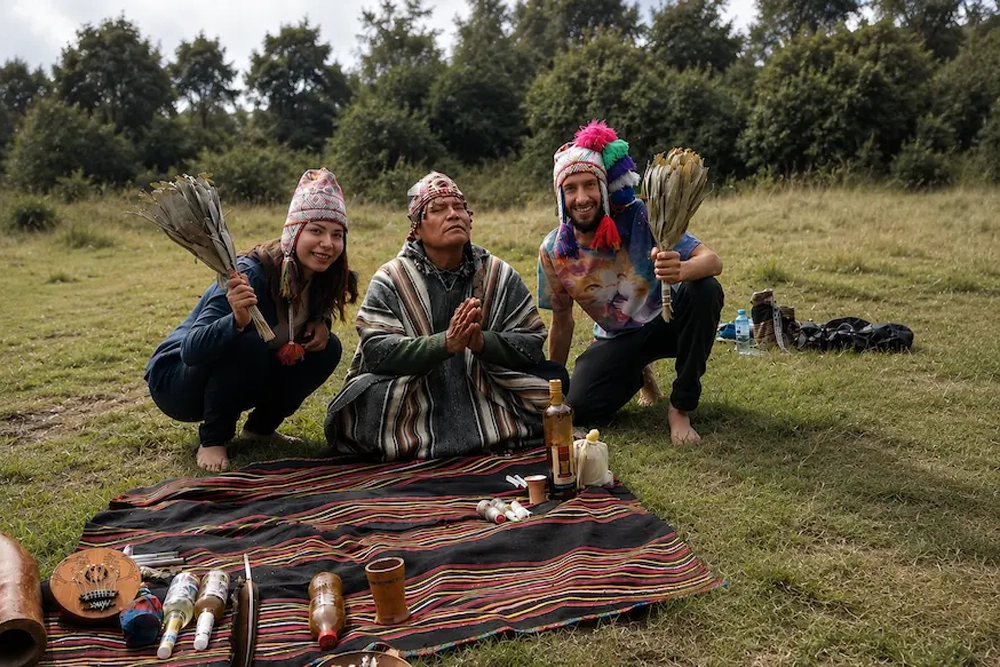
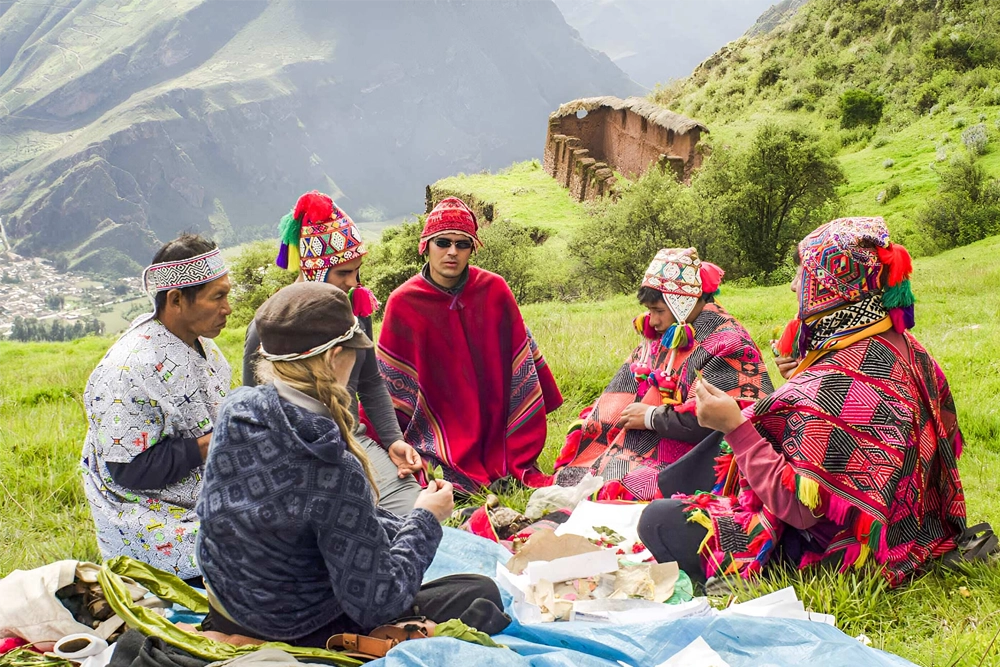
Interest in ceremony brings many visitors to Cusco, and many ask where Andean cosmovision ends and performance begins. Understanding Andean cosmovision first helps you separate authentic practice from performance. You learn to ask who leads a ceremony, from which tradition, and under what safety protocols. Peru Alive Tours states that its ceremonies are led by a Q’ero master, an Aymara master or a Machiguenga healer, depending on the type of ceremony.
Benefit 6: Altitude and Pacing Make More Sense
Andean cosmovision values gradual movement between levels. That idea has a practical echo: acclimatization works best when you rise in stages, from the lower Sacred Valley toward Cusco, rather than all at once. Travelers who treat the first days as a slow entry into Kay Pacha often cope better with soroche than those who rush straight to high-altitude sites.
Benefit 7 (Expert Insight): You Notice What Is Missing From Tourist Narratives
Many visitors hear that Ukhu Pacha is “the underworld” and picture something dark. Andean communities describe a fertile interior where seeds rest before sprouting and ancestors stay present in the soil. Recognizing this correction is the clearest sign that a traveler has moved from stereotype to understanding. It also protects you from guides or brochures that borrow Christian language such as “hell” to describe a very different idea.
Verified data: Quechua remains a widely spoken Indigenous language in the Peruvian highlands, and the Sacred Valley is one of the regions where it is used daily alongside Spanish.
Want to maximize these benefits on your trip? Let Peru Alive Tours plan your experience.
3. Step-by-Step Guide: Experiencing the Three Worlds on Your Trip
Quick answer: To experience the three worlds in the Sacred Valley, follow six steps: 1. Learn the basic vocabulary. 2. Acclimatize in Kay Pacha. 3. Visit sites tied to Hanan Pacha. 4. Visit places linked to Ukhu Pacha. 5. Join a guided offering. 6. Reflect and integrate before leaving.
Step 1: Learn the Basic Vocabulary
Goal: Reach the first site already knowing the key terms of Andean cosmovision.
- Memorize pacha, ayni, Apu and Pachamama.
- Learn the three world names and their animals.
- Read the Smithsonian’s Indigenous cultures resources for background.
Estimated time: 1 to 2 hours. Tools: This article, the National Museum of the American Indian at the Smithsonian Institution, and a notebook for questions to bring to your guide.
Step 2: Acclimatize in Kay Pacha
Goal: Let your body adjust before any high or ceremonial activity.
- Spend the first nights at lower altitude in the Sacred Valley.
- Drink water, eat lightly and walk slowly.
- Skip alcohol until you feel settled.
Estimated time: 1 to 2 days. Tools: Hydration, coca tea (a traditional Andean infusion), and local advice on pacing.
Expert tip: Villages in the lower Sacred Valley, such as Urubamba, make a gentler base than Cusco for the first nights because they sit several hundred meters lower. Operators familiar with soroche often use this sequence for travelers planning spiritual activities.
Step 3: Visit Places Tied to Hanan Pacha
Goal: Connect with the sky, sun and mountain Apus of Andean cosmovision.
- Visit solar and astronomical sites such as Ollantaytambo’s Temple of the Sun.
- Watch sunrise or sunset from a high viewpoint.
- Ask your guide which Apu watches over the valley you see.
Estimated time: Half a day to a full day. Tools: A guide who explains astronomical alignments, plus warm layers and sun protection.
Step 4: Visit Places Linked to Ukhu Pacha
Goal: Understand, through Andean cosmovision, water, seeds and ancestors as sources of life.
- Visit sites tied to springs or underground water, such as the Maras salt ponds.
- Observe terraces and irrigation channels.
- Ask how local families honor springs and seeds.
Estimated time: Half a day. Tools: Comfortable footwear and a guide who can explain local agricultural customs.
Expert tip: Moray’s concentric terraces are often described as a space where Incas studied crops at different microclimates. Interpretations vary, so ask your guide to separate documented findings from tradition.
Step 5: Join a Guided Offering
Goal: Move from observing to participating, with respect.
- Ask Peru Alive Tours which ceremonies match your interests.
- Prepare a small intention before the offering begins.
- Follow the officiant’s instructions exactly.
Estimated time: 2 to 4 hours for a standard offering, longer for multi-day ceremonies. Tools: A trusted facilitator, a clear briefing on what will happen and an open mind.
Step 6: Reflect and Integrate
Goal: Convert what you saw into lasting understanding of Andean cosmovision.
- Write what you noticed in each of the three worlds.
- Note which questions remain unanswered.
- Share your notes with your guide for feedback.
Estimated time: 30 to 60 minutes. Tools: Your notebook and the answers you gathered along the way.
Common mistake and solution: Many travelers schedule Machu Picchu, a ceremony and a high-altitude hike in the first 48 hours. This combination overloads the body and leaves no space to absorb what you see. Solution: Place ceremonies after at least two days of acclimatization and keep one free day between major activities.
Need help choosing the right tour for your trip?
Don’t waste time on trial and error. Peru Alive Tours designs personalized experiences.
Contact Peru Alive Tours on WhatsApp
We guide you step by step with a personalized plan · Offices in Urubamba and Cusco
4. Key Factors to Evaluate Before You Go
Quick answer: Seven factors decide whether an Andean cosmovision experience is authentic and safe: guide accreditation, who leads each ceremony, acclimatization time, group size and per-person price, insurance, cultural ethics, and itinerary pacing. Check each one in writing before you pay a deposit.
Travelers comparing operators in Cusco usually see similar photographs and similar promises. The differences sit in details that rarely appear in the headline. The table below turns those details into questions you can ask any provider, including Peru Alive Tours.
| Key Factor | Importance | How to Evaluate | Expected Impact |
|---|---|---|---|
| Guide accreditation | Critical | Ask for the official guide card number issued by DIRCETUR Cusco and verify it. | Confirms the person interpreting sacred sites is formally recognized. |
| Ceremony leadership | Critical | Ask who leads each ceremony, from which community and which tradition. | Separates authentic practice from improvised performance. |
| Acclimatization plan | High | Request the altitude of each night and activity in the itinerary. | Reduces the risk of soroche disrupting key days. |
| Group size and price | High | Ask for the per-person price in USD at your exact group size. | Prevents surprises, since larger groups lower the per-person cost. |
| Insurance coverage | High | Ask what the operator’s insurance covers and what it excludes. | Tells you whether you need your own travel insurance. |
| Cultural ethics | High | Ask how communities benefit and how photography is handled. | Keeps your visit respectful and supports local families. |
| Itinerary pacing | Medium | Count free or low-activity days between major experiences. | Leaves room to absorb what you see and recover physically. |
Guide Accreditation and Ceremony Leadership
Peru Alive Tours founder Wilbert Yucra Choqqucunsa holds official guide card No. 627, issued by DIRCETUR Cusco. For ceremonies, the company works with Indigenous leaders rather than staff performers. Ceremonies are led by a Q’ero master, an Aymara master or a Machiguenga healer, depending on the type of ceremony. The Q’ero are an Andean community of the Cusco highlands, the Aymara are an Andean people of the southern altiplano, and the Machiguenga are an Amazonian people.
That geography matters. Ayahuasca is an Amazonian tradition, not an Andean one, and Peru Alive Tours states that its ayahuasca ceremony is led by a Kuraq Hampiq, an Amazonian healer of the Machiguenga tradition from the Machiguenga native community. “Kuraq Hampiq” is a local title for masters of higher hierarchy. A provider that sells ayahuasca as part of “Inca” tradition is blending two different worlds, and a careful traveler should ask why.
Per-Person Prices and Group Size
Peru Alive Tours quotes prices in US dollars per person, and each service requires a minimum of two or three participants. The per-person price falls as the group grows. For its multi-day programs, the current figures are:
- 10-day Andean Mystical Pilgrimage: US$2,795 per person for 3 participants, or US$2,475 per person for 4 or more.
- 15-day Spiritual Connection Tour (15 days and 14 nights): US$3,775 per person for 3 participants, or US$3,395 per person for 4 or more.
Peru Alive Tours also runs a multi-day journey that starts in Cusco and reaches Puno on day 7, visiting the Uros, Taquile and Amantani on Lake Titicaca. Ask the team for the current itinerary and rate for your dates.
Insurance, Plant Medicine and Legal Questions
Peru Alive Tours’ insurance does not cover adventure activities. If your trip combines cultural visits with activities such as rafting or horseback riding, buy personal travel insurance that explicitly covers them.
Safety and legal notice for plant medicine: Ceremonies that involve ayahuasca or San Pedro (Wachuma) carry medical contraindications, including interactions with certain medications and some health conditions. Consult your own doctor before you travel, and work only with experienced, reputable facilitators. Peru Alive does not provide legal advice. Rules on traditional plant medicines differ from country to country, so check the regulations of your home country, including what you may carry or bring back, and consult a legal adviser if needed before you travel.
How to Prioritize Based on Your Situation
Travelers who approach Andean cosmovision through ceremony should weight the leadership and safety factors most heavily, and should accept a slower, more expensive itinerary if that is what authentic preparation requires. Travelers who approach Andean cosmovision through archaeology and landscape should weight guide accreditation and pacing, since their experience depends mostly on interpretation rather than ritual.
One principle applies to everyone. The more an experience is described with superlatives and the less it is described with names, places and logistics, the less information you have. Sacred Valley operators who answer specific questions about altitude, leadership and cancellation terms in writing generally prove easier to trust than those who answer with general reassurance.
Need a personalized recommendation for your trip? Request a free consultation from Peru Alive Tours.
5. Real Traveler Scenarios in the Sacred Valley
Quick answer: Three common traveler profiles show how Andean cosmovision shapes a Sacred Valley trip: the first-time visitor seeking context, the returning traveler seeking ceremony, and the small group seeking a long pilgrimage. These are composite scenarios, not individual testimonials.
The scenarios below are illustrative composites built from questions that travelers commonly bring to Sacred Valley operators. They are not named testimonials, and they contain no invented statistics. For verified guest feedback, visit Peru Alive Tours on Facebook, Instagram or YouTube.
Scenario 1: The First-Time Visitor Seeking Andean Cosmovision Context
Context: A traveler on a first trip to Peru has booked Machu Picchu and wants more than a photograph. They have heard the words Pachamama and Apu but cannot place them.
Challenge: Standard group tours move quickly between sites, and the traveler leaves each one with facts but no framework. Without the three-world map, Ollantaytambo and Pisac feel like two unrelated ruins.
Solution: The traveler studies the three-world vocabulary before arrival, spends the first nights in the lower Sacred Valley, and asks the guide to explain each site as a part of the larger sacred landscape.
What the traveler takes away:
- Reads each site as part of one sacred landscape.
- Understands why mountains receive offerings.
- Asks sharper questions at every stop.
Key lesson: A guide matters less for the facts they recite than for the questions they make you ask.
Scenario 2: The Returning Traveler Seeking Ceremony
Context: A traveler who has visited Cusco before wants to take part in a ceremony, not only observe the ruins. They are unsure which tradition applies to which ritual.
Challenge: Online listings blend Andean and Amazonian practices under the same “shamanic” label, and prices vary widely with little detail about who leads each ceremony.
Solution: The traveler asks each provider the same four questions: who leads, from which community, what screening happens beforehand and what the cancellation terms are. They pick the provider that answers in writing.
What the traveler takes away:
- Separates Andean offerings from Amazonian ceremonies.
- Completes medical screening before travel.
- Chooses a leader with a stated lineage.
Key lesson: The clearest sign of an authentic ceremony is not atmosphere but how precisely the operator describes who leads it.
Scenario 3: The Small Group on a Long Pilgrimage
Context: Four friends plan a multi-week trip that combines cultural visits, ceremony and time at altitude. They need a program that stays coherent across many days.
Challenge: Longer programs risk fatigue and a feeling of repetition, especially when each day adds new sites without a thread connecting them.
Solution: The group chooses a pilgrimage format organized around the three worlds, moving from lower valley to higher ground, with free days built in. Because they travel as four, they also secure the lower per-person group rate.
What the traveler takes away:
- Experiences the trip as one arc, not a list.
- Keeps energy through planned rest days.
- Pays the lower per-person rate for four.
Key lesson: Group size changes the price, but the itinerary’s internal logic changes how the trip feels.
Common mistakes observed:
- Booking ceremonies on arrival day. Solution: wait for acclimatization first.
- Assuming all shamanic work is Andean. Solution: ask about the lineage.
- Skipping personal insurance. Solution: buy cover for adventure activities.
- Photographing offerings without asking. Solution: request permission first.
- Packing too many sites into a day. Solution: plan fewer, longer visits.
Want a similar experience? Discover how Peru Alive Tours can help you.
6. Best Practices and Mistakes to Avoid
Quick answer: Respectful travelers learn the vocabulary of Andean cosmovision, acclimatize first, ask permission before photographing offerings, work with accredited guides, and treat ceremonies as sacred. They avoid rushing, mixing Andean and Amazonian traditions, and treating the Andean worldview as a performance.
What You SHOULD Do
- Learn the vocabulary first. Pacha, ayni, Apu and Pachamama will carry you through most conversations.
- Acclimatize before ritual. Altitude sickness can ruin a ceremony day if you rush.
- Ask before you photograph. Offerings are private for many families, so permission is basic courtesy.
- Bring a small gift of gratitude. Fruit, coca leaves or a donation to a community project honor the principle of ayni.
- Use accredited guides. A DIRCETUR card number gives you something concrete to verify.
- Dress in layers. Temperatures swing sharply between sun and shade at altitude.
- Carry personal insurance. It fills the gap left by operator policies.
- Keep a journal. Notes made each evening turn passing impressions into understanding.
What You Should NOT Do
- Do not call Ukhu Pacha “hell.” The word imports a Christian idea that does not match how Andean communities describe the inner world.
- Do not climb on sacred stones. Ruins are fragile, and many are also living shrines.
- Do not treat ceremonies as entertainment. They are spiritual and sometimes medical events, so participation requires sincerity and preparation.
- Do not combine all activities in the first days. Space them to protect your health.
- Do not assume one tradition fits all. Q’ero, Aymara and Machiguenga traditions differ from each other.
- Do not skip the medical screening. Certain medications and conditions interact with plant medicines, so involve your own doctor.
Advanced strategy (Level 3): Ask your guide to take you to a place where Andean cosmovision becomes visible, with all three worlds in one view: a viewpoint that includes snow peaks (Hanan Pacha), the valley floor with fields and villages (Kay Pacha) and a spring or river (Ukhu Pacha). Standing there while the guide names each level converts the model from a diagram into something you see with your own eyes. Operators who know the Urubamba valley well can usually point out such places on a short walk.
Quick Checklist
- Verified the guide’s DIRCETUR card number.
- Confirmed who leads each ceremony.
- Planned at least two acclimatization days.
- Bought personal travel insurance.
- Consulted my doctor about plant medicines.
Want expert guidance for your Sacred Valley itinerary? Request a free review from Peru Alive Tours.
7. Current Trends in Cultural and Spiritual Travel
Quick answer: Andean cosmovision is currently drawing travelers who want context, not only scenery. Tourism observers report growing interest in community-led experiences, responsible travel and guided interpretation, while regulators in Peru continue to manage visitor flows at the most sensitive heritage sites.
Innovations in Adventure and Spiritual Tourism
Travelers interested in Andean cosmovision currently expect more transparency than a decade ago. They ask who leads a ceremony, how communities are paid and what the environmental impact is. Operators that teach Andean cosmovision and publish credentials and explain lineage answer those expectations directly, while operators that rely on vague spiritual language lose credibility quickly.
The UNESCO World Heritage framework and the sustainable-tourism guidance of the World Tourism Organization have both pushed destinations toward visitor management, and Peru has applied regulated circuits and time slots at Machu Picchu as part of that approach. You can read the official property description on the UNESCO World Heritage Centre.
Market Evolution in Cusco and the Sacred Valley
The Sacred Valley has moved from being a day trip off the Cusco route to being a destination in its own right. More travelers base themselves in Urubamba or Ollantaytambo and treat Cusco as a stop, not a center. Peru Alive Tours, with offices in Urubamba and San Blas, reflects that shift by operating from both locations.
Official tourism information for visitors is published by Peru’s tourism ministry, MINCETUR, on the government portal. Check it for current rules before you book.
Short- and Medium-Term Outlook
- Greater demand for verified guides. Accreditation numbers will become a standard question.
- More attention to ceremony ethics. Travelers will ask about lineage and community benefit.
- Slower itineraries. Multi-day programs with rest days will outcompete rushed circuits.
- Tighter heritage regulation. Authorities will continue to refine visitor limits at sensitive sites.
- Cosmovision as a trip organizer. The most coherent itineraries will use the three worlds as a narrative thread, not a footnote.
Strategic advice: Book flexible, slower itineraries and ask every provider the same written questions about leadership, altitude and cancellation terms.
Expected Impact in Cusco and the Sacred Valley
Peru Alive Tours’ cancellation policy states that with 30 days or fewer before the start date there is no refund. Reading such terms carefully matters more as trips grow longer and more specialized. In the Sacred Valley, local families benefit most when travelers choose locally owned operators and spend time in smaller communities rather than only on the major circuits.
Ready to experience the latest in Sacred Valley tourism? Let Peru Alive Tours design your trip.
Frequently Asked Questions
Peru Alive Tours compiled the most common questions about Andean cosmovision and the three worlds in the Sacred Valley and Cusco:
What is Andean cosmovision?
Short answer: Andean cosmovision is the Quechua and Aymara worldview that treats people, nature, ancestors and the sky as one connected system.
Andean cosmovision rests on reciprocity (ayni), complementary duality (yanantin) and a three-level cosmos. Mountains, rivers and stones are not scenery in Andean cosmovision. They are beings with whom humans keep relationships through offerings and respect. In Cusco and the Sacred Valley, the worldview shows up in Inca architecture, in festivals such as Inti Raymi and in the daily habits of highland families.
What are Hanan Pacha, Kay Pacha and Ukhu Pacha?
Short answer: Hanan Pacha is the upper world, Kay Pacha is the world of the living, and Ukhu Pacha is the inner world of seeds, water and ancestors.
Each world has its own beings and its own symbolic animal: the condor above, the puma here, the serpent within. The worlds are not separate places you travel to after death. Andean cosmovision describes them as levels of one reality, connected by ritual, water, mountains and offerings. Understanding this part of Andean cosmovision makes Inca sites easier to read.
What does “pacha” mean in Quechua?
Short answer: Pacha means earth, world, space and time together, which is why it appears in names for both places and eras.
The same word appears in Pachamama, Mother Earth, and in Pachakuti, a turning over of space and time that Andean tradition associates with major change. In Andean cosmovision, because pacha joins space and time, an Andean “world” is also an era or a state of being. Translators often render it simply as “world,” but that loses half the meaning.
What is ayni in Andean culture?
Short answer: Ayni is the Andean principle of reciprocity: whatever you receive from people or nature creates an obligation to give back.
Ayni organizes farm labor, community festivals and offerings to the earth. A family helps a neighbor harvest and expects the same help later, and a farmer feeds Pachamama before taking from her. For travelers, ayni explains why guides ask you to arrive with respect and, when appropriate, with a small gift of gratitude rather than only a camera.
How did the Incas represent the three worlds?
Short answer: The Incas used animals as symbols: the condor for Hanan Pacha, the puma for Kay Pacha and the serpent for Ukhu Pacha.
In Andean cosmovision, Cusco itself carried the symbolism. A tradition describes the city’s layout as a puma, and the city was split into Hanan and Hurin halves. The chakana, a stepped cross, is also often read as a bridge between levels. Scholars debate details, so ask your guide which interpretations are documented and which come from tradition.
How can I experience Andean cosmovision in the Sacred Valley?
Short answer: Combine accredited guided visits to Inca sites with a respectful offering led by an Indigenous master, and allow time to acclimatize first.
To experience Andean cosmovision, start with sites such as Ollantaytambo, Moray and the Maras salt ponds, ask your guide to connect each one to the three worlds, and then add a ceremony if it suits you. Peru Alive Tours arranges ceremonies led by Q’ero, Aymara or Machiguenga leaders, depending on the type of ceremony, and can build an itinerary around your interests and fitness.
How do I prepare for altitude before a spiritual trip to Cusco?
Short answer: Arrive early, sleep first at lower altitude in the Sacred Valley, drink water, eat lightly and avoid alcohol for the first days.
Cusco sits near 3,400 meters, while the Sacred Valley towns of Urubamba and Ollantaytambo sit several hundred meters lower. Operators generally recommend using that difference to your advantage. Talk to your doctor before travel if you have heart, lung or blood-pressure conditions, and schedule ceremonies only after you feel settled.
Is Ukhu Pacha the same as hell?
Short answer: No. Ukhu Pacha is the inner world of seeds, water and ancestors, a source of life rather than a place of punishment.
In Andean cosmovision, the comparison with hell is misleading; it entered through Spanish colonial translation, which mapped Christian categories onto Andean ones. In Andean tradition, seeds rest in the earth before they sprout, springs rise from the interior, and ancestors remain present in the soil. Ukhu Pacha is therefore fertile and necessary, and it deserves the same respect as the upper world.
Is it worth hiring an accredited guide for Inca sites?
Short answer: Yes, if you want interpretation beyond dates and measurements, since an accredited guide connects the architecture to the Andean worldview.
An official guide card issued by DIRCETUR Cusco gives you a number to verify. Peru Alive Tours founder Wilbert Yucra Choqqucunsa holds guide card No. 627. A good guide also reads the landscape: which Apu faces a temple, where water enters a site, and why a terrace faces a particular direction. Those details change a visit from sightseeing to understanding.
How much does a spiritual program in Peru cost?
Short answer: Peru Alive Tours’ 10-day program costs US$2,795 per person for 3 participants or US$2,475 per person for 4 or more.
The 15-day Spiritual Connection Tour (15 days and 14 nights) costs US$3,775 per person for 3 participants or US$3,395 per person for 4 or more. All prices are in US dollars per person, each service requires a minimum of two or three participants, and the per-person price drops as the group grows. Peru Alive Tours’ insurance does not cover adventure activities, so add personal travel insurance if you plan any.
How many days do I need to understand the Andean worldview?
Short answer: A focused introduction fits in three to five days, while a deeper pilgrimage typically needs ten days or more.
Three to five days allow for acclimatization, two or three guided sites and one offering. Peru Alive Tours’ longer programs on Andean cosmovision, at 10 and 15 days, add the time needed to move through several landscapes and to rest between experiences. Treat the numbers as a guide, not a rule: the right length depends on your health, your interests and how much you want to absorb.
Where in Cusco can I see the sacred geography of the Incas?
Short answer: Start at the Qorikancha, the Inca temple of the sun, and at Sacsayhuaman above the city.
The Qorikancha was the center from which the ceque lines radiated across the landscape, according to the chronicler Bernabé Cobo. In the Sacred Valley, Ollantaytambo, Pisac and Moray add further layers. Peru Alive Tours guides can sequence them so each site builds on the previous one, starting from the offices in Urubamba and San Blas.
What is the cancellation policy for Peru Alive Tours?
Short answer: With 30 days or fewer before the start date, Peru Alive Tours does not issue a refund.
Because the policy is strict close to departure, confirm your dates, your health clearance and your travel insurance before paying. Ask the team in writing about any terms that apply earlier than 30 days. Reading these details at the booking stage avoids disputes later and helps you plan with confidence.
Is ayahuasca part of Andean cosmovision?
Short answer: No. Ayahuasca belongs to Amazonian traditions, while Andean cosmovision comes from the highlands.
Peru Alive Tours’ ayahuasca ceremony is led by a Kuraq Hampiq, an Amazonian healer of the Machiguenga tradition. Plant medicine carries real medical contraindications, so consult your own doctor, work only with experienced facilitators and check the regulations of your home country, including what you may carry or bring back. Peru Alive does not provide legal advice.
Don’t see your question here?
The Peru Alive Tours team is ready to answer your specific questions.
Message Peru Alive Tours on WhatsApp
No commitment · Offices in Urubamba and Cusco
Common Voice Search Queries
Hey Google, what are the three worlds of the Incas?
Quick answer: The three worlds of Inca and Andean belief are Hanan Pacha, the upper world of sun and stars, Kay Pacha, the world of living people and nature, and Ukhu Pacha, the inner world of seeds, water and ancestors.
Each world has a symbolic animal: the condor, the puma and the serpent. The Incas did not see them as distant places but as connected levels of one reality. If you visit Cusco, the Qorikancha and the Sacred Valley sites make these ideas easier to see on the ground.
Alexa, what does Pachamama mean?
Quick answer: Pachamama means Mother Earth in Quechua. She is the living earth that feeds people, and Andean families thank her with offerings of coca leaves, chicha and food before planting, harvesting or beginning a journey.
The name joins pacha, meaning earth, world, space and time, with mama, meaning mother. That explains why Andean communities treat soil as a relative, not a resource. Many Sacred Valley guides will show you how an offering is prepared, so you can see the practice directly.
Hey Siri, where can I learn about Andean spirituality near me in Cusco?
Quick answer: You can learn about Andean spirituality in Cusco and the Sacred Valley through guided visits to the Qorikancha, Ollantaytambo and Pisac, and through ceremonies led by Indigenous masters with an accredited local operator such as Peru Alive Tours.
Peru Alive Tours operates from Urubamba and San Blas in Cusco. Visit an office or message the team to compare options. Ask who leads each ceremony and whether the guide holds a DIRCETUR card, since those answers tell you more than any brochure.
OK Google, is Ukhu Pacha the underworld?
Quick answer: Ukhu Pacha is often called the inner or lower world, but it is not an underworld of punishment. In Andean tradition it is the fertile interior of the earth, where seeds, springs and ancestors rest and renew life.
The “underworld” label came largely through colonial translation. Quechua speakers use ukhu to mean inside, and the world it names is closer to roots than to hell. Travelers who see springs, caves and terraces in the Sacred Valley often start to feel that distinction firsthand.
Hey Google, how long does it take to adjust to altitude in Cusco?
Quick answer: Most travelers feel better after one to three days in Cusco, but individual responses vary widely. Sleeping first at lower altitude in the Sacred Valley, drinking water and eating lightly usually help.
Consult your doctor before travel if you have a health condition. Plan low-intensity days at the start, and schedule ceremonies or demanding hikes after you feel settled. Peru Alive Tours can design the first days of your itinerary around gentle acclimatization.
Conclusion: Your Next Step
Andean cosmovision, with its three worlds of Hanan Pacha, Kay Pacha and Ukhu Pacha, turns Cusco and the Sacred Valley from a list of attractions into one connected landscape. Ollantaytambo, the Urubamba River and the surrounding Apus each take a place in the same map, and once you can read it, every site carries more meaning.
That understanding also protects the people who keep the tradition alive. A visitor who knows what ayni asks of them behaves differently at a shrine, a market and a ceremony, and the quality of the trip rises accordingly. Andean cosmovision behaves like a good compass: it does not choose your destination, but it keeps you oriented wherever you go.
Choose a guide with a verifiable accreditation, ask who leads each ceremony, build rest into your plan, and contact Peru Alive Tours to turn those principles into a concrete itinerary.
Recommended action for today: Write down three questions for your guide.
Andean cosmovision explained as a practical map gives you a way to travel with understanding: three worlds, one relationship system, and a landscape in which every mountain, river and stone has a place. Peru Alive Tours can help you walk that map with accredited local guides.
Ready to Take the Next Step?
Peru Alive Tours operates from offices in Urubamba and San Blas (Cusco), with a team of local Sacred Valley specialists ready to design your experience. Reach out today and receive a personalized itinerary tailored to your interests and schedule.
Start Your Sacred Valley Journey with Peru Alive Tours
Our local team will help you plan the right experience from Cusco or Urubamba.
Chat with Peru Alive Tours on WhatsApp
No commitment · We explain everything before you decide
+51 999 878 807 · info@perualive.com · www.perualive.com