Executive Summary
Quick answer: Apus Cusco refers to the sacred mountain spirits of the Cusco region in Andean cosmovision. In Quechua, an apu is a lord or protector mountain that guards communities, water and harvests. Ausangate, Salkantay and Chicón are the best-known sacred mountains Cusco travelers encounter, and respectful, reciprocal offerings keep the relationship balanced.
Key takeaways:
- An apu is a living mountain protector, not scenery.
- Each Cusco community ranks its own apus differently.
- Offerings work through reciprocity, known as ayni.
- Acclimatize in the Sacred Valley before visiting high peaks.
- Choose practitioners from the tradition they represent.
Article data:
- Read time: 24 minutes
- Level: Beginner to Intermediate
- Verified by Peru Alive Tours, Sacred Valley specialists
- Based on UNESCO, MINCETUR, UN Tourism and Smithsonian references
The apus Cusco families honor are not scenery, and treating them as scenery is the most common mistake visitors make. Walk through Urubamba at dawn and you will see farmers pause toward a snow peak before they start work. They are greeting someone, not admiring a view.
Most travelers arrive with three conflicting definitions: a spirit, a god, or just a mountain. Guides then compress the answer into a photo stop, and the offering ritual becomes a performance with no explanation. That gap produces awkward ceremonies, wasted money and, sometimes, real disrespect toward the people who keep the tradition alive.
Apus: The Sacred Mountains of Cusco and Their Meaning is a guide to closing that gap. According to anthropological studies of Andean communities, highland families treat these peaks as active protectors with whom they maintain a living relationship. You will learn what the apus Cusco families honor are, how Cusco ranks them, how to approach them with respect, and how to plan a trip around them.
Each section works on its own, so jump to what you need. If you are comparing options before booking, the step-by-step guide and the factors table will save you the most time.
Table of Contents
- Apus Cusco Explained: What Are the Apus?
- Benefits of Understanding the Sacred Mountains of Cusco
- Apus Cusco Etiquette: How to Approach the Apus Respectfully, Step by Step
- Key Factors to Evaluate
- Traveler Scenarios in the Sacred Valley
- Best Practices and Mistakes to Avoid
- Current Trends
- Frequently Asked Questions
- Common Voice Search Queries
- Conclusion and Next Steps
1. Apus Cusco Explained: What Are the Apus?
Quick answer: An apu is a sacred mountain spirit in Quechua-speaking Andean cosmovision. The apus of Cusco are the protector peaks of the region, including Ausangate, Salkantay, Chicón and Pachatusan. Communities believe each apu influences weather, water, livestock and harvests, and they honor it through reciprocal offerings such as despacho ceremonies and coca leaf k’intu.
The sacred Apu mountains of Cusco are a type of Andean sacred landscape entity: a mountain treated as a person with will, memory and obligations. This differs from the Western idea of a landmark by one key feature, reciprocity. An apu gives water and protection, and people return food, coca leaves and attention. The tradition includes named peaks, local legends and seasonal offerings.
The word what are the apus has a short linguistic answer and a long cultural one. In Quechua, “apu” means lord or master, and the same word historically applied to Inca provincial governors. Nearly every high point near Cusco carries the title, which is why guides who know the apus Cusco tradition open most tours with a mountain greeting. The most respected ones sit at the top of a regional hierarchy that Andean communities describe in their own terms.
Apus connect to Pachamama (Mother Earth) rather than compete with her. Pachamama nourishes the soil beneath your feet, while the apus watch over the landscape above it. Andean cosmovision divides the world into three layers: Hanan Pacha above, Kay Pacha where people live, and Uku Pacha below. Mountains bridge the first two. The Q’ero Nation, whose communities live in the highlands near Ausangate, is widely regarded as one of the most important keepers of these practices.
Historical Background
The Inca organized their capital around sacred geography. Spanish chronicler Bernabé Cobo recorded that the Inca ceque system radiated from the Qorikancha in Cusco and linked more than 300 shrines, called huacas, across the landscape. Apus Cusco geography began with that map. Think of it as a sacred road map drawn like the spokes of a wheel, with mountains as some of its most important stops.
After the Spanish conquest, church campaigns tried to suppress these practices. The apus survived anyway, partly by coexisting with Catholic saints and festivals. Today a family may bless a field with holy water and then offer coca leaves to the nearest peak in the same morning. Anthropologists call this overlap syncretism, and it is the normal state of Cusco spirituality, not a contradiction.
Why It Matters Today
The apus Cusco families honor matter today because they still shape daily decisions in highland communities. Families offer to the apus before planting, before moving herds and before long journeys. Travelers who understand this read the landscape differently, and local hosts notice and respond to the difference.
Here is the insight most visitors miss: apu rankings are local. The most important apu for a village above Pisac is not necessarily Ausangate, and a family in Urubamba may name Chicón first. When a practitioner asks which apu is “yours” for the day, the answer depends on where you stand. Ask your guide to name the closest apu before any ceremony begins.
The Sacred Valley and Cusco Context
Cusco sits at about 3,400 meters above sea level, while Urubamba and Ollantaytambo lie roughly 600 meters lower in the Sacred Valley (Valle Sagrado). That difference shapes every plan. Peru Alive Tours operates from offices in Urubamba and San Blas, and its guides routinely sequence arrivals so travelers acclimatize in the valley before visiting high apu sites.
The valley itself is a map of apus. Chicón dominates the sky above Urubamba. Pitusiray and Sawasiray stand above the Pisac side, and local tradition tells of them as a pair of lovers turned to stone. Salkantay and Veronica (Wakay Willka) frame the approaches to Machu Picchu, while Ausangate anchors the southeast. DIRCETUR-registered operators such as Peru Alive Tours report that most first-time visitors recognize only Machu Picchu by name.
Key fact: Cusco sits at about 3,400 meters, and altitude specialists generally advise a rest day or light activity during the first 24 to 48 hours before visiting any high-altitude sacred site.
Want to explore how the apus fit your specific travel plans? Check the FAQ section or ask Peru Alive Tours on WhatsApp.
2. Benefits of Understanding the Sacred Mountains of Cusco
Quick answer: Understanding the Andean sacred mountains improves trip planning, deepens cultural respect, supports local practitioners and changes how you read the landscape. Travelers who learn the apus Cusco honors gain better conversations with guides, safer pacing at altitude and a clearer sense of which ceremonies are authentic.
Benefit 1: You Read the Landscape Like a Local
Once you know the names, the horizon turns into a conversation. In the Sacred Valley, a traveler who can name Chicón, Pitusiray and Sawasiray stops seeing “mountains” and starts seeing neighbors. A short example: on the drive from Urubamba to Ollantaytambo, you can trace three named peaks in under an hour.
Benefit 2: You Hold Better Conversations With Local Guides
Guides respond to informed questions with deeper answers. Asking “which apu is closest to this village?” opens stories that rarely appear in scripted tours. In practice, that is how travelers learn about family offerings, seasonal festivals and community obligations that no guidebook records.
Benefit 3: You Build a Smarter Itinerary
Each major apu implies a different type of trip. Ausangate suggests multi-day high-altitude trekking, Salkantay points toward the Machu Picchu approach, and Chicón suits a gentle Sacred Valley day with views and a ceremony. Choosing apus Cusco routes by mountain, rather than by checklist, matches physical effort to spiritual intent.
Benefit 4: You Pace Yourself at Altitude
Ceremonial practice naturally slows a trip down. A despacho offering, a coca leaf reading and a quiet pause at a mountain viewpoint all force rest breaks. That rhythm complements acclimatization, because rushed schedules are the main reason travelers feel soroche (altitude sickness) early in a Cusco trip.
Benefit 5: You Support Community-Based Practitioners
Offerings and ceremonies keep traditional knowledge economically viable. When a Q’ero master, an Aymara master or a Machiguenga healer is paid fairly for ceremonial work, the knowledge stays valuable inside the community. That outcome matters more than any souvenir you bring home.
Benefit 6: You Spot Authentic Ceremonies Faster
Informed travelers recognize the difference between an explained offering and a staged one. An authentic practitioner names the apu, explains the purpose of each element and invites questions. A staged version rushes, avoids names and asks you to hold a pose.
Benefit 7: You Understand Syncretism (Expert Insight)
Most visitors expect a clean separation between Catholic and Andean practice. The reality is blended. Many festivals around Cusco combine church calendars with apu devotion, and the pilgrimage of Qoyllur Rit’i at the foot of Ausangate is the clearest example. Knowing this prevents you from asking a practitioner to choose between the two.
Verified data: According to UNESCO, the Qoyllur Rit’i pilgrimage near Ausangate is recognized as intangible cultural heritage. Learn more at the UNESCO Intangible Cultural Heritage portal.
Want to maximize these benefits on your trip? Let Peru Alive Tours plan your experience.
3. Apus Cusco Etiquette: How to Approach the Apus Respectfully, Step by Step
Quick answer: The six steps to approach the apus respectfully are: 1. learn the local names, 2. define your intention, 3. acclimatize in the Sacred Valley, 4. choose a practitioner from the right tradition, 5. prepare a reciprocal offering, 6. reflect and give back after the ceremony.
Step 1: Learn the Names of the Nearest Apus
Goal: Replace “that mountain” with a name you can pronounce and place on a map.
- Memorize three apus near your base: Chicón, Pitusiray, Ausangate.
- Ask your host which peak the community honors first.
- Learn the Quechua pronunciation before arrival.
Estimated time: 30 minutes. Tools: a regional map, a guide’s explanation and the Quechua names printed in this article.
Step 2: Define Your Intention
Goal: Arrive with a clear reason, because practitioners shape the offering around it.
- Write one sentence about what you want to honor or ask.
- Choose gratitude over requests when unsure.
- Share the sentence with your practitioner beforehand.
Estimated time: 15 minutes. Tools: a notebook and a quiet moment.
Expert tip: Andean offerings emphasize gratitude first. Practitioners often begin with thanks for water, food and health before any request, so open your own intention the same way.
Step 3: Acclimatize Before You Climb
Goal: Protect your health so the ceremony is a pleasure, not an endurance test.
- Spend your first nights in the Sacred Valley, roughly 600 meters below Cusco.
- Drink water and coca tea, and avoid heavy alcohol.
- Consult your own doctor about altitude before you travel.
Estimated time: 1 to 2 days. Tools: a rest day built into the itinerary and your doctor’s advice.
Expert tip: Sleeping low and visiting high is standard practice among Cusco operators. A midday visit to a high viewpoint followed by a night in Urubamba reduces strain compared with sleeping at altitude on day one.
Step 4: Choose a Practitioner From the Right Tradition
Goal: Work with someone whose lineage matches the ceremony you want.
- Ask which tradition the practitioner represents.
- Confirm who leads the ceremony before booking.
- Check the operator’s guide credentials with DIRCETUR.
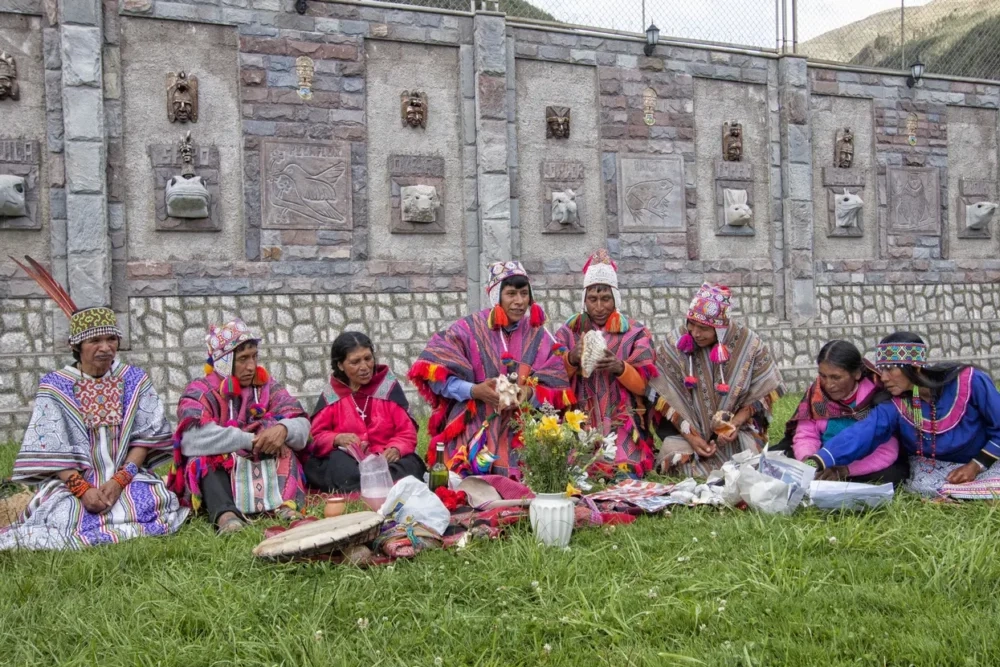
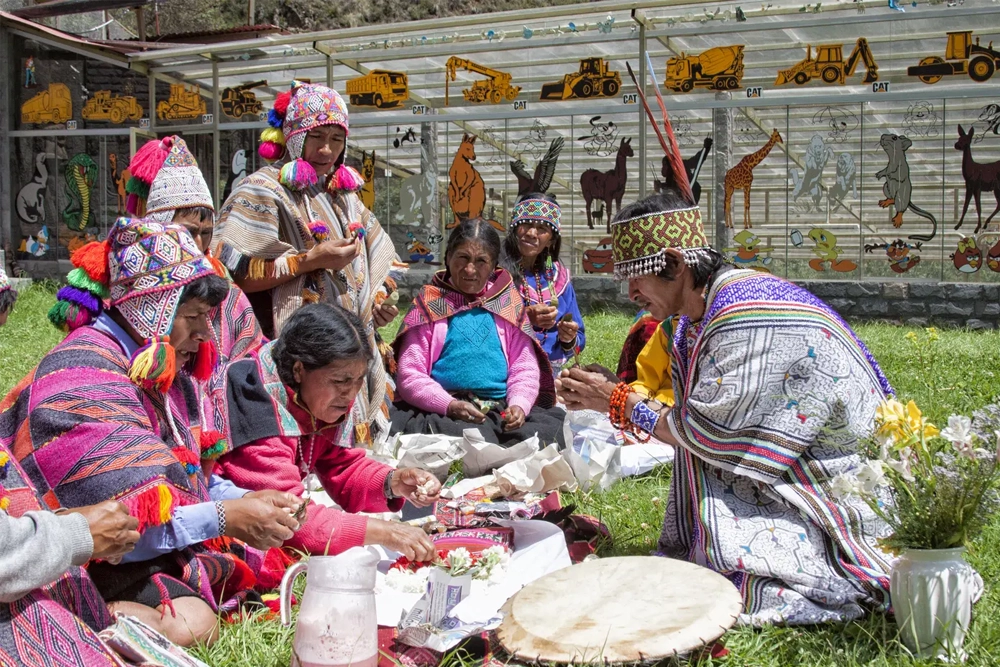
Peru Alive Tours states that ceremonies are led by a Q’ero master, an Aymara master or a Machiguenga healer, depending on the type of ceremony. Its founder and guide, Wilbert Yucra Choqqucunsa, holds official guide card No. 627, issued by DIRCETUR Cusco.
Estimated time: 1 to 3 days of research. Tools: direct questions by WhatsApp or email.
Step 5: Prepare a Reciprocal Offering
Goal: Honor ayni, the principle of reciprocity that governs the relationship with an apu.
- Ask your practitioner what the despacho will contain.
- Bring simple, natural items only if the practitioner asks.
- Carry out all packaging and waste afterward.
Estimated time: 1 hour of preparation. Tools: coca leaves, flowers, grains and sweets are common components of a despacho, prepared by the practitioner.
Common mistake: Treating the offering as a photo opportunity and filming without permission. Solution: Ask your practitioner before taking any photo or video, and accept a no without argument.
Step 6: Reflect and Give Back
Goal: Close the exchange so the experience does not stay a one-sided taking.
- Pay the practitioner fairly and directly where possible.
- Write down what you noticed within one hour.
- Share what you learned accurately with others.
Estimated time: 30 minutes. Tools: your notebook and an honest conversation with your guide.
Need help choosing the right ceremony or route for your trip?
Skip the trial and error. Peru Alive Tours designs personalized itineraries around the apus.
Contact Peru Alive Tours on WhatsApp
No commitment · We explain everything before you decide · Offices in Urubamba and Cusco
4. Key Factors to Evaluate
Quick answer: Seven factors decide whether an apu experience fits you: which apu you choose, altitude and fitness, season, practitioner tradition, group size, ceremony protocol and insurance. Evaluating these before booking prevents most disappointments among visitors to the sacred mountains Cusco is known for.
| Key Factor | Importance | How to Evaluate | Expected Impact |
|---|---|---|---|
| Which apu | High | Match the peak to your goal: Chicón for a gentle day, Salkantay or Ausangate for multi-day trekking. | Effort level fits your fitness and your intention. |
| Altitude and fitness | High | Compare each site’s elevation with your recent hiking history and ask your doctor. | Lower risk of altitude symptoms on the day. |
| Season | Medium | Dry months generally bring clearer views, while the rainy months bring green valleys and cloud. | Better visibility, or fewer crowds, depending on choice. |
| Practitioner tradition | High | Ask which tradition and community the practitioner belongs to. | A ceremony consistent with its cultural roots. |
| Group size | Medium | Ask the minimum and maximum participants and how price changes with size. | A calmer ceremony and a lower per-person cost in larger groups. |
| Ceremony protocol | High | Ask what happens step by step, what is expected of you and whether photos are allowed. | No surprises, and a respectful experience for everyone. |
| Insurance and safety | High | Read the operator’s policy and compare it with your personal travel insurance. | Coverage for trekking and other adventure activities. |
How to Prioritize Based on Your Situation
Start with altitude and insurance, because they limit everything else. First-time visitors usually do best with a low-elevation base in the Sacred Valley and a day trip toward Chicón or the Pisac peaks. Experienced trekkers can consider a multi-day Ausangate circuit, which commonly spends several days above 4,000 meters.
Insurance deserves its own sentence. Peru Alive Tours’ insurance does not cover adventure activities, so travelers who plan trekking, rafting or horseback riding should buy personal travel insurance that explicitly covers them. This is standard advice among certified operators in the Sacred Valley, and it applies to any operator you consider.
Apus Cusco Programs and Pricing at Peru Alive Tours
All prices are in USD per person. Each service requires a minimum of two or three participants, and the per-person price falls as the group grows. Ask Peru Alive Tours which apu offerings each itinerary includes [TO BE CONFIRMED BY CLIENT: apu ceremonies per program].
- 10-day Andean Mystical Pilgrimage: US$2,795 per person for 3 participants; US$2,475 per person for 4 or more.
- 15-day Spiritual Connection Tour (15 days / 14 nights): US$3,775 per person for 3 participants; US$3,395 per person for 4 or more.
- 7-day Kawsay: from US$1,375 per person, depending on group size [TO BE CONFIRMED BY CLIENT].
- Rafting and horseback riding: US$150 per person for groups of 3 or more [TO BE CONFIRMED BY CLIENT].
The cancellation policy is simple: with 30 days or fewer before the start date, there is no refund. Read it before you pay a deposit.
Need a personalized recommendation for your trip? Request a free consultation from Peru Alive Tours.
5. Traveler Scenarios in the Sacred Valley
Quick answer: Three traveler profiles show how visitors approach the apus Cusco communities honor: a first-time couple who sequence altitude carefully, a friend group who plan a trek with proper insurance, and a returning traveler who vets a practitioner. Each scenario highlights one planning lesson.
Note on these scenarios: The profiles below are illustrative composites based on common planning patterns, not verified testimonials. [TO BE CONFIRMED BY CLIENT: replace with real, linked reviews from Peru Alive Tours’ Facebook or Instagram pages.]
Scenario 1: The First-Time Couple With Five Days
Context: A couple plans a short trip centered on Machu Picchu and wants cultural context.
Challenge: They land in Cusco at about 3,400 meters and feel tired on day one. Ollantaytambo and Machu Picchu are on a tight clock.
Solution: They move straight to the Sacred Valley, rest, and view Apu Chicón from Urubamba before any ceremony. A short offering takes place on the third day.
- Acclimatized at lower elevation first.
- Named three apus before reaching Machu Picchu.
- Understood the offering before taking part.
Key lesson: Sequence matters more than speed. Apu rituals work best after the body has adjusted.
Scenario 2: Four Friends Planning a Trek
Context: Four experienced hikers want a multi-day route near Ausangate.
Challenge: Weather shifts quickly at altitude, and their home insurance excludes trekking above a set elevation.
Solution: They buy personal travel insurance that covers adventure activities, plan a flexible schedule and ask their guide to include a brief offering at a pass.
- Insurance covered trekking, confirmed in writing.
- Schedule allowed weather delays without stress.
- Offering marked the pass as a pause, not a summit race.
Key lesson: An apu is honored through the way you travel, not by reaching a summit.
Scenario 3: The Returning Traveler Who Vets a Practitioner
Context: A traveler returns to Cusco wanting a deeper ceremony after a short earlier visit.
Challenge: Online listings blur traditions, and several operators use the same vocabulary for very different practices.
Solution: They ask each operator who leads the ceremony, which tradition that person represents and what the protocol is, then choose the one with specific, verifiable answers.
- Confirmed the leader’s tradition in advance.
- Received a step-by-step protocol in writing.
- Knew the group size and price before paying.
Key lesson: Specific answers signal authenticity. Vague answers signal a script.
Common mistakes observed:
- Arriving at altitude without a rest day. Solution: sleep low first.
- Booking ceremonies without asking who leads them. Solution: ask directly.
- Assuming Ausangate is every village’s main apu. Solution: ask locally.
- Skipping insurance for adventure activities. Solution: buy personal coverage.
- Photographing offerings without asking. Solution: always request permission.
Want a similar experience? Discover how Peru Alive Tours can help you.
6. Best Practices and Mistakes to Avoid
Quick answer: Respectful apus Cusco visits, like visits to any Andean sacred mountains, combine slow acclimatization, local names, permission before photos, fair payment and personal insurance. The biggest mistakes are rushing altitude, treating offerings as entertainment and confusing Andean practices with Amazonian plant medicine traditions.
What You SHOULD Do
- Greet the apu by name. Even a quiet greeting in Quechua shows intent. Ask your guide for the correct pronunciation.
- Offer coca leaves only with guidance. The k’intu has a specific form. Your practitioner will show you how to hold the leaves.
- Carry out every item you bring. Waste at high altitude decomposes slowly. Pack a bag for trash on every walk.
- Pay practitioners directly and fairly. Ask how payment reaches the community. Transparent answers are a good sign.
- Dress in layers. Temperatures swing widely between sun and shade in the highlands. Waterproof outer layers are essential in the rainy months.
- Hydrate before you feel thirsty. Dry mountain air hides fluid loss. Sip steadily during the day.
- Ask about local protocol on arrival. Communities differ. A two-minute question prevents an awkward moment.
- Keep a flexible schedule. Weather rules the mountains. A spare day absorbs delays without stress.
What You Should NOT Do
- Do not climb or sit on ceremonial stones. They are part of an active shrine. Walk around them.
- Do not treat the ceremony as a show. A practitioner is not a performer. Stay quiet during the offering.
- Do not mix traditions casually. Andean and Amazonian practices come from different regions and lineages. Ask which one you are joining.
- Do not rush the first days. Pushing altitude early is the leading cause of ruined itineraries. Schedule a rest day.
- Do not pay for vague promises. If an operator cannot explain the ceremony, keep looking.
- Do not skip insurance. Peru Alive Tours’ insurance does not cover adventure activities. Buy personal travel insurance that does.
Advanced strategy: Plan the offering for the beginning or end of a hiking day, not the middle. Practitioners often prefer calm moments, and you will concentrate better when you are neither rushing nor exhausted.
Plant medicine safety and legal note: The apus belong to the Andean highlands. Ayahuasca is an Amazonian tradition and is a separate practice. Peru Alive Tours states that its ayahuasca ceremony is led by a Kuraq Hampiq, an Amazonian healer of the Machiguenga tradition from the Machiguenga native community; “Kuraq Hampiq” is a local title for masters of higher hierarchy. Plant ceremonies carry health risks and contraindications, so consult your own doctor and ask the facilitator about screening before you decide. Peru Alive Tours presents Mick Stemborski as a Licensed Clinical Therapist (license BBH-LCPC-LIC-1103, Montana). Peru Alive does not provide legal advice. Rules on traditional plant medicines differ from country to country, so check the regulations of your home country, including what you may carry or bring back, and consult your own doctor and, if needed, a legal adviser before you travel.
Quick Checklist
- I know the names of the nearest apus.
- I have a rest day after arriving.
- I know who leads my ceremony.
- I have personal insurance for adventure activities.
- I will ask before photographing offerings.
Want expert guidance for your Sacred Valley itinerary? Request a free review from Peru Alive Tours.
7. Current Trends in Apus Cusco Tourism
Quick answer: Current trends in apu tourism favor smaller groups, community-led ceremonies, slower itineraries and transparent payment to practitioners. Travelers increasingly ask who leads a ceremony and where the money goes, which pushes Cusco operators toward clearer protocols and more honest descriptions of traditions.
Innovations in Adventure and Spiritual Tourism
Operators in Cusco now describe ceremonies in more detail before booking. Written protocols, named practitioners and stated traditions have become standard requests, and tourism industry observers note that informed travelers drive this shift. Spiritual tourism in the Andes increasingly overlaps with trekking, so a single itinerary may combine a high-altitude hike with an offering at a pass.
The protection of heritage sites also shapes travel. Machu Picchu, inscribed by UNESCO as a World Heritage property, uses timed entry and capacity management, and travelers should check current rules before they build a schedule. You can read the official description at the UNESCO World Heritage Centre page for Machu Picchu. Peru’s national tourism ministry publishes official guidance through MINCETUR.
Market Evolution in Cusco and the Sacred Valley
The Sacred Valley has moved from a day-trip corridor to a destination where travelers stay several nights. Urubamba, at a lower elevation than Cusco, benefits directly because acclimatization-minded visitors choose it as a base. Operators such as Peru Alive Tours, with offices in Urubamba and San Blas, adapt by offering itineraries that begin in the valley and reach higher sites later.
Responsible travel has also entered the conversation. UN Tourism, the global tourism body, promotes sustainability principles for destinations, which you can explore at unwto.org. Local travelers and operators apply those ideas in practical ways: carrying out waste, paying practitioners fairly and limiting group size at sensitive sites.
Short- and Medium-Term Outlook
- More questions about practitioners. Travelers will ask who leads each ceremony, and operators will answer in writing.
- Smaller groups. Quiet ceremonies are easier to protect, so many operators will cap group size.
- Longer stays in the valley. Slower schedules fit both acclimatization and cultural learning.
- Clearer separation of traditions. Andean, Aymara and Amazonian practices will be described separately, with fewer blended labels.
- Apu names move into mainstream trip planning. Expect travelers across apus Peru wide to choose routes by the mountain they wish to honor, not only by landmarks.
Strategic advice: Choose operators that publish who leads their ceremonies and how groups are priced. Specific information today predicts a respectful experience on the day.
Expected Impact in Cusco and the Sacred Valley
Greater transparency benefits communities directly. When travelers insist on named practitioners and fair payment, income reaches the people who carry the knowledge, and the tradition remains economically viable. The apus Cusco communities honor stay at the center of that exchange, which is exactly where they belong.
Ready to experience the latest in Sacred Valley tourism? Let Peru Alive Tours design your trip.
Frequently Asked Questions About the Apus
Peru Alive Tours compiled the most common questions about the apus in the Sacred Valley and Cusco:
What are the apus?
Short answer: The apus are sacred mountain spirits that Andean communities treat as protectors of people, water, animals and crops.
Each apu is a named peak with its own character and history. Families honor them with coca leaves, food and prayers, expecting protection in return. The relationship is reciprocal, which Quechua speakers call ayni.
What does apu mean in Quechua?
Short answer: In Quechua, apu means lord or master, and it is the title given to sacred mountains.
The apus meaning extends beyond the dictionary. The word historically described authority figures too, which shows how seriously Andean culture treats mountains: they hold rank, and they receive respect in return.
Which are the most important apus Cusco visitors should know?
Short answer: Ausangate, Salkantay, Chicón, Pachatusan and Veronica are among the best-known apus near Cusco.
Importance depends on location. Villages near Urubamba often name Chicón first, while communities in the southeast honor Ausangate. Ask your guide which apu the local community considers closest.
Who is Apu Ausangate and why is it sacred?
Short answer: Apu Ausangate is the glaciated peak of about 6,384 meters in southeastern Cusco and one of the region’s most revered mountains.
The Q’ero Nation lives in the highlands nearby, and the Qoyllur Rit’i pilgrimage takes place at its foot. If you want to understand the apu Ausangate tradition, plan a respectful visit and take your time at altitude.
What is the difference between an apu and Pachamama?
Short answer: Pachamama is Mother Earth, who nourishes the soil, while an apu is a specific mountain protector.
The two work together in ceremonies. A practitioner typically honors both, thanking Pachamama for the land and the apu for protection and water.
How do I make an offering to an apu?
Short answer: Make the offering with a qualified practitioner, who prepares a despacho or coca leaf k’intu and guides your role.
Do not improvise. The arrangement has meaning, and the practitioner will explain each element. Ask what you should bring, if anything, and follow instructions for quiet and timing.
How do I visit the apus Cusco offers respectfully in the Sacred Valley?
Short answer: Learn their names, ask local permission, carry out your waste and photograph nothing ceremonial without asking.
Hire a local guide who knows the community. Pay fairly, follow instructions at shrines and avoid climbing on ceremonial stones. Respect matters more than the number of sites you reach.
How does altitude affect a visit to the sacred mountains of Cusco?
Short answer: Altitude can cause soroche, with headache, fatigue and nausea, so most travelers acclimatize first.
Cusco sits at about 3,400 meters, and many apu sites are higher. Sleeping in the Sacred Valley first helps. Consult your own doctor before you travel, since symptoms and risk vary between people.
Is it worth hiring a local guide or practitioner?
Short answer: Yes, because a local guide gives context, access and protocol that you cannot get from a guidebook.
Check credentials. Peru Alive Tours’ founder and guide, Wilbert Yucra Choqqucunsa, holds official guide card No. 627 issued by DIRCETUR Cusco. Ask any operator for similar proof.
How much does a spiritual tour with apu ceremonies cost?
Short answer: Peru Alive Tours’ multi-day programs range from US$1,375 to US$3,775 per person, depending on program and group size.
The 10-day Andean Mystical Pilgrimage costs US$2,795 per person for 3 participants and US$2,475 for 4 or more. The 15-day Spiritual Connection Tour costs US$3,775 for 3 and US$3,395 for 4 or more. Kawsay starts from US$1,375 [TO BE CONFIRMED BY CLIENT].
How long does a trek around Ausangate take?
Short answer: Circuit treks around Ausangate commonly take about four to six days, depending on the route and pace.
Most of that time is spent above 4,000 meters. Confirm the itinerary with your operator and buy personal insurance that covers trekking, since Peru Alive Tours’ insurance does not cover adventure activities.
Which is better to visit: Ausangate or Salkantay?
Short answer: Neither is better; Salkantay suits travelers heading to Machu Picchu, while Ausangate suits those seeking remote highland culture.
Both are demanding at altitude. Choose by your goal, your fitness and your schedule. A guide can match the route to your experience level.
Is ayahuasca part of the apu tradition?
Short answer: No. Ayahuasca is an Amazonian tradition, separate from the Andean practices honoring the apus.
Peru Alive Tours states that its ayahuasca ceremony is led by a Kuraq Hampiq, a Machiguenga healer. Consult your own doctor before any plant ceremony. Peru Alive does not provide legal advice, so check your home country’s regulations.
What is Peru Alive Tours’ cancellation policy?
Short answer: With 30 days or fewer before the start date, there is no refund.
Plan your dates carefully and ask about the rest of the policy before paying a deposit. Contact the team by WhatsApp or at info@perualive.com for details.
Don’t see your question here?
The Peru Alive Tours team is ready to answer your specific questions.
Message Peru Alive Tours on WhatsApp
We explain everything before you decide · Offices in Urubamba and Cusco
Common Voice Search Queries
Hey Google, what are the sacred mountains Cusco is famous for called?
Quick answer: The sacred mountains near Cusco are called apus. The best known are Ausangate, Salkantay, Chicón, Pachatusan and Veronica, and each community honors its closest peaks first.
Ask a local guide which apu is closest to where you are staying. The answer changes between villages and often leads to a story.
What does apu mean?
Quick answer: Apu is a Quechua word meaning lord or master. In Andean belief, it names a sacred mountain spirit that protects nearby communities, water sources, animals and harvests.
The title shows respect. Families speak to apus as they would to a respected elder.
Where can I see the apus in the Sacred Valley?
Quick answer: You can see Apu Chicón from Urubamba, Pitusiray and Sawasiray from the Pisac side, and Salkantay and Veronica along the approaches to Machu Picchu. Clear mornings give the best views.
Peru Alive Tours is based in Urubamba, so Chicón is a daily presence for the team.
How high is Cusco compared to the Sacred Valley?
Quick answer: Cusco sits at about 3,400 meters above sea level. The Sacred Valley is roughly 600 meters lower, which is why many travelers sleep there first to acclimatize.
Consult your own doctor before you travel if you have any health concerns about altitude.
Can I join a ceremony for the apus Cusco has near me?
Quick answer: Yes, travelers can join offerings to the apus through qualified local practitioners. Ask who leads the ceremony, which tradition they represent and what protocol they follow before you book.
Peru Alive Tours arranges ceremonies led by a Q’ero master, an Aymara master or a Machiguenga healer, depending on the ceremony. Follow its Instagram or YouTube channel to see its work.
Conclusion: Your Next Step
The Smithsonian’s National Museum of the American Indian offers further reading on Andean cultures, and UNESCO documents the heritage you will walk through. The mountains themselves teach the rest, if you arrive rested, curious and willing to listen.
Knowing the apus changes the trip. Peaks stop being a backdrop and become a conversation with people who have kept it going for centuries. A good ceremony works like a handshake: brief, mutual and meaningful when both sides mean it.
Choose a practitioner you can question, a route that matches your body and a schedule with room to breathe. Then contact Peru Alive Tours to turn that outline into a plan.
Recommended action for today: Send Peru Alive Tours your dates and ask which apu fits.
The apus Cusco honors remain central to Andean life, and Peru Alive Tours designs itineraries that respect that fact. Your apus Cusco journey starts with one honest question to a local team, and the answer shapes everything that follows.
Ready to Take the Next Step?
Peru Alive Tours operates from offices in Urubamba and San Blas (Cusco), with a team of local Sacred Valley specialists ready to design your experience. Reach out today and receive a personalized itinerary tailored to your interests and schedule.
Start Your Sacred Valley Journey with Peru Alive Tours
Our local team will help you plan the right experience from Cusco or Urubamba.
Chat with Peru Alive Tours on WhatsApp
No commitment · We explain everything before you decide · Offices in Urubamba and Cusco
+51 999 878 807 · info@perualive.com · www.perualive.com