Executive Summary
Quick answer: A first time ayahuasca ceremony is an overnight session in which a trained healer serves a plant brew and sings protective songs. Effects last several hours and often include visions, emotional release and purging. Peru Alive Tours prepares beginners with screening, herbal teas, guidance and a light breakfast at dawn.
Key takeaways:
- Screen your health and medications with a doctor before booking
- Choose a facilitator by lineage, safety protocol and group size
- Expect a night-long session, not a short tour activity
- Purging and strong emotions are common and not a failure
- Plan rest and integration time after the ceremony
Article data:
- Read time: 28 minutes
- Level: Beginner
- Verified by Peru Alive Tours, Sacred Valley specialists
- Based on operator experience and authoritative public sources
You have read the stories, watched the documentaries and still cannot tell what actually happens in the room. That gap between curiosity and clear information is where most beginners feel anxious. This guide to a first time ayahuasca ceremony closes that gap with concrete detail on preparation, the night itself and the days after.
Ayahuasca is a serious Amazonian plant medicine, not a tourist activity. Experienced Sacred Valley operators report that travelers who prepare for several days arrive calmer and cope better with intense moments. You will learn how to screen your health, choose a facilitator, read a ceremony from start to finish and plan integration. Keep reading, then message the Peru Alive Tours team with any question that remains.
What Is a First Time Ayahuasca Ceremony? Definition and Context
Quick answer: A first time ayahuasca ceremony is a guided, usually overnight session in which a participant drinks ayahuasca, a brew of the Banisteriopsis caapi vine and chacruna leaves, under the supervision of a traditional healer. It combines songs, silence, personal reflection and physical purging, and it is rooted in Amazonian tradition.
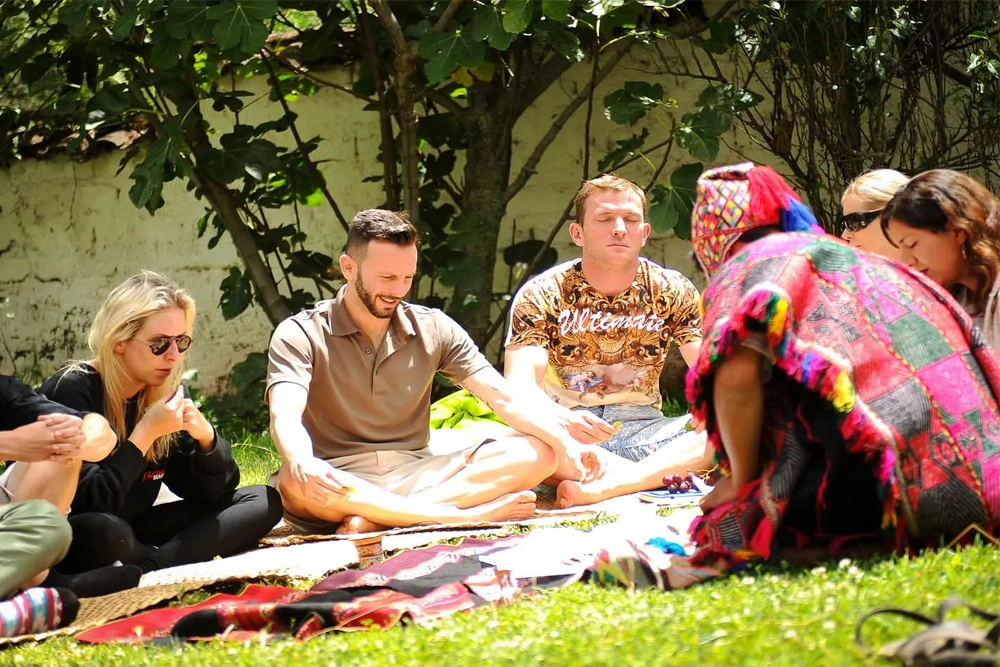
A first ayahuasca experience is a type of plant-medicine ceremony oriented toward personal healing and self-inquiry. It differs from a recreational event by its structure: a defined opening, a trained leader, support staff and a closing at dawn. Participants stay seated or lying on a mat, usually with a bucket and a blanket nearby.
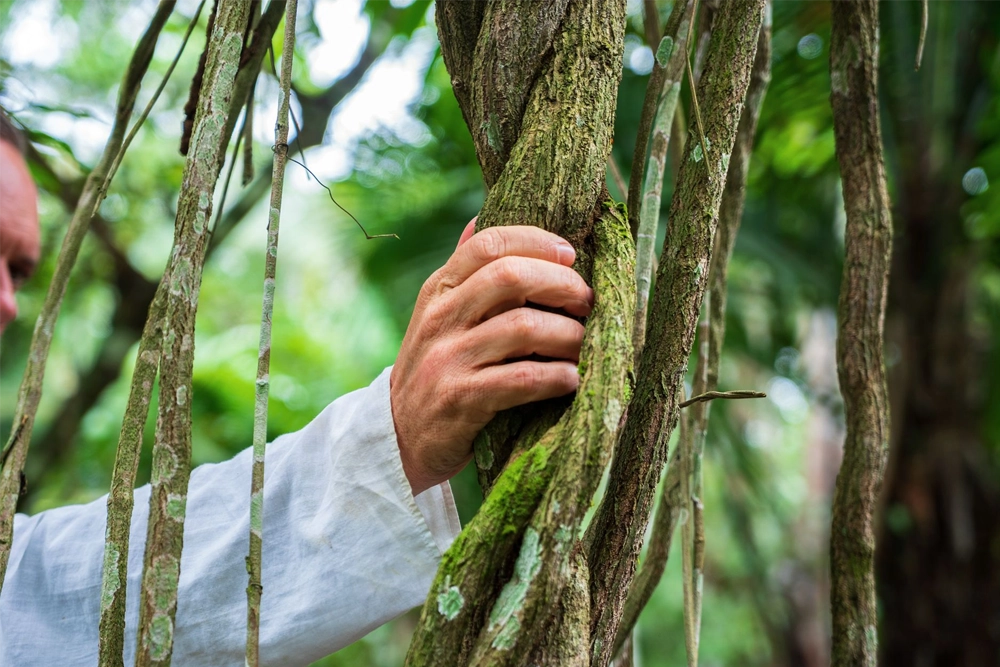
The brew combines the Banisteriopsis caapi vine with the leaves of the chacruna plant. The vine contains compounds that allow the leaf alkaloid to act when taken by mouth. That pharmacology is the reason medication screening matters so much. Certain antidepressants and other drugs can interact dangerously with the brew.
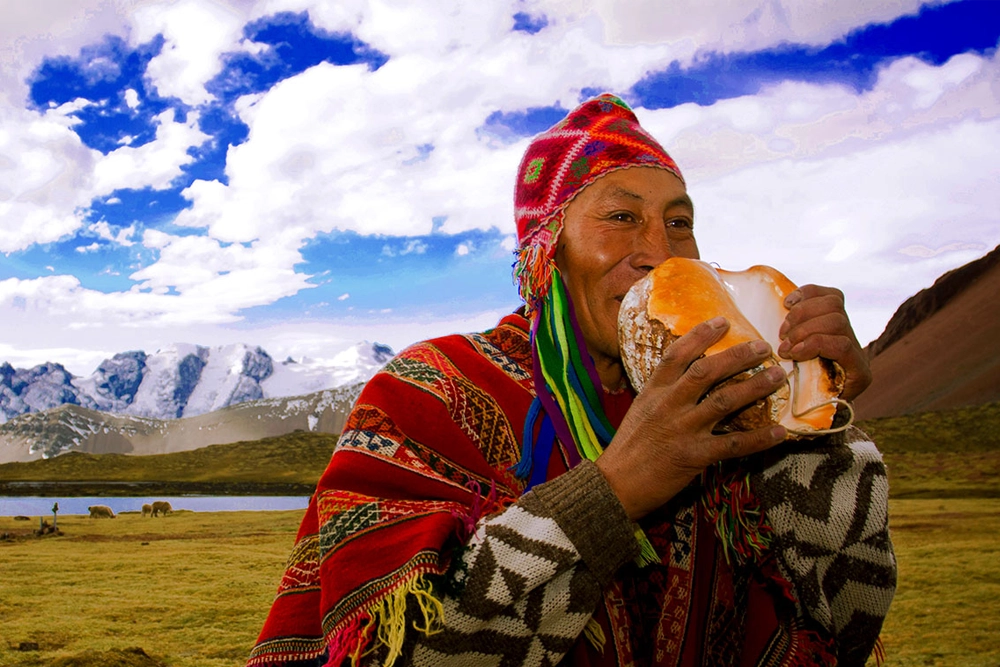
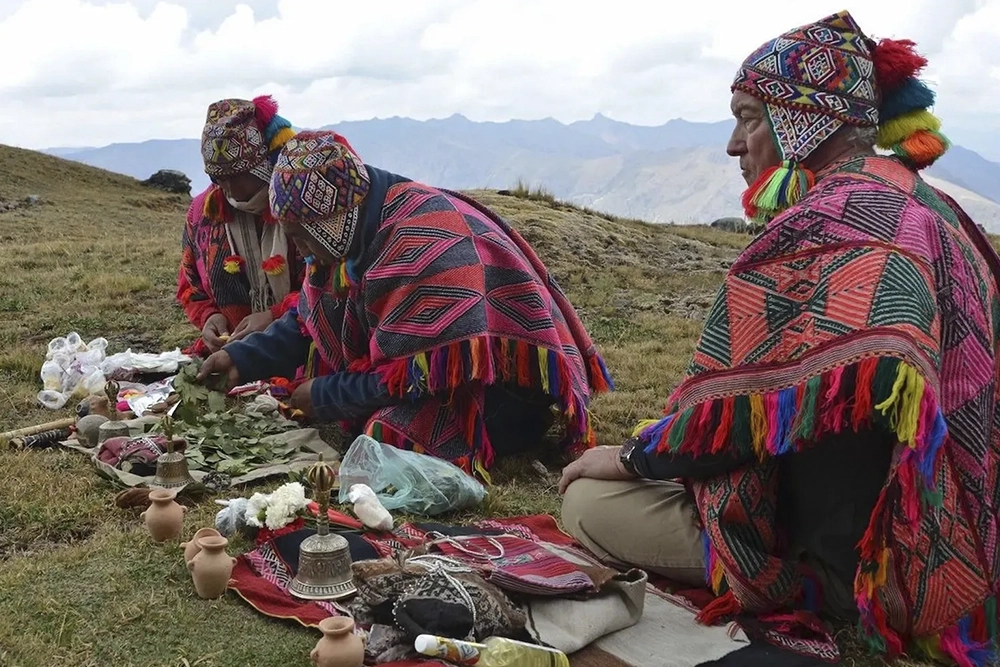
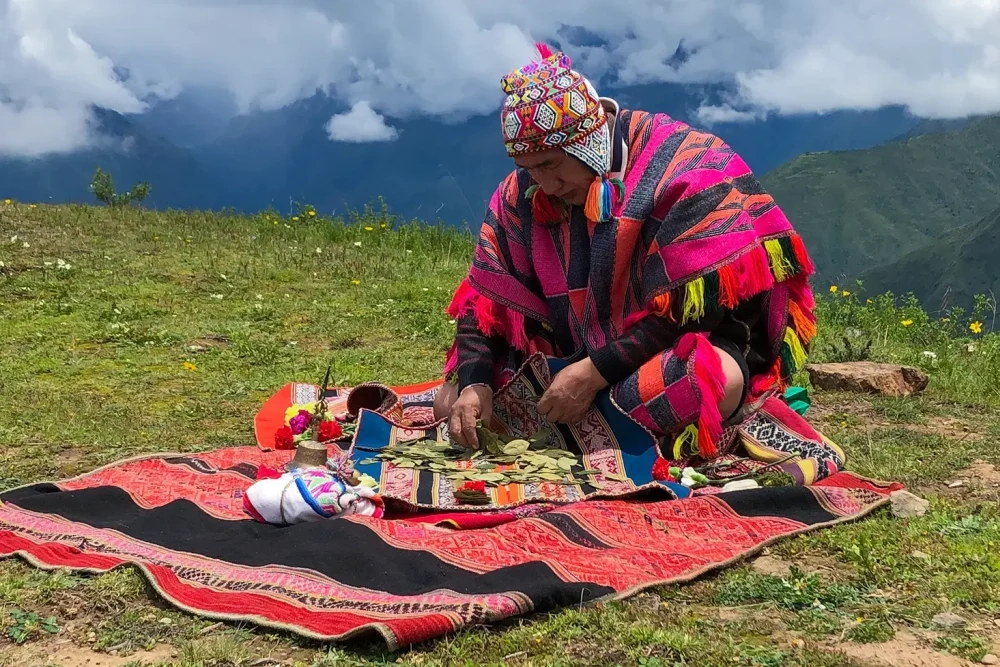
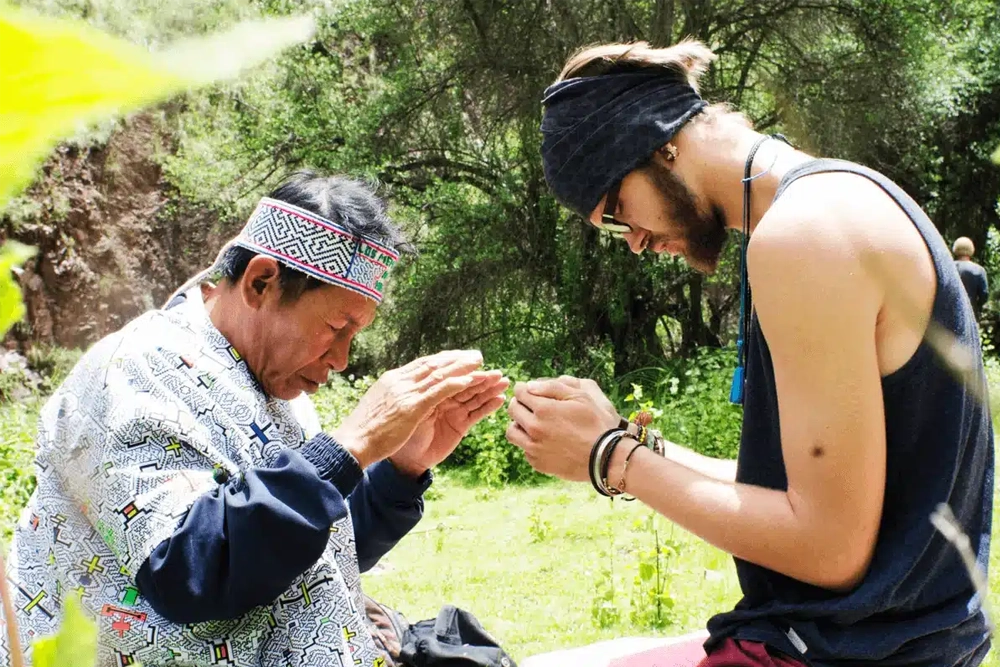
The tradition belongs to the Amazon basin, not to the Andes. Peru Alive Tours describes it that way on purpose. At Peru Alive, the ayahuasca ceremony is led by a Kuraq Hampiq, an Amazonian healer of the Machiguenga tradition from the Machiguenga native community. Kuraq Hampiq is a local title for masters of higher hierarchy.
Historical Background
Indigenous Amazonian peoples used ayahuasca for generations as a medicine for the body, the community and the spirit. Knowledge passed from master to apprentice through long periods of diet, song learning and practice. Over the past decade, international interest has grown quickly, and Peru has become one of the main destinations for people seeking the ceremony.
Think of the tradition as a language. A tourist can learn a few phrases, but a speaker raised inside it understands tone, silence and context. That is why lineage matters when you pick a facilitator.
Why It Matters Today
More beginners now arrive with serious questions about safety, ethics and mental health. Sound operators respond with screening forms, small groups and clear communication. Cusco and the Sacred Valley act as the logistical base because travelers can acclimatize, meet the team in person and travel onward with support.
Most beginners miss one point: the first time ayahuasca ceremony is the middle of the process, not the whole of it. Preparation before and integration after carry as much weight as the night itself. Operators who skip either stage leave participants alone at the moments they need guidance most.
The Sacred Valley and Cusco Context
Peru Alive Tours operates from Urubamba and San Blas in Cusco, with its main office at Av. Vilcanota N°154, Urubamba. Wilbert Yucra Choqqucunsa, founder and guide, holds official guide card No. 627 issued by DIRCETUR Cusco. Local operators coordinate arrival, lodging and ceremony logistics so that travelers do not manage them alone at night.
Altitude shapes your plan. Cusco sits at roughly 3,400 meters above sea level, while Urubamba is lower in the valley. Soroche, or altitude sickness, can overlap with ceremony symptoms such as nausea and dizziness. Arrive with at least two quiet days before your first time ayahuasca ceremony.
Key fact: Experienced facilitators confirm that medication interactions, not the plant alone, create the most serious preventable risks for a first time ayahuasca ceremony. Medical screening must happen before travel, not on arrival.
Want to explore how a first time ayahuasca ceremony fits your trip? Check the FAQ section or ask Peru Alive Tours on WhatsApp.
2. Proven Benefits of Ayahuasca for Beginners
Quick answer: Participants in an ayahuasca ceremony for beginners commonly describe emotional release, clearer self-reflection, a sense of connection and a stronger commitment to change habits. These are reported experiences, not medical outcomes, and ayahuasca does not replace professional treatment for any condition.
Benefits of a first time ayahuasca ceremony vary from person to person, and no facilitator can promise a result. What follows reflects what travelers and operators commonly report. Treat these as possibilities, not guarantees, and never as a substitute for care from a licensed professional.
1. Emotional Release
Impact: Many participants describe crying, laughing or long-held tension leaving the body during the night. Experienced operators report that this release often surprises beginners, because it arrives without a clear trigger.
Practical example: At a first time ayahuasca ceremony in the Sacred Valley, a traveler resting on a mat may cry for an hour, then feel calm and light before dawn.
2. Clarity About Personal Patterns
Impact: Reflection often turns toward relationships, work and habits. Participants frequently report seeing familiar patterns from a new angle.
Practical example: After a first time ayahuasca ceremony, a participant might write down three decisions they had avoided for months and discuss them with the facilitator.
3. A Structured Setting for Inner Work
Impact: A first time ayahuasca ceremony offers a defined container: songs, silence and supervision. That structure helps people stay with difficult feelings instead of fleeing them.
Practical example: The healer sings a specific song when a participant struggles, and the support team checks on people throughout the night.
4. Connection With Nature and Culture
Impact: Participants often describe a deeper respect for plants, land and the Indigenous peoples who protect this knowledge.
Practical example: Travelers who spend time in Urubamba before the ceremony learn how Andean Pachamama traditions and Amazonian practices differ.
5. Motivation to Change Habits
Impact: The days after a ceremony often bring a strong urge to rest, eat lighter food and reduce screens. Operators observe that this window supports new routines.
Practical example: A beginner might plan a quiet walk along the Urubamba River the next afternoon.
6. Community and Shared Experience
Impact: Sitting in a small group builds trust quickly. Participants often keep in touch with the people who shared the night.
Practical example: Group sharing circles the next morning let people hear how others experienced the same hours.
7. Expert Insight: The Value of Integration
Most people expect the benefit to come from the visions. Experienced facilitators say it comes from what you do afterward. Journaling, conversations with trained listeners and small daily changes convert a vivid night into lasting results. Without integration, the memory fades like a dream that nobody wrote down.
Verified data: Peru Alive Tours includes various herbal teas before the ceremony and a light breakfast at dawn. Lunch and dinner on the following day are not included.
Want to maximize these benefits on your trip? Let Peru Alive Tours plan your experience.
3. Step-by-Step Guide to Your First Ceremony
Quick answer: The six steps of preparing for a first time ayahuasca ceremony are: 1. clarify your intention, 2. complete a medical and medication review, 3. choose an authentic facilitator, 4. prepare your body and schedule, 5. take part in the ceremony, 6. rest and integrate afterward.
Step 1: Clarify Your Intention
Goal: Know why you are going to your first time ayahuasca ceremony, so the night has direction.
- Write down what you hope to understand
- Separate curiosity from a need for healing
- Share your intention with the facilitator
Estimated time: One evening. Tools: A notebook and a quiet hour.
Step 2: Complete a Medical and Medication Review
Goal: Remove avoidable health risks before you travel.
- Book an appointment with your own doctor
- List every medication and supplement you take
- Disclose heart, mental health and pregnancy history honestly
Estimated time: One to two weeks before travel. Tools: Your doctor and a written medication list.
Expert tip: Some antidepressants and other medications interact with ayahuasca, and stopping them without medical supervision can be dangerous. Never change a prescription on your own. Ask your doctor first, and share the answer with Peru Alive Tours.
Step 3: Choose an Authentic Facilitator
Goal: Place your safety in experienced hands.
- Ask who leads the ceremony and from which tradition
- Ask how many people attend and how many assistants work
- Ask what happens in a medical emergency
Estimated time: Two to three days of research. Tools: Written questions and direct conversation.
At Peru Alive, a Kuraq Hampiq of the Machiguenga tradition leads the ayahuasca ceremony, including any first time ayahuasca ceremony. Other ceremonies are led by a Q’ero master, an Aymara master or a Machiguenga healer, depending on the type.
Step 4: Prepare Your Body and Your Schedule
Goal: Arrive at your first time ayahuasca ceremony rested, hydrated and unhurried.
- Eat lighter meals in the days before
- Avoid alcohol and recreational drugs
- Keep the next day completely free
Estimated time: Three to five days. Tools: Your facilitator’s preparation guidelines.
Expert tip: Spend two nights at lower altitude in the Sacred Valley before the ceremony. Acclimatization reduces the chance that soroche symptoms mix with ceremony effects and confuse your experience.
Step 5: Take Part in the Ceremony
Goal: Stay present, safe and respectful through the night.
- Arrive on time and follow the leader’s instructions
- Stay on your mat unless an assistant helps you
- Ask for help whenever you feel unsure
Estimated time: One full night, ending at dawn. Tools: Comfortable clothes, a blanket and a water bottle.
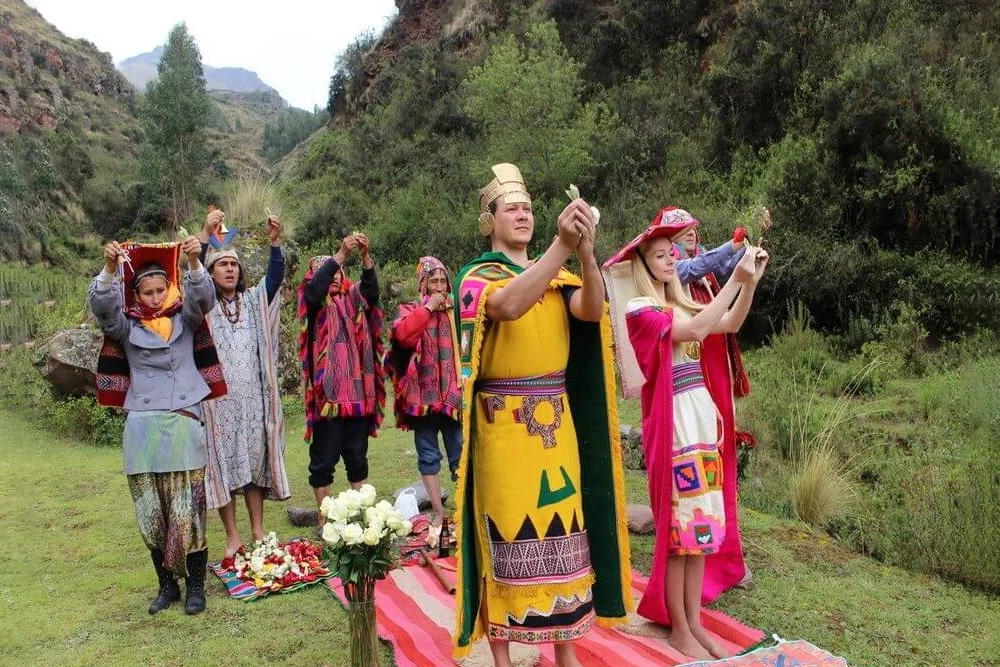
The night of a first time ayahuasca ceremony usually follows a clear sequence. The healer opens the space, participants receive the brew one at a time, and songs begin as effects develop. Assistants watch the room, and a light breakfast closes the session at dawn.
Step 6: Rest and Integrate
Goal: Turn your first time ayahuasca ceremony into lasting insight.
- Sleep and eat lightly after the ceremony
- Write down what you remember within a day
- Talk with someone trained to listen
Estimated time: At least two days. Tools: A journal and, if needed, a licensed mental health professional at home.
Common mistake: Booking a ceremony the night before a flight or a Machu Picchu entry. Fatigue and disorientation can last into the next day. Solution: Leave at least one free day after your ceremony.
Need help choosing the right ceremony for your trip?
Skip the guesswork. Peru Alive Tours explains the process before you decide.
Contact Peru Alive Tours on WhatsApp
We explain everything before you decide · Offices in Urubamba & Cusco
4. Key Factors to Evaluate Before You Book
Quick answer: Seven factors decide whether a first time ayahuasca ceremony is safe and worthwhile: the facilitator’s lineage, health screening, group size, support staff, ceremony setting, post-ceremony care and transparent pricing. Compare operators on these points before you compare photos or reviews.
Beginners often compare a first time ayahuasca ceremony by price or by atmosphere. Those are poor starting points. Safety and lineage come first, because a mistake in either cannot be undone on the night.
| Key Factor | Importance | How to Evaluate | Expected Impact |
|---|---|---|---|
| Facilitator lineage | Critical | Ask who leads, which tradition and which community | Clear accountability and cultural respect |
| Health screening | Critical | Check for a written medical and medication questionnaire | Fewer preventable medical risks |
| Group size | High | Ask the number of participants and the number of assistants | More individual attention during the night |
| Support staff | High | Ask who stays awake and who responds to emergencies | Faster help when someone struggles |
| Setting and logistics | Medium | Ask about transport, bathrooms, warmth and sleeping arrangements | Greater comfort and fewer distractions |
| Aftercare and integration | High | Ask what happens at dawn and during the following days | Smoother recovery and clearer insights |
| Price transparency | Medium | Ask what is included, per person, and for which group size | No surprises at payment or arrival |
5. Traveler Profiles in the Sacred Valley
Quick answer: Three common traveler profiles show how a beginner ayahuasca ceremony works in practice: a solo traveler seeking reflection, a couple with limited time, and a medication-dependent traveler who needs medical clearance first. These are illustrative profiles based on typical situations, not individual testimonials.
The profiles below combine situations that Sacred Valley operators see often before a first time ayahuasca ceremony. They are composites, written to illustrate decisions, and they do not quote real guests or invent results.
Profile 1: The Solo Traveler Seeking Reflection
Context: A traveler arrives in Cusco alone after a career change and wants space to think before a first time ayahuasca ceremony.
Challenge: Nervousness about being the only participant without a companion, plus mild soroche in the first days.
Solution: The traveler spends two nights in Urubamba, speaks with the team before booking and joins a small group.
Results:
- Altitude symptoms settled before the ceremony
- Questions answered in advance by the team
- A free day followed the ceremony
Key lesson: Arriving early at lower altitude removes one stress variable, so the mind can focus on the ceremony.
Profile 2: The Couple With Limited Time
Context: Two travelers have nine days in Peru and want a first time ayahuasca ceremony plus Machu Picchu.
Challenge: A tight schedule leaves almost no rest after the ceremony.
Solution: They place the ceremony early in the trip and visit Machu Picchu several days later.
Results:
- Ceremony and Machu Picchu no longer competed
- Recovery time protected both experiences
- Both partners shared notes during integration
Key lesson: Sequence matters. A first time ayahuasca ceremony placed early leaves the rest of the itinerary calm and flexible.
Profile 3: The Traveler Who Takes Regular Medication
Context: A traveler takes a daily prescription and feels unsure whether to join a first time ayahuasca ceremony.
Challenge: Some medications interact dangerously with ayahuasca, and the traveler cannot judge the risk alone.
Solution: The traveler shares the medication list with a doctor, receives written advice and tells Peru Alive Tours before booking.
Results:
- Decision made with medical advice, not guesswork
- Team informed before arrival
- Booking postponed or confirmed on solid information
Key lesson: A respectful operator will accept a postponed booking over a risky one, and so should you.
Common mistakes observed:
- Hiding medication use. Disclose everything to your doctor and the team.
- Booking the cheapest option. Compare lineage and safety first.
- Skipping rest days. Schedule a free day afterward.
- Expecting a fixed result. Enter without a script.
- Ignoring integration. Plan journaling and one conversation.
Want a similar experience? Discover how Peru Alive Tours can help you.
6. Best Practices and Mistakes to Avoid
Quick answer: The best ayahuasca first time tips are to disclose your health history, arrive acclimatized, follow the facilitator’s instructions, release expectations and plan integration. The most harmful mistakes are mixing substances, hiding medication, choosing by price alone and leaving no recovery time.
What You SHOULD Do
- Tell the truth on every form. Medical honesty protects you, and facilitators cannot protect you from what they do not know.
- Speak with the facilitator beforehand. A short conversation reveals tone, experience and openness to questions.
- Acclimatize first. Two nights in the Sacred Valley reduce altitude symptoms.
- Wear loose, warm clothing. Nights in the Andes turn cold, and comfort helps you stay settled.
- Bring a water bottle and a small towel. Purging and sweating are common.
- Stay on your mat. Ask an assistant for help when you need the bathroom.
- Accept whatever arrives. Resisting an experience often makes it harder than allowing it.
- Write within a day. Memory fades quickly, so record images and feelings early.
What You Should NOT Do
- Do not mix substances. Alcohol and recreational drugs add risk and cloud the experience. Stay clear in the days before.
- Do not stop prescribed medication on your own. Withdrawal can be dangerous. Ask your doctor.
- Do not choose only by price. Low cost can signal weak safety. Compare staff, group size and screening.
- Do not film or leave the space. Recording disturbs others, and wandering at night is unsafe. Follow the rules of the circle.
- Do not book adjacent to a flight. Fatigue after a first time ayahuasca ceremony peaks the next day. Leave a free day.
- Do not treat it as a cure. Ayahuasca does not replace therapy or medicine. Keep your professional support.
Advanced strategy (Level 3): Prepare your integration contacts before you leave home. Identify one friend or licensed counselor who agrees to listen without advising. Participants who arrange this early often find the days after a first time ayahuasca ceremony less isolating, particularly when they travel onward to Machu Picchu or Lake Titicaca.
Quick Checklist
- Doctor consulted about health and medication
- Facilitator and lineage confirmed in writing
- Two nights at lower altitude planned
- A free day booked after the ceremony
- Integration contact arranged at home
Peru Alive Tours does not cover adventure activities with its insurance. If you combine your ceremony with rafting, horseback riding or similar activities, buy personal travel insurance that covers them. Peru Alive also notes that rules on traditional plant medicines differ by country, so check the regulations of your home country, including what you may carry or bring back. Peru Alive does not provide legal advice.
Want expert guidance for your Sacred Valley itinerary? Request a free review from Peru Alive Tours.
7. Current Trends in Ayahuasca Tourism
Quick answer: Current ayahuasca tourism in Peru moves toward smaller groups, written health screening, cultural respect for Indigenous lineages and structured integration support. Travelers increasingly ask who leads the ceremony and where that person’s tradition comes from before they ask about price.
Innovations in Spiritual Tourism
Operators currently publish clearer information about leadership, safety and what is included. Travelers compare these details across several operators before booking a first time ayahuasca ceremony, and they arrive with more questions than a decade ago. The questions are usually good ones: who trained the leader, how many people attend and what happens if someone becomes unwell.
Another shift concerns integration. Many travelers now want a plan for the days after the ceremony, not only a plan for the night. Programs that combine a first time ayahuasca ceremony with quiet time in the Urubamba valley respond to that demand directly.
Market Evolution in Cusco and the Sacred Valley
Local analyses indicate that the Cusco region attracts travelers who combine Machu Picchu, the Sacred Valley and a first time ayahuasca ceremony in one journey. Peru Alive Tours adapts by offering programs that pair ceremonies with cultural visits and by explaining each service in advance. Discussion about sustainability and respect for Indigenous communities has also grown, and responsible operators address it openly.
UNESCO recognizes Machu Picchu as a World Heritage site, and Peru’s tourism ministry provides general traveler information through MINCETUR. The World Tourism Organization publishes broader guidance on responsible travel.
Short- and Medium-Term Outlook
- Travelers will expect written health screening as a standard step.
- Small groups will keep gaining preference over large gatherings.
- Operators will explain lineage and leadership more openly.
- Integration support will become part of the package, not an extra.
- Travelers who ask hard questions early will make better choices, so operators who welcome those questions will earn lasting trust.
Strategic advice: Send your questions in writing before you pay. Compare the answers across operators and choose the one that responds clearly and without pressure.
Expected Impact in Cusco and the Sacred Valley
Higher traveler expectations raise standards across the region. Operators that screen, explain and follow up carefully stand out, while those that rely on vague promises lose credibility. For the traveler, this means better information and a stronger basis for choosing a first time ayahuasca ceremony.
Ready to plan with a team that explains every step? Let Peru Alive Tours design your trip.
Frequently Asked Questions
Peru Alive Tours compiled the most common questions about a first time ayahuasca ceremony in the Sacred Valley and Cusco:
What is a first time ayahuasca ceremony?
Short answer: It is a guided overnight session where a trained healer serves a plant brew and sings protective songs.
The brew comes from the Banisteriopsis caapi vine and chacruna leaves. Participants sit or lie on mats, receive the brew one at a time and stay in the circle until dawn. At Peru Alive, a Kuraq Hampiq of the Machiguenga tradition leads the ceremony, supported by assistants who watch over participants.
What is ayahuasca made of?
Short answer: Ayahuasca is a brew made from the Banisteriopsis caapi vine and, usually, the leaves of the chacruna plant.
Healers cook the plants slowly and prepare the brew with care and prayer. The vine allows the leaf compounds to act when swallowed. That interaction explains why certain medications create risk and why medical screening comes before any booking.
What happens during an ayahuasca ceremony?
Short answer: The healer opens the space, participants drink the brew, songs begin and the group stays together until dawn.
Effects usually begin within an hour and continue for several hours. Participants commonly report visions, strong emotions, body sensations and purging. Assistants help people reach the bathroom or a bucket and check on anyone who struggles. A light breakfast closes the session.
Who leads the ayahuasca ceremony at Peru Alive Tours?
Short answer: A Kuraq Hampiq, an Amazonian healer of the Machiguenga tradition, leads the ceremony.
The healer comes from the Machiguenga native community. Kuraq Hampiq is a local title for masters of higher hierarchy. Ayahuasca is an Amazonian tradition, so Peru Alive describes it as Amazonian and not Andean. Wilbert Yucra Choqqucunsa, founder and guide, holds official guide card No. 627 from DIRCETUR Cusco.
How do I prepare for my first time ayahuasca ceremony?
Short answer: Consult your doctor, list your medications, eat lightly, avoid alcohol and drugs, and arrive acclimatized.
Write your intention in a notebook and share it with the facilitator. Keep the following day free. Peru Alive Tours serves various herbal teas before the first time ayahuasca ceremony, and the team explains the steps in advance.
How do I know if ayahuasca is safe for me?
Short answer: Only your own doctor can judge that, based on your health history and medication.
Heart conditions, certain medications, pregnancy and some mental health histories can make participation unsafe. Disclose everything honestly to your doctor and to the team. Peru Alive Tours does not give medical advice, and no one should stop a prescription without medical supervision.
How do I choose a trustworthy ayahuasca facilitator?
Short answer: Ask who leads, which tradition they belong to, how many people attend and how emergencies are handled.
Request written answers. Look for medical screening, trained assistants and clear information on what is included. Be cautious of operators who promise cures, pressure you to decide quickly or avoid direct questions.
Is it normal to vomit during a first time ayahuasca ceremony?
Short answer: Yes, purging through vomiting is common and traditions often treat it as part of the process.
Not everyone purges, and purging does not measure the quality of your experience. Assistants provide buckets and help you move safely. Contact the staff if symptoms feel worrying, and tell them right away about severe discomfort.
Is ayahuasca worth it for a beginner?
Short answer: That depends on your health, your reasons and your readiness for an intense overnight experience.
Participants who prepare carefully, choose a reputable facilitator and plan integration tend to describe the experience as meaningful. It is not a quick fix, and it is not suitable for everyone. If you feel unsure, wait and talk with the team.
Why do I need to avoid certain medications before ayahuasca?
Short answer: Some medications interact with compounds in the brew and can cause serious reactions.
Certain antidepressants are the best-known example. Never adjust a prescription yourself. Ask your doctor about interactions and give the Peru Alive Tours team your complete list so they can advise whether the ceremony is appropriate.
How much does a first time ayahuasca ceremony cost?
Short answer: The cost depends on group size and what the service includes, so request a current written quote.
Peru Alive Tours quotes prices in US dollars per person. Each service requires a minimum of two or three participants, and the per-person price is lower for larger groups. Ayahuasca and San Pedro ceremonies include various herbal teas before the ceremony and a light breakfast at dawn. They do not include lunch or dinner of the following day.
How long does an ayahuasca ceremony last?
Short answer: A ceremony usually runs through the night and closes at dawn.
Effects typically last several hours, and tiredness can continue the next day. Plan to do nothing demanding after your first time ayahuasca ceremony. Keep your schedule free and avoid early flights or strenuous excursions.
Can I do an ayahuasca ceremony in Cusco or the Sacred Valley?
Short answer: Yes, travelers book ceremonies through operators based in Cusco and Urubamba, including Peru Alive Tours.
Ayahuasca is an Amazonian tradition, and Peru Alive works with a Machiguenga healer. Peru Alive does not provide legal advice. Rules on traditional plant medicines differ from country to country, so check the regulations of your home country, including what you may carry or bring back, and consult your own doctor and, if needed, a legal adviser before you travel.
Which is better for a beginner, ayahuasca or San Pedro?
Short answer: Neither is better; they are different traditions with different formats, and the right choice depends on you.
Ayahuasca is Amazonian and usually held overnight. San Pedro, or Wachuma, is an Andean cactus tradition. Both involve health screening and trained leadership. Discuss your goals, health and comfort level with Peru Alive Tours before choosing.
What is Peru Alive’s cancellation policy?
Short answer: With 30 days or fewer before the start date, there is no refund.
Confirm your travel dates and health clearance before you pay for a first time ayahuasca ceremony. Ask the team to explain the policy in writing, together with what each service includes. Personal travel insurance can help cover unexpected changes.
Don’t see your question here?
The Peru Alive Tours team is ready to answer your specific questions.
Message Peru Alive Tours on WhatsApp
Response in under 2 hours · Offices in Urubamba & Cusco
Common Voice Search Queries
Hey Google, what should I know before my first time ayahuasca ceremony?
Quick answer: Before a first time ayahuasca ceremony, talk to your doctor about health and medications, choose a facilitator you can question openly, arrive acclimatized and keep the next day free. Ask the operator who leads the ceremony, how many assistants attend and what the plan is for emergencies.
Write your questions down and send them before you pay. A transparent operator answers them directly. If an operator avoids your questions, treat that as useful information.
Where can I find an ayahuasca ceremony near me in Cusco?
Quick answer: Several operators in Cusco and Urubamba offer ayahuasca ceremonies. Peru Alive Tours operates from offices in Urubamba and San Blas, Cusco, and a Machiguenga healer leads its ayahuasca ceremony. Contact the team to ask about dates and group sizes.
Offices sit at Av. Vilcanota N°154 and Av. La Convención N°190 in Urubamba, and Calle Carmen Alto N°197 in San Blas, Cusco. Visiting in person lets you meet the people who will care for you.
What does an ayahuasca ceremony feel like?
Quick answer: Participants describe a mix of visions, strong emotions, physical sensations and purging, with periods of calm in between. Experiences differ for every person and every ceremony, and nobody can predict yours. The facilitator and assistants stay present throughout the night.
Many people say the hardest part of a first time ayahuasca ceremony is letting go of control. Breathing slowly and staying on your mat helps. Tell an assistant if you need support, whatever the reason.
Can anyone drink ayahuasca?
Quick answer: No. People with certain heart conditions, some mental health histories, pregnancy or interacting medications should not participate without medical clearance. Only your own doctor can assess your situation, so consult one before you book.
A responsible operator will also decline or postpone participants whose answers raise concern. That refusal is a sign of care.
What do I eat before and after an ayahuasca ceremony?
Quick answer: Eat light, simple meals in the days before and avoid alcohol and recreational drugs. At Peru Alive, you receive herbal teas before the ceremony and a light breakfast at dawn. Lunch and dinner on the following day are not included.
Plan your own gentle meals for the next day and keep hydrated. Heavy food and strong stimulants rarely suit the hours after a first time ayahuasca ceremony.
Conclusion: Your Next Step
A first time ayahuasca ceremony asks for honesty, preparation and humility. Done with a lineage-based facilitator in the Sacred Valley, it can become a serious step in a longer personal journey. Machu Picchu and Cusco give the trip its setting, but the work belongs to you.
Think of a first time ayahuasca ceremony as one night inside a longer walk. The days before decide how steady you feel, and the days after decide what you keep. Peru Alive Tours supports you through both, from medical questions to integration planning.
Send your questions, your dates and your health concerns to the team now. Ask for the details in writing and take the time you need to decide.
Recommended action for today: Book a doctor visit and list your medications.
A first time ayahuasca ceremony at Peru Alive Tours is led by a Machiguenga Kuraq Hampiq, supported by a Sacred Valley team that explains each step before you decide. Contact them with your dates and questions.
Ready to Take the Next Step?
Peru Alive Tours operates from offices in Urubamba and San Blas (Cusco), with a team of local Sacred Valley specialists ready to design your experience. Reach out today and receive a personalized plan tailored to your interests and schedule.
Start Your Sacred Valley Journey with Peru Alive Tours
Our local team will help you plan the right experience from Cusco or Urubamba.
Chat with Peru Alive Tours on WhatsApp
No commitment · We explain everything before you decide · Offices in Urubamba & Cusco
+51 999 878 807 · info@perualive.com · www.perualive.com