
Quick answer: What is an icaro? An icaro is a sacred song, chant, whistle or hummed melody that an Amazonian healer sings during an ayahuasca ceremony to guide the session, protect participants and direct healing work. Peru Alive Tours organizes ayahuasca ceremonies led by a Machiguenga Kuraq Hampiq.
Key takeaways:
- An icaro is a working tool, not background music.
- Ayahuasca is an Amazonian tradition, not an Andean one.
- Each lineage sings different icaros with different methods.
- Medical screening comes before any ceremony, always.
- Ask about lineage, structure and safety before you book.
Article data:
- Read time: 30 minutes
- Level: Beginner to Intermediate
- Prepared by Peru Alive Tours, Sacred Valley specialists
- Includes links to authoritative public sources
Travelers often ask what is an icaro in an ayahuasca ceremony only after they hear one for the first time, in the dark, with no explanation. The sound can feel strange, intimate and powerful at once. Without context, many people either over-interpret it or dismiss it as background music.
Neither reading is accurate. Knowing what is an icaro solves both mistakes. An icaro is a functional part of the ceremony, and understanding its role changes how you prepare, what you ask your facilitator and how you receive the night. Amazonian healers and ethnographers describe the song as one of the main tools of the ceremony, comparable in importance to the plant medicine itself.
This guide explains the icaro meaning, the seven roles icaros play, a six-step preparation process, the factors to compare between ceremonies, and the safety questions to settle before you travel. You will also see how Peru Alive Tours, based in Urubamba and Cusco, structures its ceremonies. Read on, then message the team with your own questions.
Table of Contents
- What Is an Icaro? Definition and Context
- Seven Roles of the Icaro in an Ayahuasca Ceremony
- How to Prepare for the Icaros: Step-by-Step Guide
- Key Factors to Evaluate Before You Book
- Traveler Scenarios: How Icaros Shape the Experience
- Best Practices and Mistakes to Avoid
- Current Trends in Icaro and Ceremony Practice
- Frequently Asked Questions
- Common Voice Search Queries
- Conclusion and Next Steps
1. What Is an Icaro? Definition and Context
Quick answer: An icaro is a sacred song, chant, whistle or hummed melody that an Amazonian healer performs during an ayahuasca ceremony. The icaro guides the energy of the session, protects the group and directs healing work. Icaro meaning combines music, prayer and ritual technique within Amazonian plant medicine traditions.
Understanding what an icaro is starts with its function. An icaro is a type of ritual healing song used in Amazonian plant medicine. It differs from a devotional hymn or a playlist because the healer sings it to act on the ceremony itself, not to entertain the room. An icaro song can last a few minutes or much longer, and a single night often includes many icaros, each chosen for a specific moment, person or need.
The word itself is commonly traced to the Quechua verb ikaray, which describes blowing smoke to heal. Linguists and ethnographers connect the term to the practice of using breath and sound as a vehicle for healing intent. Across the Amazon basin, healers sing, whistle or hum icaros, and some sessions rely on the voice alone from start to finish.
Two points matter for any traveler. First, the voice carries meaning: the words, melody and rhythm each signal a purpose, whether calling, protecting, cleansing or closing. Second, the healer does not improvise freely. Experienced singers draw on a repertoire received through training and personal dedication, so the quality of an icaro tradition depends on the lineage behind it.
Historical Background of the Icaro Tradition
Ethnographic accounts describe icaros as knowledge that healers receive through a plant dieta, a period of isolation, restricted food and focused relationship with a specific plant. In many Amazonian traditions, the healer says the song comes from the plant, not from personal invention. That origin explains why healers guard their icaros and why they rarely teach them casually.
Within any icaro tradition, the song is the vehicle. Over the past decade, interest in ayahuasca ceremonies has grown well beyond the Amazon, and icaros traveled with it. Recordings now circulate widely online. An icaro, however, works like air-traffic control for a ceremony: the instructions only make sense when a trained person gives them live, to specific people, at a specific moment. A recording removes that relationship.
Why It Matters Today: What Is an Icaro for Modern Travelers?
The icaro tradition is not one tradition. Shipibo-Konibo healers of the Ucayali region are among the best-known icaro singers, and their songs are closely associated with geometric kené designs. Other Amazonian peoples sing different songs with different methods. Understanding that range prevents the common mistake of treating “ayahuasca ceremony music” as a single genre.
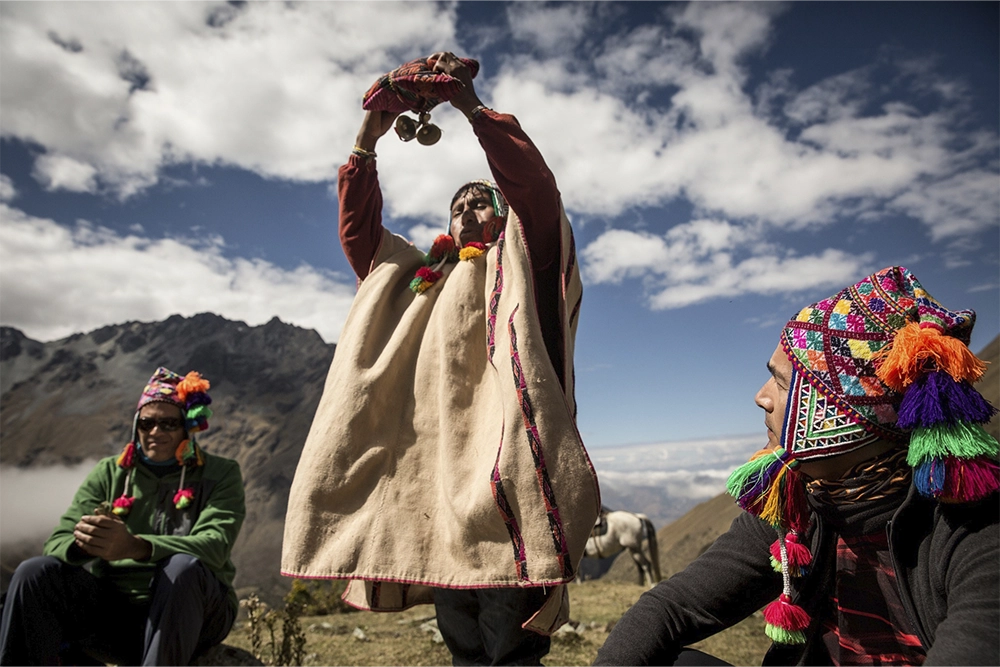
Anyone asking what is an icaro in the Peru Alive Tours context should know that the company belongs to a different lineage than the Shipibo repertoire. A Kuraq Hampiq of the Machiguenga tradition, from the Machiguenga native community, leads the ayahuasca ceremony. “Kuraq Hampiq” is a local title for masters of higher hierarchy. For the traveler, the practical insight is simple: ask any facilitator which lineage they represent, who trained them and how they structure the night.
The Sacred Valley and Cusco Context
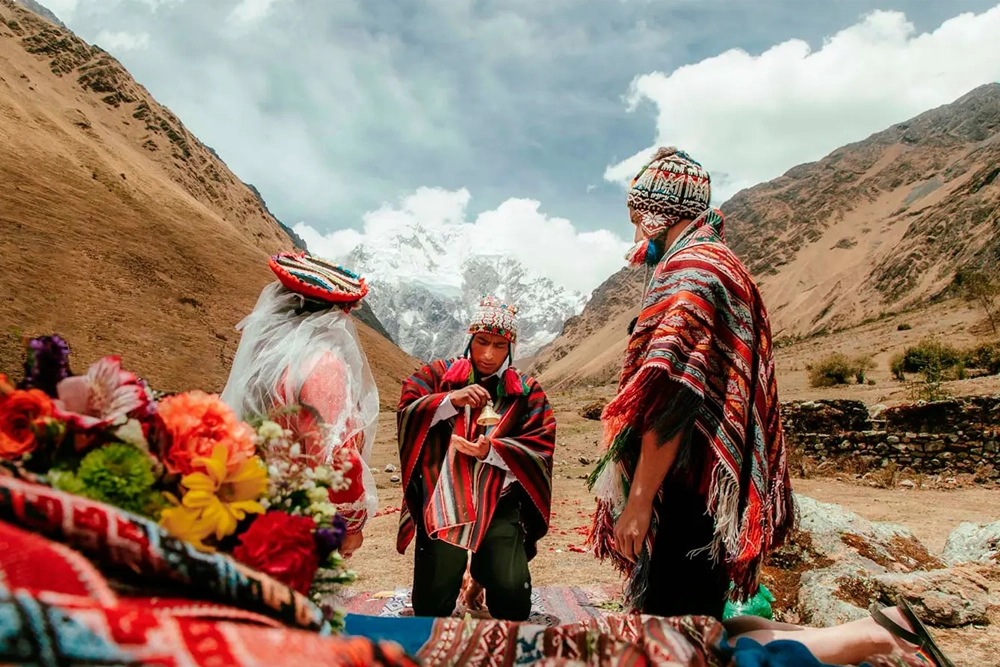
Ayahuasca is an Amazonian tradition, not an Andean one, and it is important to keep that distinction clear. The Andes have their own ceremonial practices, such as the despacho offering, coca leaf reading and limpia energy cleansing, led by Q’ero or Aymara masters. Many travelers combine Andean ceremonies in the Sacred Valley with an Amazonian ceremony, and each one follows different protocols.
Machiguenga communities live in the Amazonian lowlands of southeastern Peru, in the Urubamba River basin, the same river system that runs through the Sacred Valley. Peru Alive Tours operates from offices in Urubamba and San Blas, Cusco, and works with local healers who hold this knowledge. Cusco sits at 3,399 meters above sea level, so most travelers also plan acclimatization days before any ceremony.
Key fact: Standard practice among responsible facilitators is to explain the role of the songs, the structure of the night and the safety rules before the ceremony begins, never during it.
Want to explore how this applies to your travel plans? Check the FAQ section or ask Peru Alive Tours on WhatsApp.
2. Seven Roles of the Icaro in an Ayahuasca Ceremony
Quick answer: The icaro in an ayahuasca ceremony opens the space, guides the experience, protects the group, cleanses energy, supports emotional processing, marks transitions and carries the healer’s lineage. These seven roles explain why participants treat ayahuasca icaros songs as a core part of the work.
Understanding what is an icaro starts with its job, and the role of the icaro in an ayahuasca ceremony is practical before it is poetic. Traditional healers describe the songs as instruments with specific jobs. The seven roles below reflect how practitioners explain them, not clinical claims, and no icaro replaces medical or psychological care.
Opening and Setting the Space
Impact: The first icaros mark the start of the ceremony and define the space as ritual ground. Participants often describe a clear shift once the singing begins, and the sacred songs ayahuasca ceremonies rely on make that shift audible.
Practical example: In Amazonian practice, the healer sings an opening icaro before or as the group receives the medicine, signaling that the work has started.
Guiding the Experience
Impact: Healers use melody and rhythm to steer the intensity of the session. A calm, steady song can ground participants, while an energetic one can move stagnant states.
Practical example: A participant who feels disoriented can focus on the voice as an anchor point while the healer adjusts the song.
Protecting the Group
Impact: Traditional accounts describe protective icaros that establish a boundary around the ceremony. The healer sings them at the start and whenever the group feels vulnerable.
Practical example: Facilitators often repeat protective songs when new participants arrive late or when the mood in the room shifts.
Cleansing and Clearing Energy
Impact: Some icaros target cleansing, similar in purpose to the Andean limpia, although the methods differ. The healer may direct the song toward a specific person.
Practical example: A participant working through grief may receive a personal song while the rest of the room stays in silence.
Supporting Emotional Processing
Impact: Participants frequently report that the human voice gives them a steady reference point during intense emotional moments. Music and ritual context are widely discussed as important factors in psychedelic experiences generally.
Practical example: A traveler who cries during a gentle icaro can return to the sound of the healer’s voice and breathe with it.
Marking Transitions
Impact: Songs signal the arc of the night: opening, deepening, resolution and closure. Participants who know this structure feel less lost during long silences.
Practical example: A closing icaro tells the group the intense phase has ended, ahead of the light breakfast at dawn.
Carrying the Healer’s Lineage
Impact (expert insight): Each icaro encodes a relationship between the healer, a plant and a tradition. When a Kuraq Hampiq sings, the song carries accumulated training, and that continuity is what a traveler pays for, far more than the vocal performance itself.
Practical example: Two healers can sing for the same duration, yet the depth of an icaro tradition shows in how consistently the songs match each moment of the ceremony.
Practitioner insight: Amazonian healers traditionally describe icaros as learned through plant dietas, which means the repertoire reflects years of dedicated practice rather than performance training.
Want to understand these roles before you travel? Let Peru Alive Tours plan your experience.
3. How to Prepare for the Icaros: Step-by-Step Guide
Quick answer: To prepare for an icaro ceremony, follow six steps: learn the vocabulary, confirm the facilitator’s lineage, complete medical screening with your own doctor, prepare body and mind, set an intention without expectations, and plan your integration after the night ends.
Knowing what is an icaro before you arrive makes preparation concrete, and preparation determines how much you understand and how safely you participate. The six steps below follow the order most experienced facilitators recommend, from first research to the days after the ceremony.
Step 1: Learn the Vocabulary and the Context
Goal: Recognize what you hear, so the songs do not surprise you.
- Read about icaro meaning and the Amazonian setting.
- Learn the terms: dieta, kené, Kuraq Hampiq, limpia.
- Separate Amazonian ceremonies from Andean ones.
Estimated time: one to two hours. Tools: this guide, the Peru Alive Tours team and the authoritative sources linked below, such as the UNESCO World Heritage Centre page on Machu Picchu for regional cultural context.
Step 2: Confirm the Facilitator and the Lineage
Goal: Know who leads the ceremony and which tradition they represent.
- Ask who sings and which community they come from.
- Ask how they trained and how long they have practiced.
- Ask how the night is structured from start to finish.
Estimated time: one conversation of 20 to 30 minutes. Tools: WhatsApp, email or a phone call.
Expert tip (Level 3): A reliable facilitator answers lineage questions without hesitation and names the tradition clearly. At Peru Alive Tours, a Kuraq Hampiq of the Machiguenga tradition leads the ayahuasca ceremony, and the team states this before you book.
Step 3: Complete Medical Screening with Your Own Doctor
Goal: Rule out health risks before you travel.
- List every medication and supplement you take.
- Book an appointment with your own physician.
- Share your doctor’s feedback with the facilitator.
Estimated time: one to two weeks. Tools: your doctor and a written medication list.
Medical literature on ayahuasca flags interactions with certain medications, especially serotonergic antidepressants, and cautions people with heart conditions, a history of psychosis or bipolar disorder, or pregnancy. Peru Alive Tours does not give medical advice. Mick Stemborski, presented by the company as a Licensed Clinical Therapist (license BBH-LCPC-LIC-1103, Montana), is not a physician, and nothing in this article replaces your own doctor’s judgment.
Common mistake and solution: Travelers sometimes stop prescribed medication on their own before a ceremony. Never do this. Ask your prescribing doctor what is safe, then tell the facilitator what the doctor said.
Step 4: Prepare Body, Mind and Altitude
Goal: Arrive rested, acclimatized and ready.
- Follow the dietary guidance your facilitator sends.
- Arrive in Cusco early to adjust to altitude.
- Sleep well and reduce alcohol and stimulants.
Estimated time: several days before the ceremony. Tools: facilitator guidelines, hydration and rest.
Ayahuasca and San Pedro ceremonies with Peru Alive Tours include various herbal teas before the ceremony and a light breakfast at dawn. They do not include lunch or dinner on the following day, so plan those meals in advance.
Step 5: Set an Intention and Release Expectations About the Songs
Goal: Receive the icaros as they come, without requesting or judging them.
- Write one simple intention before the ceremony.
- Leave your phone and recording devices aside.
- Accept that the healer chooses every song.
Estimated time: 15 minutes the day before. Tools: a notebook.
Expert tip (Level 3): Many first-time participants wait for “a special song.” Experienced participants listen to the voice as a whole, including silences between songs, because the pauses belong to the structure.
Step 6: Plan Your Integration
Goal: Turn the night into lasting understanding.
- Keep the day after the ceremony free of tours.
- Write what you remember before conversations dilute it.
- Talk with your facilitator or a trusted professional.
Estimated time: one full day plus journaling over the following week. Tools: journal, rest, and support from a qualified professional if difficult material appears.
Need help choosing the right ceremony for your trip?
Skip the trial and error. Peru Alive Tours explains the lineage, the structure and the safety steps before you decide.
Contact Peru Alive Tours on WhatsApp
We explain everything before you decide · Offices in Urubamba and Cusco
4. Key Factors to Evaluate Before You Book
Quick answer: Evaluate seven factors before booking an icaro ceremony: facilitator lineage, training, medical screening, group size, explanation quality, setting and safety, and integration support. A trustworthy operator answers each factor clearly and in writing before taking any payment.
Travelers who know what is an icaro compare ceremonies more precisely. Many focus on price and photographs. The table below shifts attention to factors that affect safety and depth. Use it as a checklist when you speak with any operator, including Peru Alive Tours.
| Key Factor | Importance | How to Evaluate | Expected Impact |
|---|---|---|---|
| Facilitator lineage | Very high | Ask which community and tradition the healer belongs to and who trained them. | Clear lineage means songs and methods come from a defined tradition. |
| Training and title | High | Ask how the healer earned the title and how long they have worked. | You understand the level of experience guiding your night. |
| Medical screening | Very high | Check that the operator asks for medications and health history before booking. | Screening reduces the chance of a dangerous interaction. |
| Group size | High | Ask how many participants join and how the healer attends each one. | Smaller groups allow more individual attention. |
| Explanation of the process | High | Request a written outline covering songs, structure and rules. | You know what to expect and reduce anxiety. |
| Setting and safety | High | Ask about supervision, support staff and emergency procedures. | A prepared setting limits risk during the night. |
| Integration support | Medium | Ask what happens at dawn and during the following days. | You process the experience with guidance rather than alone. |
How to Prioritize Based on Your Situation
If you take regular medication or have a medical history, prioritize medical screening above every other factor. A beautiful setting does not offset an unscreened participant list. Speak with your doctor first, then compare operators only among those who ask the right health questions.
If you are traveling for cultural depth, prioritize lineage and training. An icaro tradition carries value in proportion to the continuity behind it. Peru Alive Tours, led in Urubamba by founder and guide Wilbert Yucra Choqqucunsa, official guide card No. 627 issued by DIRCETUR Cusco, connects travelers with a Machiguenga Kuraq Hampiq for its ayahuasca ceremony, and the team confirms details before booking. Prices are in USD per person, each service requires a minimum of two or three participants, and the per-person price falls as the group grows.
Need a personalized recommendation for your trip? Request a consultation from Peru Alive Tours.
5. Traveler Scenarios: How Icaros Shape the Experience
Quick answer: Three common traveler profiles show how understanding what an icaro is changes the experience: the anxious first-timer, the music lover who wants recordings, and the traveler who takes medication. Each scenario leads to a different preparation path.
Transparency note: The scenarios below are illustrative profiles built from questions travelers commonly ask. They are not testimonials and do not report measured results.
Scenario 1: The Anxious First-Timer
Context: A traveler in her thirties searches what is an icaro the night before booking, with strong interest in ayahuasca and little background.
Challenge: She fears that unfamiliar sounds in the dark will overwhelm her, and she cannot picture the structure of the night.
Solution: She asks the operator for a written outline, learns the basic icaro meaning and understands that songs follow a sequence: opening, deepening, closing.
What she can expect:
- A clearer picture of the night’s structure
- Less fear of the unknown before arrival
- A listening focus instead of a guessing game
Key lesson: Knowing the structure turns the voice from a source of uncertainty into a reference point.
Scenario 2: The Music Lover Who Wants Recordings
Context: A traveler who works as a musician wants to record the icaros and learn them.
Challenge: He treats the songs as a repertoire and overlooks their ritual purpose.
Solution: He reads about the dieta tradition and learns that healers receive icaros through training and relationship with plants, so copying them out of context misses their function.
What he can expect:
- Respect for the healer’s knowledge
- Attention on listening rather than capturing
- A better understanding of why the songs are guarded
Key lesson: An icaro belongs to a relationship between a healer, a plant and a lineage, so a recording captures sound but not that relationship.
Scenario 3: The Traveler on Prescribed Medication
Context: A traveler in her fifties takes a prescribed medication daily and plans a Peru trip around a ceremony.
Challenge: She does not know whether her medication affects participation.
Solution: She consults her prescribing doctor first, shares the written answer with the facilitator and accepts the decision, even if it means skipping the ceremony.
What she can expect:
- A decision based on medical advice, not enthusiasm
- Honest communication with the operator
- Alternatives such as Andean ceremonies if participation is not advisable
Key lesson: Responsible preparation includes the possibility of not participating, and a good operator supports that decision.
Common mistakes observed:
- Expecting a performance. Treat the songs as ceremonial work, not a concert.
- Skipping medical screening. Consult your doctor before booking.
- Ignoring lineage. Ask which tradition leads the ceremony.
- Planning tours the next day. Keep a full recovery day free.
- Assuming all ceremonies are alike. Compare structure, not only price.
Want a similar level of preparation? Discover how Peru Alive Tours can help you.
6. Best Practices and Mistakes to Avoid
Quick answer: The best practice for an icaro ceremony is to combine medical clearance, lineage verification and respectful listening. Avoid recording, requesting songs, stopping medication alone, and treating the ceremony as tourism. Each habit protects your safety and the healer’s tradition.
What You SHOULD Do
- Verify the lineage. Ask which community and tradition the healer represents. A clear answer signals transparency.
- Complete medical screening. Share medications and history with your doctor and the operator. This step prevents avoidable risk.
- Arrive acclimatized. Spend days in Cusco before the ceremony. Altitude fatigue clouds judgment and comfort.
- Follow dietary guidance. Respect the instructions your facilitator provides. They exist to support your safety.
- Listen without analyzing. Let the voice work without naming each song. Analysis can wait until morning.
- Ask about the structure. Request an outline of the night. Predictability lowers anxiety.
- Plan recovery time. Leave the following day free. Lunch and dinner after the ceremony are not included, so arrange them ahead.
- Greet the tradition with humility. Treat the ceremony as someone else’s sacred practice. Your attitude shapes the group.
What You Should NOT Do
- Do not record the ceremony. Recordings strip the icaros of their ritual function and may breach the group’s privacy.
- Do not request specific songs. The healer chooses based on the night’s needs, so requests disrupt the work.
- Do not stop medication by yourself. Abrupt changes carry their own risks. Consult your prescribing doctor.
- Do not rely on legal assumptions. Peru Alive does not provide legal advice. Rules on traditional plant medicines differ from country to country, so check the regulations of your home country, including what you may carry or bring back, and consult your own doctor and, if needed, a legal adviser before you travel.
- Do not stack ceremonies carelessly. Rushing between ceremonies leaves no room for integration.
- Do not treat the ceremony as entertainment. Sacred practices lose meaning when reduced to attractions.
Advanced strategy (Level 3): Ask your facilitator how the Machiguenga tradition differs from the Shipibo or mestizo styles you may have read about online. Comparing methods directly shows whether the operator understands its own tradition, and the answer reveals more than any brochure.
Quick Checklist
- Doctor consulted and written feedback shared
- Lineage and facilitator confirmed in writing
- Altitude acclimatization days scheduled
- Recovery day kept free of activities
- Travel insurance and home-country rules checked
Want expert guidance for your Sacred Valley itinerary? Request a review from Peru Alive Tours.
7. Current Trends in Icaro and Ceremony Practice
Quick answer: Current trends around what an icaro is and how ceremonies run include stronger demand for lineage transparency, medical screening, integration support and respect for indigenous communities. Travelers increasingly ask who leads a ceremony, not only where it takes place.
Innovations in Adventure and Spiritual Tourism
Travelers currently research ceremonies far more carefully than before. Online forums, documentaries and recorded music introduced many people to ayahuasca icaros songs, and that exposure produced better-informed questions about tradition and safety. Operators now answer questions about lineage, group size and screening that rarely came up in earlier years.
Spiritual tourism in Peru also combines Andean and Amazonian practices in single itineraries. A traveler may attend a despacho ceremony in the Sacred Valley and an ayahuasca ceremony with an Amazonian healer in the same trip. That combination requires clear communication, because each tradition follows separate protocols.
Market Evolution in Cusco and the Sacred Valley
Cusco and Urubamba host a growing number of operators offering plant medicine ceremonies. Local observers note that travelers now compare operators on transparency, not only on price. Peru Alive Tours responds with written explanations, named leadership and direct contact through WhatsApp, phone and email, with offices in Urubamba and San Blas.
Short- and Medium-Term Outlook
- Greater lineage disclosure. Travelers will expect operators to name the tradition and community behind each ceremony.
- Stronger medical screening. Operators will ask for more health information before accepting bookings.
- Integration as a standard service. Travelers will look for support in the days after a ceremony.
- More respect for indigenous voices. Communities will increasingly set the terms on how their knowledge is shared.
- Deeper questions about songs. Informed travelers will ask how icaros are earned, a question that separates tradition from imitation.
Strategic advice: Prepare three written questions for any operator: who leads the ceremony, which tradition they follow and how health screening works.
Expected Impact in Cusco and the Sacred Valley
Rising traveler awareness pushes local operators toward clearer standards, and operators that explain lineage, safety and structure openly earn trust faster. For travelers, the practical benefit is simple: better questions produce better ceremonies and fewer unpleasant surprises.
Ready to plan with a team that answers these questions openly? Let Peru Alive Tours design your trip.
Frequently Asked Questions
Peru Alive Tours compiled the most common questions about the icaro in an ayahuasca ceremony, from travelers planning a trip to Cusco and the Sacred Valley:
What is an icaro?
Short answer: An icaro is a sacred song that an Amazonian healer sings during an ayahuasca ceremony to guide, protect and heal.
The healer may sing, whistle or hum, and each icaro serves a purpose in the sequence of the night. Because the songs belong to specific lineages, an icaro from one tradition does not translate directly into another.
What does icaro mean?
Short answer: Icaro means a healing song, and the word is commonly traced to the Quechua verb for blowing smoke to heal.
The term describes breath and sound used as a vehicle for healing intent. In everyday ceremony language, travelers use it for any of the healer’s sacred songs, whether sung with words or carried by melody alone.
What are icaros in an ayahuasca ceremony?
Short answer: Icaros are the healer’s songs that open the space, guide the experience, protect participants and close the ceremony.
A single night usually includes many icaros, each fitted to a moment or a person. Participants often describe them as the voice that keeps the ceremony organized while the medicine works.
What are ayahuasca icaros songs about?
Short answer: Ayahuasca icaros songs address plants, spirits, protection, cleansing and healing, depending on the tradition.
Some icaros include words in indigenous languages, and others rely on melody and whistling. Content varies by lineage, so ask your facilitator how their tradition understands each type of song.
How do icaros work during an ayahuasca ceremony?
Short answer: The healer chooses icaros in response to the group’s needs, using voice and rhythm to steer the night.
Traditional explanations describe the songs as acting on the ceremony itself. Participants commonly report that the human voice gives a steady point of focus when the experience becomes intense.
How does a healer learn icaros?
Short answer: Healers traditionally learn icaros through plant dietas, long training and guidance from experienced teachers.
Ethnographic accounts describe healers who attribute their songs to the plants themselves. This explains why many traditions guard icaros carefully and why travelers should not expect to learn or record them.
How do I prepare for an icaro ceremony?
Short answer: Consult your doctor, confirm the facilitator’s lineage, follow dietary guidance, acclimatize to altitude and set a simple intention.
Section 3 of this guide details each step. Ayahuasca and San Pedro ceremonies with Peru Alive Tours include various herbal teas before the ceremony and a light breakfast at dawn, but not lunch or dinner the following day.
Why are icaros important in ayahuasca ceremonies?
Short answer: Icaros are important because they structure the ceremony, protect participants and express the healer’s lineage.
Without the songs, the ceremony loses its guide, and the ayahuasca ceremony music is never decoration. Travelers who understand this tend to listen more attentively and ask better questions about who leads the night and how they trained.
Do I need to understand icaros before attending a ceremony?
Short answer: No deep knowledge is required, but basic understanding of what an icaro is helps you prepare calmly.
You do not need to recognize individual songs. Knowing the general structure, the Amazonian origin of the practice and the role of the healer reduces anxiety and improves your ability to follow the night.
How much does an ayahuasca ceremony cost?
Short answer: Prices are in USD per person and fall as the group grows; [TO BE CONFIRMED BY CLIENT: ayahuasca ceremony price by group size].
Each Peru Alive Tours service requires a minimum of two or three participants. For reference on multi-day programs, the 10-day Andean Mystical Pilgrimage costs US$2,795 per person for 3 participants and US$2,475 per person for 4 or more. Ask which ceremonies each itinerary includes before you decide.
How long does an ayahuasca ceremony last?
Short answer: The ceremony runs through the night, and Peru Alive Tours serves a light breakfast at dawn.
Plan to keep the next day free for rest and integration. Because lunch and dinner on the following day are not included, arrange your own meals and avoid scheduling tours or long transfers.
What is the cancellation policy for ceremonies in Cusco and the Sacred Valley?
Short answer: Peru Alive Tours offers no refund when cancellation happens 30 days or fewer before the start date.
Because policies matter for medical and travel planning, confirm all conditions in writing before paying, and buy personal travel insurance that matches your plans.
Who leads the ayahuasca ceremony with Peru Alive Tours in Cusco and Urubamba?
Short answer: A Kuraq Hampiq, an Amazonian healer of the Machiguenga tradition from the Machiguenga native community, leads it.
“Kuraq Hampiq” is a local title for masters of higher hierarchy. Other Peru Alive ceremonies are led by a Q’ero master, an Aymara master or a Machiguenga healer, depending on the ceremony. Founder and guide Wilbert Yucra Choqqucunsa holds official guide card No. 627 from DIRCETUR Cusco.
Which is better: Shipibo icaros or Machiguenga icaros?
Short answer: Neither is better; each belongs to a different Amazonian tradition with its own methods and meaning.
Shipibo icaros are widely documented and linked to kené designs. Peru Alive Tours does not describe its ceremony as Shipibo: a Machiguenga Kuraq Hampiq leads it. Choose a tradition by lineage transparency and safety, not by popularity. The Smithsonian National Museum of the American Indian offers educational resources on indigenous cultures of the Americas.
Do not see your question here?
The Peru Alive Tours team is ready to answer your specific questions.
Message Peru Alive Tours on WhatsApp
Response in under 2 hours · Offices in Urubamba and Cusco
Common Voice Search Queries
Hey Google, what is an icaro in ayahuasca?
Quick answer: An icaro in ayahuasca is a sacred healing song that an Amazonian healer sings during the ceremony. The healer uses icaros to open the space, guide the experience, protect participants and close the night. Each tradition has its own songs and methods.
When someone asks a voice assistant what is an icaro, the short answer covers the basics. The deeper layer is that the songs follow the night’s structure and respond to the group. The same icaro can mean different things in different lineages, so context always matters more than the melody.
What are icaros and why do they sing in ayahuasca ceremonies?
Quick answer: Healers sing icaros in ayahuasca ceremonies because the songs act as working tools. They guide the energy of the group, establish protection and mark transitions. Singing also expresses the healer’s training and the relationship they hold with the plants of their tradition.
The voice carries instructions that silence cannot. Experienced participants say they feel the ceremony organize itself around the song, with the healer reading the room in real time. That responsiveness separates a live ceremony from any recorded playlist.
Where can I find an ayahuasca ceremony near Cusco or the Sacred Valley?
Quick answer: Peru Alive Tours organizes ayahuasca ceremonies from offices in Urubamba and San Blas, Cusco. A Kuraq Hampiq of the Machiguenga tradition leads the ceremony. Contact the team by WhatsApp, phone or email to confirm availability, medical screening and group size.
Before you book anywhere, ask for the facilitator’s lineage and the written structure of the night. The Peru Alive Tours team also shares updates and photographs on Instagram, Facebook and YouTube, where you can review the company’s public presence.
Is it safe to attend an icaro ceremony?
Quick answer: Safety depends on medical screening, an experienced facilitator and a prepared setting. Consult your own doctor before any ayahuasca ceremony, especially if you take medication or have a heart condition, psychosis or bipolar history, or pregnancy. Peru Alive Tours does not give medical advice.
No song replaces medical clearance. A responsible operator asks about your health before accepting a booking, explains the safety rules in advance and supports your decision if you choose not to participate. Peru Alive Tours also lists Mick Stemborski as a Licensed Clinical Therapist, license BBH-LCPC-LIC-1103, Montana, but he is not a physician.
How can I listen to icaros before I go?
Quick answer: You can listen to recorded icaros online to become familiar with the sound, but a recording is not a ceremony. Live icaros respond to the group and the moment. Use recordings for orientation only, and ask your facilitator how their tradition sings.
Familiarity helps many travelers feel calmer, yet a recording captures sound without the relationship that gives an icaro its function. Treat it as a first introduction, not as preparation for the ceremony. Your best preparation remains a conversation with the facilitator and your own doctor.
Conclusion: Your Next Step
An icaro gives the ceremony its voice, its structure and its protection. Once you understand that, the unfamiliar sounds of the night become readable, and your questions to any operator get sharper. The Amazonian roots of ayahuasca, the Machiguenga tradition behind the Peru Alive Tours ceremony and the Andean context of Cusco and the Sacred Valley each add a layer worth respecting.
The strongest preparation combines three habits: medical clearance, lineage verification and humble listening. Together they work like a compass, pointing you away from spectacle and toward a practice that honors the people who carry it. The Peruvian Ministry of Foreign Trade and Tourism publishes official tourism information if you want to verify travel requirements.
Write to Peru Alive Tours with your dates, your health questions and your group size, and the team will explain each step before you commit.
Recommended action for today: Book a doctor visit and message Peru Alive Tours.
What is an icaro in an ayahuasca ceremony? It is the healer’s sacred song, and when a Kuraq Hampiq of the Machiguenga tradition leads it, Peru Alive Tours explains its role to every participant before the ceremony begins.
Ready to Take the Next Step?
Peru Alive Tours operates from offices in Urubamba and San Blas (Cusco), with a team of local Sacred Valley specialists. Reach out today and receive a personalized itinerary tailored to your interests, your health considerations and your schedule.
Start Your Sacred Valley Journey with Peru Alive Tours
Our local team will help you plan the right ceremony from Cusco or Urubamba.
Chat with Peru Alive Tours on WhatsApp
No commitment · We explain everything before you decide · Offices in Urubamba and Cusco
+51 999 878 807 · info@perualive.com · www.perualive.com