Executive Summary
Quick answer: Ayahuasca is a plant brew from the Amazon basin, made by simmering the Banisteriopsis caapi vine with leaves such as chacruna. Amazonian Indigenous peoples have used it for generations in healing and spiritual ceremonies. In Peru, travelers should treat it as a cultural practice led by an authorized healer, with medical screening first.
Key takeaways:
- Ayahuasca is an Amazonian tradition, not an Andean one.
- The brew combines a vine with a leaf-based plant.
- Medical screening is essential before any ceremony.
- Antidepressants and several medications can create serious risks.
- Choose facilitators by lineage, protocol, and transparency, not by price.
Article data:
- Read time: 28 minutes
- Level: Beginner to Intermediate
- Reviewed by Peru Alive Tours, Sacred Valley specialists
- Based on published ethnobotanical and clinical literature, plus Peru Alive Tours operating practice
What is ayahuasca, and should you drink it during your trip to Peru? Many travelers arrive with a mix of curiosity, secondhand stories, and real worry about safety. Search results rarely help, because they swing between mystical promises and warnings that treat the practice as nothing more than a drug.
What Is Ayahuasca? A Cultural Guide for Travelers in Peru answers the question from three angles at once: what the brew is, what it means to the Amazonian communities who created the tradition, and what a responsible traveler needs to check before saying yes. Peru Alive Tours, which operates from Urubamba and Cusco, wrote this guide from direct experience organizing ceremonies with Indigenous healers.
You will learn what the brew contains, how a ceremony unfolds, who should never take part, and how to evaluate a facilitator. Industry practice among responsible operators places medical screening before any booking, and this guide explains why. Read the safety sections even if you feel certain about your decision.
Table of Contents
- What Is Ayahuasca? Definition and Context
- Why Travelers Seek Ayahuasca in Peru
- Step-by-Step Guide to Choosing a Ceremony
- Key Factors to Evaluate
- Traveler Scenarios in the Sacred Valley
- Best Practices and Mistakes to Avoid
- Current Trends
- Frequently Asked Questions
- Common Voice Search Queries
- Conclusion and Next Steps
1. What Is Ayahuasca? Definition and Context
Quick answer: Ayahuasca is a traditional Amazonian plant medicine prepared by boiling the Banisteriopsis caapi vine together with a DMT-containing plant, most often chacruna leaves. Indigenous healers serve it inside structured ceremonies for healing, guidance, and spiritual work. Ayahuasca is a ceremonial brew, not a recreational product.
The ayahuasca meaning comes from Quechua: “aya” refers to spirit, soul, or ancestor, and “huasca” means rope or vine. Together, the term translates roughly as “vine of the spirits.” Ayahuasca is a type of plant medicine used within Amazonian Indigenous healing systems. It differs from a pharmaceutical drug because the plants, the songs, the diet, and the healer form one inseparable practice.
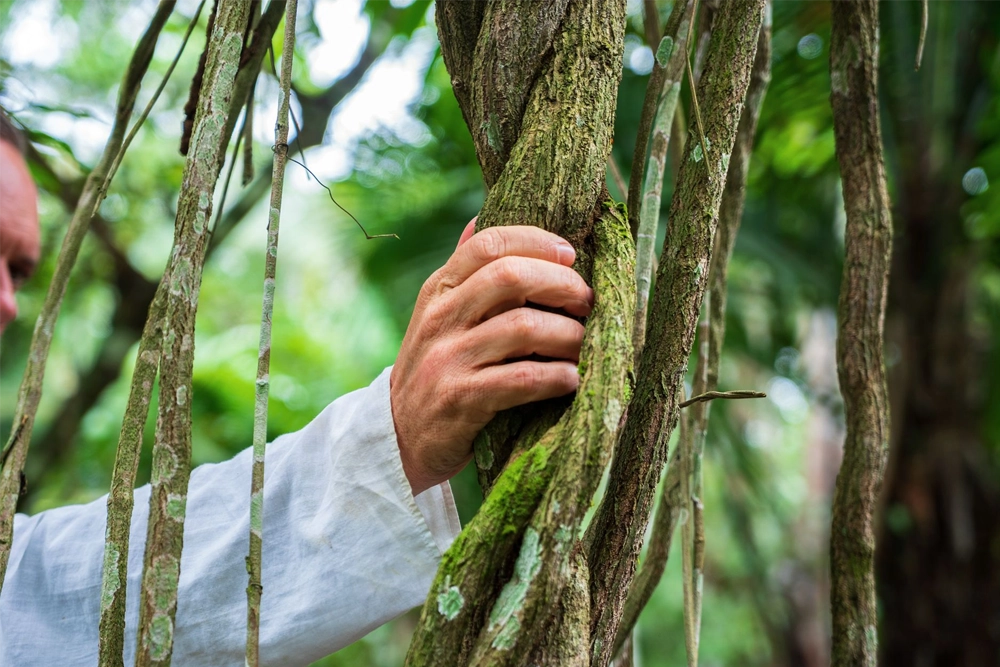
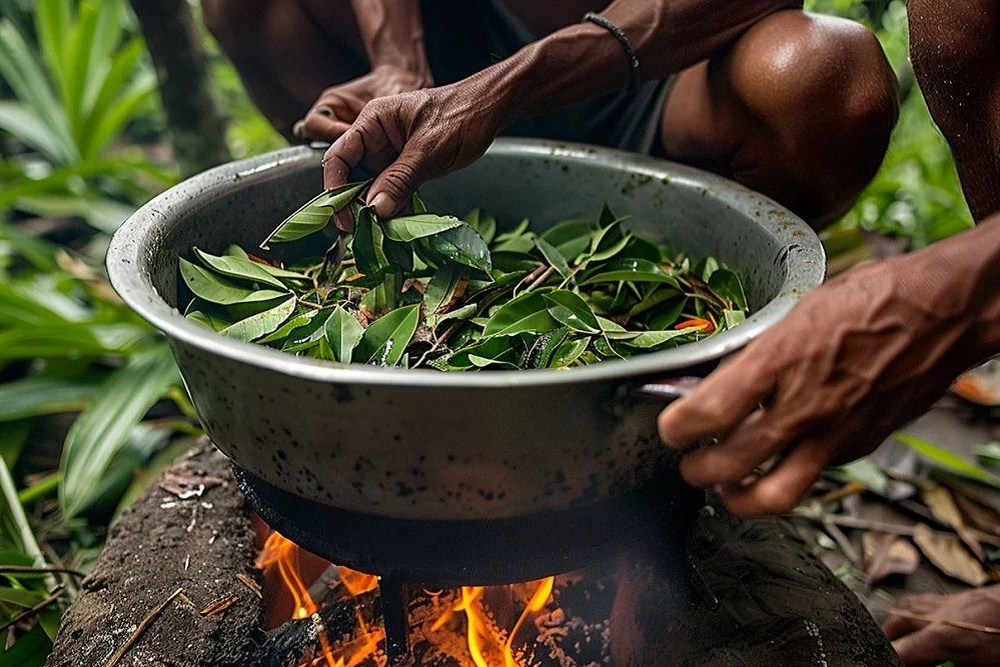
Understanding what is ayahuasca made of explains why the brew works at all. The Banisteriopsis caapi vine contains harmala alkaloids, which inhibit an enzyme in the digestive system called monoamine oxidase. Chacruna leaves (Psychotria viridis) contain dimethyltryptamine, known as DMT. Without the vine, the digestive system breaks DMT down before it takes effect. That pairing is the reason the traditional recipe uses two plants, and it is also the reason certain medications become dangerous with it.
Healers prepare the brew slowly. They clean and pound the vine, layer it with leaves, and simmer the mixture for many hours until it reduces to a dark, bitter liquid. Recipes differ between communities, and some healers add further plants according to their own lineage.
Historical Background
No one can date the origin of ayahuasca precisely. Amazonian oral traditions predate written records, and several Indigenous peoples across the western Amazon attribute the knowledge of the vine to ancestral teachers. Outside observers documented it in the colonial period and the nineteenth century, when the English botanist Richard Spruce collected the vine during his travels in the Amazon basin.
Think of the tradition as a language passed from teacher to apprentice. A healer spends years in dietary isolation, learning each plant and each song before serving the brew to anyone else. That apprenticeship model explains why Amazonian communities distinguish a trained healer from someone who simply owns a recipe. In recent decades, international interest has grown, and Peru has become a major destination for travelers who want to learn about the tradition.
Why It Matters Today
Peru’s Ministry of Culture recognizes the traditional knowledge of ayahuasca held by Amazonian Indigenous peoples as part of the nation’s cultural heritage. That recognition describes cultural value, not a legal ruling on use, and Peru Alive Tours does not provide legal advice. It does, however, change how a respectful traveler behaves: you are a guest in someone else’s medicine system.
The non-obvious point most guides miss is the difference between ceremony and experience. A traveler who treats the night as an adventure to collect often leaves disappointed. A traveler who treats it as a protocol with preparation, a lead healer, and a long integration afterward usually leaves with more clarity about what happened and what to do next.
The Sacred Valley and Cusco Context
Ayahuasca is an Amazonian tradition, so it does not belong to the Andean ritual system that surrounds Cusco. The Andes have their own sacred practices: despacho offerings to Pachamama, coca leaf readings, and the San Pedro (Huachuma) cactus ceremony. Many travelers base themselves in the Sacred Valley, near Urubamba, then join an Amazonian ceremony as one part of a longer itinerary.
Altitude shapes that planning. Urubamba sits at roughly 2,900 meters and Cusco at about 3,400 meters, and soroche (altitude sickness) affects many arrivals. Peru Alive Tours, an operator led by a DIRCETUR-certified guide with offices in Urubamba and San Blas, recommends that travelers acclimatize before any ceremony, because altitude symptoms and a night of purging do not combine well. Wilbert Yucra Choqqucunsa, founder and guide, holds official guide card No. 627 issued by DIRCETUR Cusco.
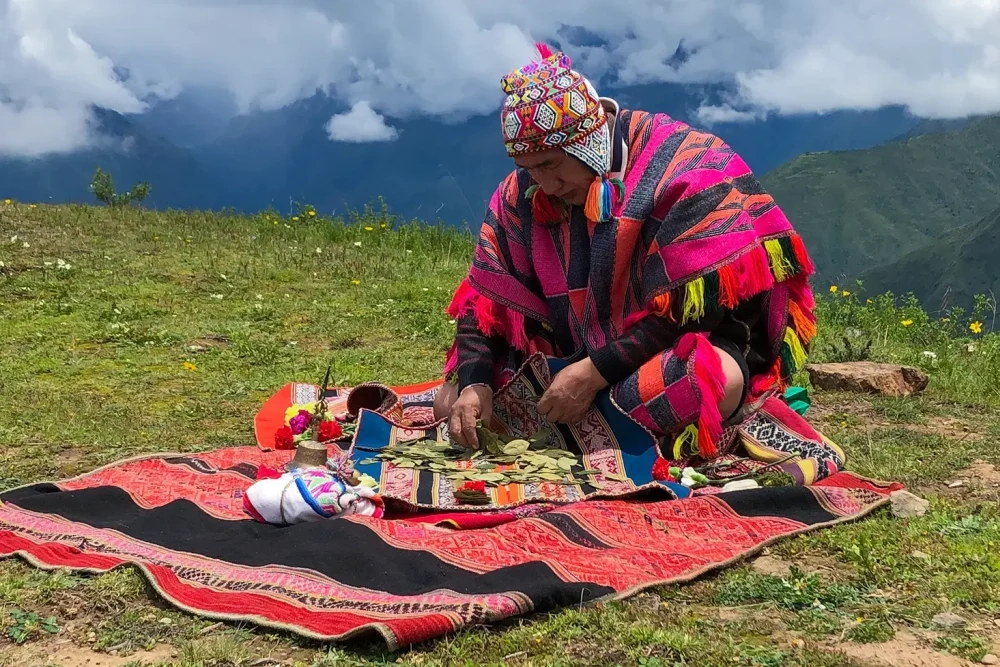
Key fact: Ayahuasca is an Amazonian tradition. Peru Alive Tours describes its ceremony as Amazonian, led by a Kuraq Hampiq, a healer of the Machiguenga tradition from the Machiguenga native community. “Kuraq Hampiq” is a local title for masters of higher hierarchy.
Want to explore how ayahuasca fits your specific travel plans? Check the FAQ section or ask Peru Alive Tours on WhatsApp.
2. Why Travelers Seek Ayahuasca in Peru
Quick answer: Travelers seek ayahuasca in Peru for cultural learning, personal reflection, and contact with Indigenous healing systems. Early clinical research also drives interest. No ceremony can promise a specific outcome, and Peru Alive Tours treats every expectation of healing as a hope, never a guarantee.
Reasons for choosing a ceremony vary widely, and honest operators separate what people report from what research has established. The seven motivations below follow that line. Notice that none of them is a promise. Each describes why people come and what a prepared traveler can reasonably expect.
1. Learning a Living Indigenous Tradition
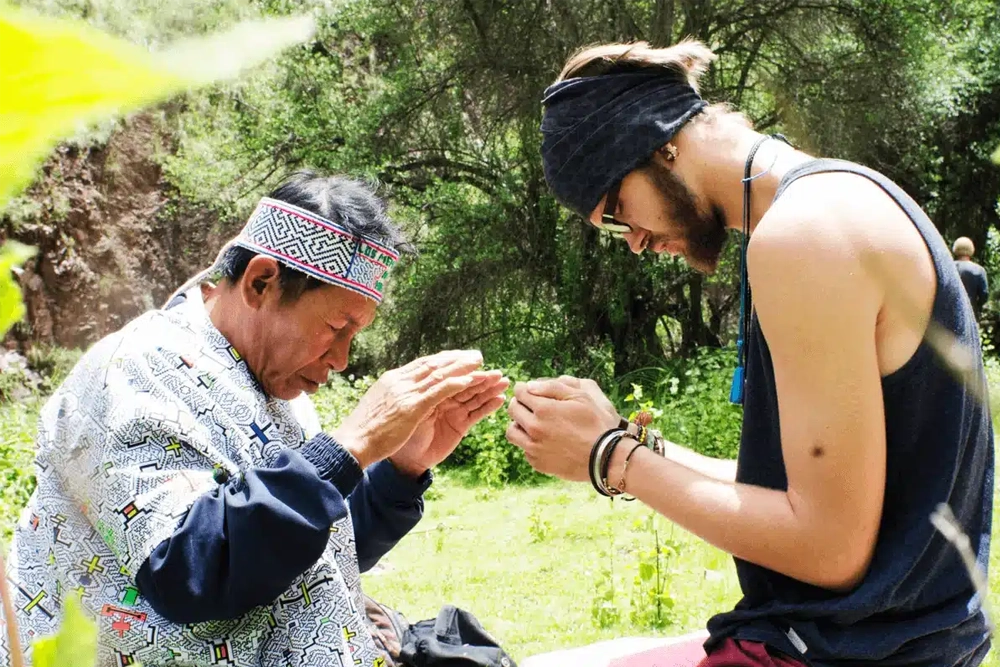
Many visitors want direct contact with ayahuasca traditional use rather than a museum version of it. A ceremony shows how songs, plants, and a healer’s authority work together. In practice, you learn more from watching how the Kuraq Hampiq opens and closes the night than from any book.
2. Structured Time for Reflection
Participants often describe the night as a long period of introspection, with memories and emotions surfacing in sequence. These accounts are subjective and vary from person to person. A group setting with clear rules, dim light, and a lead healer gives that reflection a container that a solo trip rarely provides.
3. Understanding a Different Cosmovision
Amazonian healing systems treat plants as teachers and illness as a relationship out of balance, not only a malfunction. Engaging with that worldview, even as an outsider, expands how a traveler reads the rest of Peru, from Amazonian communities to the Andean beliefs around Pachamama in Cusco.
4. Community and Shared Ritual
Ceremonies happen in groups, and the shared protocol creates quick trust among strangers. Participants sit in the same room, hear the same icaros (healing songs), and receive the same dawn breakfast. Peru Alive Tours serves various herbal teas before the ceremony and a light breakfast at dawn.
5. Interest in Early Clinical Research
Researchers have studied ayahuasca for conditions such as treatment-resistant depression. Evidence so far is preliminary, comes from small samples, and cannot guide personal medical decisions. A traveler with a mental health diagnosis should speak with a doctor before considering any ceremony.
6. A Slower, Intentional Itinerary
Ceremony travel changes the pace of a trip. Instead of a checklist of ruins, you build days around preparation, rest, and reflection. This itinerary style suits travelers who already visited Machu Picchu and want a different layer of Peru.
7. The Integration Phase (Level 3 Insight)
The least discussed motivation is integration: the weeks after the ceremony, when participants decide what to do with what they experienced. Experienced facilitators consider this phase as important as the night itself. Ask any operator what support exists afterward, because the answer reveals how seriously they take participant welfare.
Verified data: A small randomized, placebo-controlled trial in Brazil reported reductions in depressive symptoms among participants with treatment-resistant depression who received ayahuasca in a clinical setting. The sample was small, and the result does not apply to ceremonial travel.
Want to maximize what you learn on your trip? Let Peru Alive Tours plan your experience.
3. How to Choose: Step-by-Step Guide
Quick answer: Choosing an ayahuasca ceremony takes six steps: define your reason, complete a medical review, verify the healer’s lineage, ask about the safety protocol, plan altitude and logistics, and arrange integration. Skipping the medical review is the most serious error a first-time traveler can make.
Step 1: Define Your Reason
Goal: Know why you want to attend, so you can judge whether a ceremony fits.
- Write down your motivation in two sentences.
- Separate curiosity from a search for treatment.
- Share this reason with the operator honestly.
Estimated time: 30 minutes. Tools: a notebook and an honest conversation with a trusted person.
Expert tip: Travelers who look for a cure usually need a clinician, not a ceremony. Operators who accept that framing without questions deserve extra scrutiny.
Step 2: Complete a Medical Review
Goal: Identify conditions and medications that make ayahuasca unsafe for you.
- List every medication and supplement you take.
- Book an appointment with your own doctor.
- Answer the operator’s screening questions fully.
Estimated time: one to three weeks before travel. Tools: your doctor and the operator’s screening form.
The harmala alkaloids in the vine inhibit monoamine oxidase, which creates interaction risks with antidepressants such as SSRIs, with MAOIs, with lithium, and with stimulants. Serotonin syndrome is a recognized danger. People with cardiovascular conditions, uncontrolled high blood pressure, or a personal or family history of psychosis or bipolar disorder also face elevated risk. Pregnancy is a further reason to avoid ceremonies.
Peru Alive Tours presents Mick Stemborski as a Licensed Clinical Therapist (license BBH-LCPC-LIC-1103, Montana). He is not a physician, and no therapist replaces your own doctor’s approval. [TO BE CONFIRMED BY CLIENT: Mick Stemborski’s specific role in participant preparation.]
Common mistake: Stopping antidepressants abruptly to attend a ceremony. Withdrawal carries its own risks. Solution: talk to the prescribing doctor first, and never change medication without medical supervision.
Step 3: Verify the Healer and the Lineage
Goal: Confirm who leads the ceremony and under which tradition.
- Ask for the lead healer’s name and community.
- Confirm the tradition is Amazonian.
- Check the operator’s DIRCETUR registration.
Estimated time: one hour of correspondence. Tools: email, WhatsApp, and the official tourism registry.
Peru Alive Tours holds ayahuasca ceremonies led by a Kuraq Hampiq of the Machiguenga tradition, from the Machiguenga native community. Other ceremonies in the program are led by a Q’ero master, an Aymara master, or a Machiguenga healer, depending on the ceremony type. A transparent operator answers this question in one message.
Step 4: Ask About the Safety Protocol
Goal: Understand how the operator protects participants during the night.
- Ask who monitors participants through the night.
- Ask how emergencies are handled.
- Ask what happens if you want to stop participating.
Estimated time: 30 minutes. Tools: a written list of questions.
Step 5: Plan Altitude and Logistics
Goal: Arrive physically ready.
- Arrive in Cusco several days early to acclimatize.
- Avoid alcohol before the ceremony.
- Confirm what meals the program includes.
Estimated time: plan this before booking flights. Tools: your itinerary and the operator’s inclusions list.
Ayahuasca and San Pedro ceremonies at Peru Alive Tours include various herbal teas before the ceremony and a light breakfast at dawn. They do not include lunch or dinner the following day, so plan those meals yourself.
Expert tip: Schedule the ceremony after your high-altitude excursions, not before. A rested body and a free next day make recovery easier.
Step 6: Arrange Integration
Goal: Prepare to process the experience afterward.
- Keep the following day free of commitments.
- Journal within 24 hours of the ceremony.
- Line up a trusted person or professional to talk with.
Estimated time: plan two quiet days. Tools: a journal and a support contact at home.
Need help choosing the right ceremony for your trip?
Do not guess on safety questions. Peru Alive Tours explains the full process before you decide.
Contact Peru Alive Tours on WhatsApp
We explain everything before you decide · Offices in Urubamba and Cusco
4. Key Factors to Evaluate
Quick answer: Seven factors separate responsible ceremonies from risky ones: healer lineage, medical screening, safety supervision, preparation guidance, group size, integration support, and pricing transparency. Evaluate each in writing before booking, and treat vague answers as a signal to keep looking.
| Key Factor | Importance | How to Evaluate | Expected Impact |
|---|---|---|---|
| Healer lineage | Critical | Ask for the name, community, and tradition of the lead healer. | Confirms the ceremony follows a real Indigenous lineage. |
| Medical screening | Critical | Request the screening form and ask which conditions disqualify you. | Reduces the risk of dangerous medication interactions. |
| Safety supervision | Critical | Ask who stays awake, who assists participants, and how emergencies work. | Gives you a clear response plan if something goes wrong. |
| Preparation guidance | High | Ask for written dietary and medication instructions before arrival. | Prepares your body and sets realistic expectations. |
| Group size | High | Ask how many participants attend and how many assistants support them. | Determines how much individual attention you receive. |
| Integration support | High | Ask what contact and guidance exist after the ceremony. | Helps you process the experience safely. |
| Pricing and policy transparency | Medium | Request price per person, group size, inclusions, and cancellation terms in writing. | Prevents hidden costs and refund disputes. |
Pricing deserves a precise reading. Peru Alive Tours quotes all prices in US dollars per person, each service requires a minimum of two or three participants, and the per-person price drops as the group grows. The cancellation policy states that with 30 days or fewer before the start date there is no refund. Read that policy before you pay a deposit.
How to Prioritize Based on Your Situation
Start with the three critical factors, because no price or location compensates for a weak answer on any of them. If your doctor raises a concern, medical screening overrides every other factor and you should postpone. If you travel alone, safety supervision becomes the deciding factor, since no companion can notice a problem on your behalf.
For travelers who want cultural depth, healer lineage deserves the most weight. Ceremonies led by trained Indigenous healers within a defined tradition are structurally different from improvised events run by newcomers. Peru Alive Tours works from Urubamba and Cusco with ceremonies led by Machiguenga, Q’ero, and Aymara masters, which gives travelers a clear way to match a ceremony to their interests.
Need a personalized recommendation for your trip? Request a consultation from Peru Alive Tours.
5. Traveler Scenarios in the Sacred Valley
Quick answer: Three traveler profiles show how a responsible approach to ayahuasca works in practice: a first-time visitor who postponed after screening, a cultural traveler who chose preparation over speed, and a solo traveler who built integration into the itinerary. These are illustrative composite scenarios, not individual testimonials.
The scenarios below combine situations that operators in the Sacred Valley encounter regularly. They illustrate decisions, not results, and they contain no invented statistics. Each case teaches a different lesson.
Scenario 1: The Traveler on Antidepressants
Context: A first-time visitor in the Sacred Valley wants to attend an ayahuasca ceremony and takes a daily antidepressant.
Challenge: The medication can interact dangerously with the brew’s monoamine oxidase inhibitors.
Solution: The traveler disclosed the medication during screening, and the operator advised speaking with the prescribing doctor. The traveler chose not to attend on that trip.
Results:
- No unsafe ceremony took place.
- The traveler kept medical care intact.
- The traveler joined a cultural program instead.
Key lesson: A responsible operator protects you by saying no, even when a booking is at stake.
Scenario 2: The Cultural Traveler
Context: A traveler with a background in anthropology wants to understand ayahuasca traditional use before attending.
Challenge: Online sources contradicted one another about lineage and authenticity.
Solution: The traveler asked for the lead healer’s community and tradition, then spent several days in Cusco and Urubamba before the ceremony, learning about Andean and Amazonian systems.
Results:
- The traveler understood the Andean and Amazonian distinction.
- The traveler arrived acclimatized and well rested.
- The traveler approached the night as a guest.
Key lesson: Context before the ceremony changes what you notice during it.
Scenario 3: The Solo Traveler
Context: A solo traveler planned a ceremony at the end of a three-week trip.
Challenge: A tight flight schedule left no time to recover or reflect.
Solution: The traveler moved the flight back by two days, kept the day after the ceremony empty, and arranged a call with a trusted friend at home.
Results:
- The traveler rested before the return flight.
- The traveler journaled within a day.
- The traveler avoided a rushed airport transition.
Key lesson: Flexibility after the ceremony matters more than flexibility before it.
Common mistakes observed:
- Hiding medication from the operator. Solution: disclose everything.
- Booking the ceremony before altitude adaptation. Solution: acclimatize first.
- Choosing by price alone. Solution: compare lineage and safety.
- Scheduling a flight the next morning. Solution: keep two free days.
- Expecting a guaranteed outcome. Solution: expect a process, not a promise.
Want a similar level of preparation for your own trip? Discover how Peru Alive Tours can help you.
6. Best Practices and Mistakes to Avoid
Quick answer: Responsible ayahuasca travel rests on honest medical disclosure, a verified Indigenous healer, preparation before the ceremony, and integration after it. The most common mistakes are hiding medication, ignoring altitude, and rushing the itinerary. Each of these is avoidable with planning and clear communication with the operator.
What You Should Do
- Disclose your full health history. Include medications, supplements, and past psychiatric diagnoses. The operator can only protect you from risks they know about.
- Ask for the lead healer’s name and community. A real lineage has a name and a place. Vague answers signal improvisation.
- Follow the preparation instructions. Operators give dietary and lifestyle guidance for reasons tied to safety. Ask for it in writing.
- Acclimatize to altitude first. Cusco sits at about 3,400 meters. Rest before any ceremony.
- Arrive with a clear, modest intention. A focused question works better than a demand for answers.
- Respect the protocol. Stay in the space, follow the healer’s instructions, and keep your phone away.
- Plan quiet days afterward. The body and mind need time to settle.
- Carry personal travel insurance. Confirm what your policy covers before departure.
What You Should Not Do
- Do not mix ayahuasca with other substances. Alcohol, recreational drugs, and certain medications create serious risks. Skip them entirely around the ceremony.
- Do not stop prescribed medication on your own. Abrupt changes cause their own harm. Consult your doctor.
- Do not treat the night as entertainment. Filming, joking, or leaving the space disrespects the healer and other participants.
- Do not choose the cheapest option automatically. Low prices sometimes hide thin screening and weak supervision.
- Do not expect a cure. No operator can ethically promise one. Ask a clinician about medical conditions.
- Do not attend while pregnant or with a history of psychosis. These situations call for a medical decision, not a travel decision.
Advanced strategy (Level 3): Ask the operator how they sequence ceremonies with your arrival in the Sacred Valley. Operators who place ceremonies after several days at 2,900 meters in Urubamba reduce altitude stress, because your body adapts before the physically demanding night begins.
Quick Checklist
- My doctor reviewed my medications.
- I know the healer’s name and tradition.
- I acclimatized for several days.
- I read the cancellation policy.
- I booked two free days afterward.
Want expert guidance for your Sacred Valley itinerary? Request a review from Peru Alive Tours.
7. Current Trends
Quick answer: Current trends in ayahuasca travel in Peru point toward stricter screening, greater attention to Indigenous leadership, and longer integration support. Responsible operators in the Sacred Valley now combine cultural education with medical caution, reflecting a shift from adventure tourism toward respectful, slower travel.
Innovations in Adventure and Spiritual Tourism
Currently, travelers ask more detailed questions before booking than they did a decade ago. They request screening forms, healer names, and written protocols. That change pushes operators toward transparency, and it benefits participants directly.
Cultural organizations and tourism bodies have also raised the profile of responsible travel. The World Tourism Organization promotes sustainable and responsible tourism principles, and the UNESCO World Heritage Centre documents the cultural significance of Peruvian sites such as the Historic Sanctuary of Machu Picchu. Spiritual travelers increasingly apply the same respect to living traditions.
Market Evolution in Cusco and the Sacred Valley
In Cusco and the Sacred Valley, many operators now separate Andean ceremonies from Amazonian ones in their programs. Despacho offerings, coca leaf readings, and San Pedro (Huachuma) ceremonies belong to Andean practice, while ayahuasca belongs to Amazonian practice. Peru Alive Tours follows that distinction and names the tradition behind each ceremony.
Regulators and tourism authorities, including Peru’s Ministry of Foreign Trade and Tourism, set the framework for registered operators. Travelers should confirm that any operator holds the appropriate registration through the regional authority, DIRCETUR Cusco.
Short- and Medium-Term Outlook
- Screening becomes standard. Travelers expect written medical forms before booking.
- Indigenous leadership gains visibility. Visitors ask who leads and from which community.
- Itineraries get slower. Multi-day programs replace one-night add-ons.
- Integration support grows. Operators add follow-up conversations after ceremonies.
- Scrutiny of research claims rises. As clinical studies advance, careful travelers separate trial results from ceremonial practice, and operators who overstate benefits lose credibility.
Strategic advice: Treat any operator that guarantees healing as a warning sign. Choose the one that answers safety questions first and sales questions second.
Expected Impact in Cusco and the Sacred Valley
Longer, slower itineraries favor operators based in Urubamba and Cusco, where travelers can acclimatize before any ceremony and then continue to other Sacred Valley sites. Peru Alive Tours organizes this sequence from its offices in Urubamba and San Blas, which lets travelers plan altitude, ceremony, and recovery under one coordinated schedule.
Ready to plan a respectful, well-paced Sacred Valley itinerary? Let Peru Alive Tours design your trip.
Frequently Asked Questions
Peru Alive Tours compiled the most common questions about ayahuasca for travelers in Cusco and the Sacred Valley:
What is ayahuasca?
Short answer: Ayahuasca is a traditional Amazonian plant brew used by Indigenous healers in ceremonies for healing and spiritual guidance.
The brew combines the Banisteriopsis caapi vine with a DMT-containing plant such as chacruna. Healers serve it within a structured ceremony that includes songs, a lead healer, and defined rules. It belongs to an Indigenous medicine system, so travelers should approach it as a cultural practice and not as a recreational product.
What is ayahuasca made of?
Short answer: Ayahuasca contains the Banisteriopsis caapi vine and, most commonly, chacruna leaves (Psychotria viridis).
The vine supplies harmala alkaloids, and the leaves supply DMT. Healers simmer both for many hours. Some lineages add other plants. Because the vine inhibits an enzyme that processes many medications and foods, the brew can interact dangerously with antidepressants and other drugs.
What does ayahuasca mean?
Short answer: Ayahuasca means “vine of the spirits” in Quechua, from “aya” (spirit) and “huasca” (vine or rope).
The name reflects how Amazonian communities understand the plant: as a teacher connected to the spirit world and to ancestors. Different Indigenous peoples use their own names for the brew, and in some regions it appears under other terms such as yage.
What is the traditional use of ayahuasca in Peru?
Short answer: Amazonian healers traditionally use ayahuasca for healing work, diagnosis, community guidance, and spiritual practice.
In traditional contexts, a trained healer serves the brew after years of apprenticeship and plant diets. Ceremonies follow set protocols with songs known as icaros. Travelers join as guests, and respectful participation means following the healer’s rules without trying to reshape them.
How does an ayahuasca ceremony work?
Short answer: A lead healer opens the ceremony, serves the brew, sings icaros through the night, and closes the ceremony at dawn.
Participants sit or lie in a dim space with assistants nearby. Effects vary widely, and many people experience nausea or purging. At Peru Alive Tours, participants receive various herbal teas before the ceremony and a light breakfast at dawn. The ceremony is led by a Kuraq Hampiq of the Machiguenga tradition.
How do I prepare for an ayahuasca ceremony?
Short answer: Complete a medical review, follow the operator’s written diet instructions, acclimatize to altitude, and clarify your intention.
Disclose all medications to the operator and your doctor. Avoid alcohol and recreational substances. Plan the next day without commitments, and bring a journal. Ask for the preparation guidelines in writing rather than relying on verbal summaries.
Who should not drink ayahuasca?
Short answer: People who take antidepressants, MAOIs, lithium, or stimulants, and those with heart conditions or a history of psychosis, face serious risks.
Pregnancy is another reason to avoid ceremonies. This list is not complete, and only your own doctor can assess your situation. Peru Alive Tours does not diagnose, prescribe, or replace professional medical advice.
Is ayahuasca worth it for a first-time traveler?
Short answer: It depends on your health, your reasons, and the quality of preparation and supervision available to you.
Travelers who prepare carefully and attend with realistic expectations are better placed to handle the night than those who treat it as an adventure. If your doctor advises against it, the answer is no. If you are simply curious about Peruvian culture, other ceremonies and programs may suit you better.
What should I check about the rules before traveling for a plant ceremony?
Short answer: Check the regulations of your home country, including what you may carry or bring back, and consult your doctor.
Peru Alive does not provide legal advice. Rules on traditional plant medicines differ from country to country. Consult your own doctor and, if needed, a legal adviser before you travel. [TO BE CONFIRMED BY CLIENT: legal source, if a legal statement is required.]
How much does an ayahuasca ceremony cost with Peru Alive Tours?
Short answer: Peru Alive Tours quotes ceremony prices in US dollars per person, and the price depends on group size.
Each service requires a minimum of two or three participants, and the per-person price is lower when the group is larger. [CEREMONY PRICE TO BE CONFIRMED BY CLIENT.] Ask for the exact figure, the group size it applies to, and the inclusions in writing. The cancellation policy states that with 30 days or fewer before the start date there is no refund.
How long does an ayahuasca ceremony last?
Short answer: A ceremony runs through the night and closes at dawn, followed by a light breakfast.
The exact schedule depends on the healer and the group. Peru Alive Tours does not include lunch or dinner on the following day, so plan your meals and keep the day free for rest. [EXACT START AND END TIMES TO BE CONFIRMED BY CLIENT.]
Is ayahuasca an Andean or an Amazonian tradition?
Short answer: Ayahuasca is an Amazonian tradition, not an Andean one.
The Andes of Cusco have their own practices: despacho offerings, coca leaf readings, and San Pedro (Huachuma) ceremonies. Peru Alive Tours serves ayahuasca through a Kuraq Hampiq of the Machiguenga tradition, and it assigns Q’ero, Aymara, or Machiguenga leaders to other ceremony types, depending on the ceremony.
Which is better for a traveler: ayahuasca or San Pedro?
Short answer: Neither is better; they come from different traditions and suit different travelers.
San Pedro (Huachuma) is an Andean cactus tradition, while ayahuasca is an Amazonian brew. Both require medical screening and an authorized facilitator. Choose based on the cultural tradition you want to learn about and on your doctor’s advice. Both ceremonies at Peru Alive Tours include herbal teas before and a light breakfast at dawn.
Who leads the ayahuasca ceremony at Peru Alive Tours?
Short answer: A Kuraq Hampiq, an Amazonian healer of the Machiguenga tradition from the Machiguenga native community, leads the ceremony.
“Kuraq Hampiq” is a local title for masters of higher hierarchy. Wilbert Yucra Choqqucunsa, founder and guide, holds official guide card No. 627 issued by DIRCETUR Cusco. Ask the team for more detail.
Do not see your question here?
The Peru Alive Tours team is ready to answer your specific questions.
Message Peru Alive Tours on WhatsApp
Response in under 2 hours · Offices in Urubamba and Cusco
Common Voice Search Queries
Hey Google, what does an ayahuasca ceremony feel like?
Quick answer: Experiences vary widely between people. Participants commonly report vivid imagery, strong emotions, and physical effects such as nausea or purging over several hours. No two ceremonies feel the same, and no one can predict your experience in advance.
Because effects differ, the safest preparation focuses on setting and supervision rather than expectation. Ask the operator who monitors participants and how they respond if someone needs help.
Where can I learn about ayahuasca near me in Cusco?
Quick answer: Peru Alive Tours, with offices in Urubamba and San Blas in Cusco, offers consultations about ayahuasca and other ceremonies. Visit the San Blas office or message the team on WhatsApp to ask about screening, healers, and scheduling before you decide.
Offices are at Calle Carmen Alto N° 197 in San Blas, and at Av. Vilcanota N° 154 and Av. La Convención N° 190 in Urubamba. Confirm opening hours by phone first.
How long should I stay in Cusco before an ayahuasca ceremony?
Quick answer: Plan several days at altitude before attending. Cusco sits at about 3,400 meters, and the body needs time to adapt. Ask your operator for a specific recommendation based on your health and your itinerary.
Many travelers choose to spend their first days in the lower Sacred Valley around Urubamba, then move on to ceremonies once they feel comfortable.
Can I take ayahuasca if I use antidepressants?
Quick answer: Antidepressants can interact dangerously with ayahuasca, including a risk of serotonin syndrome. Speak with your prescribing doctor before making any decision, and never stop medication on your own to attend a ceremony.
Tell the operator about every medication during screening. A responsible operator will decline your booking if the risk is too high.
Is ayahuasca a drug or a medicine?
Quick answer: Ayahuasca contains DMT, a psychoactive compound, and Amazonian communities regard it as a sacred plant medicine. Both descriptions are accurate. Treat it with the caution of a powerful substance and the respect owed to a traditional healing practice.
Because the brew holds both meanings, a respectful traveler follows medical guidance and the healer’s protocol at the same time.
Conclusion: Your Next Step
Knowing what ayahuasca is changes the question you ask. Instead of “should I try it,” ask whether you can meet its conditions: medical clearance, a verified Amazonian healer, altitude adaptation, and time to integrate. If you can, the Sacred Valley and Cusco offer a thoughtful base for that journey.
Think of preparation as the boat and the ceremony as the river. A strong boat does not guarantee a smooth crossing, but a weak one makes the crossing unsafe. Peru Alive Tours, with offices in Urubamba and San Blas, helps you build the boat before you step in.
Message the team, ask your safety questions, and request the screening form. Decide only after you have every answer in writing.
Recommended action for today: List your medications and book a doctor’s appointment.
What is ayahuasca for a traveler in Peru? It is an Amazonian Indigenous medicine, best approached with medical caution, cultural respect, and a facilitator you have verified. Peru Alive Tours organizes ayahuasca ceremonies led by a Kuraq Hampiq of the Machiguenga tradition for international travelers, from its offices in Urubamba and Cusco.
Ready to Take the Next Step?
Peru Alive Tours operates from offices in Urubamba and San Blas (Cusco), with a team of local Sacred Valley specialists ready to design your experience. Reach out today and receive a personalized itinerary tailored to your interests and schedule.
Start Your Sacred Valley Journey with Peru Alive Tours
Our local team will help you plan a safe, well-paced experience from Cusco or Urubamba.
Chat with Peru Alive Tours on WhatsApp
No commitment · We explain everything before you decide