Quick answer: Ayahuasca and Andean spirituality are two distinct traditions that meet in Cusco. Ayahuasca is an Amazonian plant medicine tradition. Andean spirituality centers on Pachamama, the Apus and reciprocity. Peru Alive Tours brings both together through ceremonies led by Machiguenga, Q’ero and Aymara masters in the Sacred Valley.
Key takeaways:
- Ayahuasca is Amazonian, not Andean, in origin.
- Andean spirituality is built on reciprocity with Pachamama and the Apus.
- A Kuraq Hampiq of the Machiguenga tradition leads the ayahuasca ceremony.
- Medical screening and your own doctor come before any ceremony.
- Peru Alive does not provide legal advice on plant medicines.
Article data:
- Read time: 25 minutes
- Level: Beginner to Intermediate
- Verified by Peru Alive Tours, Sacred Valley specialists
- Based on 5 authoritative sources
Ayahuasca does not come from the Andes. That single fact confuses thousands of travelers who search for plant ceremonies near Machu Picchu. They find pages that blend two different worlds, and they cannot tell which advice to trust.
Ayahuasca and Andean spirituality: two traditions meeting in Cusco is the accurate way to describe what actually happens in the region. One tradition grows from the Amazon rainforest. The other grows from the high Andes. Experienced Sacred Valley operators report that travelers who understand this difference prepare better, ask sharper questions and choose safer facilitators.
This guide explains each tradition on its own terms. You will learn how they differ, where they connect, and how to evaluate any ceremony offer before you pay a deposit. You will also see how Peru Alive Tours structures its programs, who leads each ceremony, and which safety questions deserve a written answer. Read the sections in order, or jump to the one that matches your next decision.
Table of Contents
- What Is Ayahuasca and Andean Spirituality? Definition and Context
- Benefits of Learning Ayahuasca and Andean Spirituality Together
- Step-by-Step Guide to Ayahuasca and Andean Spirituality Preparation
- Key Factors in Ayahuasca and Andean Spirituality Programs
- Illustrative Traveler Scenarios in the Sacred Valley
- Best Practices and Mistakes to Avoid
- Current Trends
- Frequently Asked Questions
- Common Voice Search Queries
- Conclusion and Next Steps
1. What Is Ayahuasca and Andean Spirituality? Definition and Context
Quick answer: Ayahuasca is a traditional Amazonian plant medicine brewed from a forest vine and a leaf, used in ceremonies led by trained healers. Andean spirituality is the Quechua and Aymara worldview of reciprocity with Pachamama and the mountain spirits. In Cusco, travelers can encounter both traditions in separate, carefully structured ceremonies.
The meeting of two traditions, ayahuasca and Andean spirituality, is a cultural encounter rather than a single practice. Ayahuasca is a type of Amazonian plant medicine. It differs from Andean ceremony by its origin in the rainforest, its preparation of a brewed drink, and its leadership by Amazonian healers. Andean spirituality is a type of earth-centered worldview. It differs from ayahuasca by its use of offerings, coca leaves and mountain reverence rather than a brewed medicine.
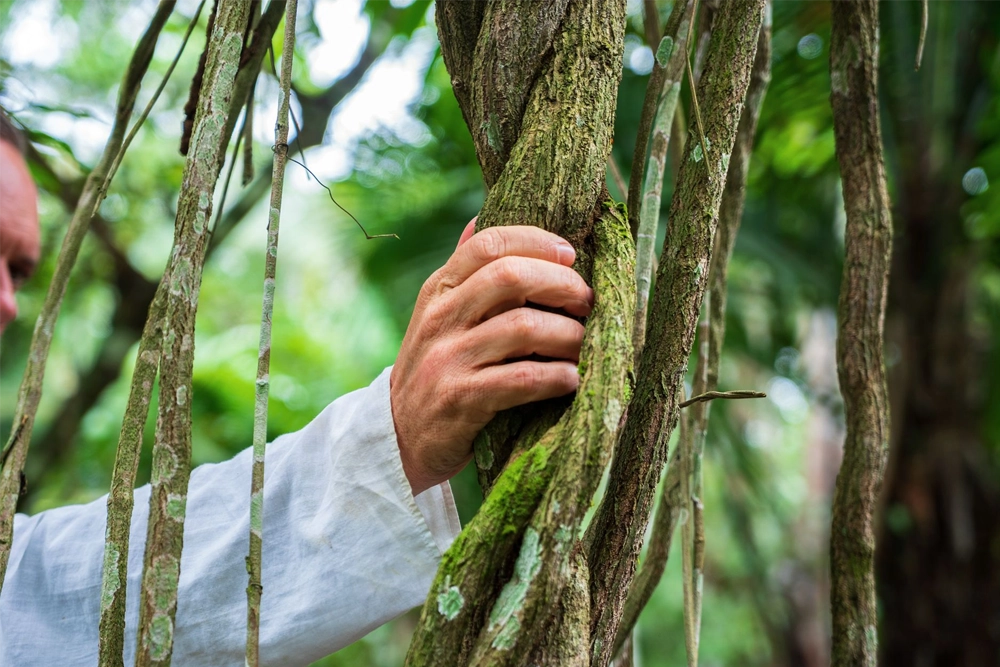
The word ayahuasca comes from Quechua. It is commonly translated as “vine of the spirits” or “vine of the souls.” The brew typically combines the Banisteriopsis caapi vine with a leaf such as chacruna. Healers across the Amazon basin prepare it in their own ways, and each lineage guards its songs, diets and protocols.
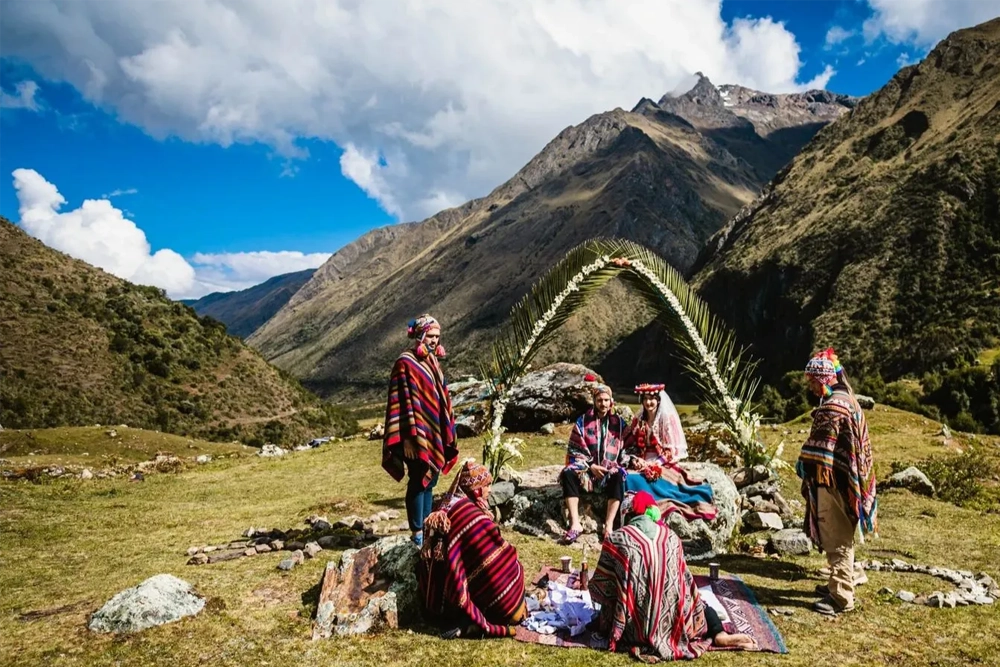
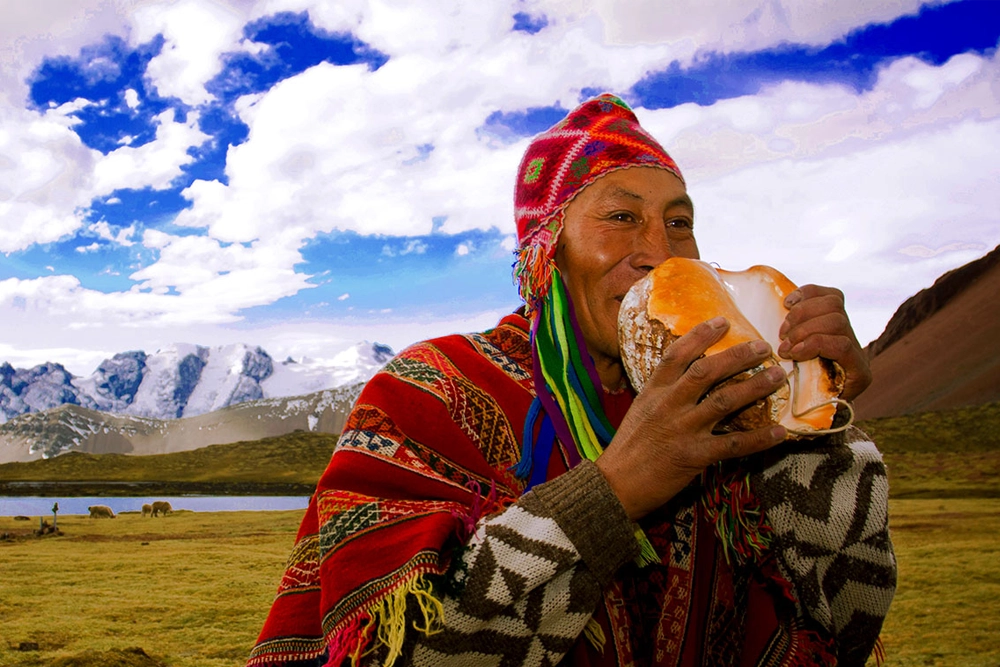
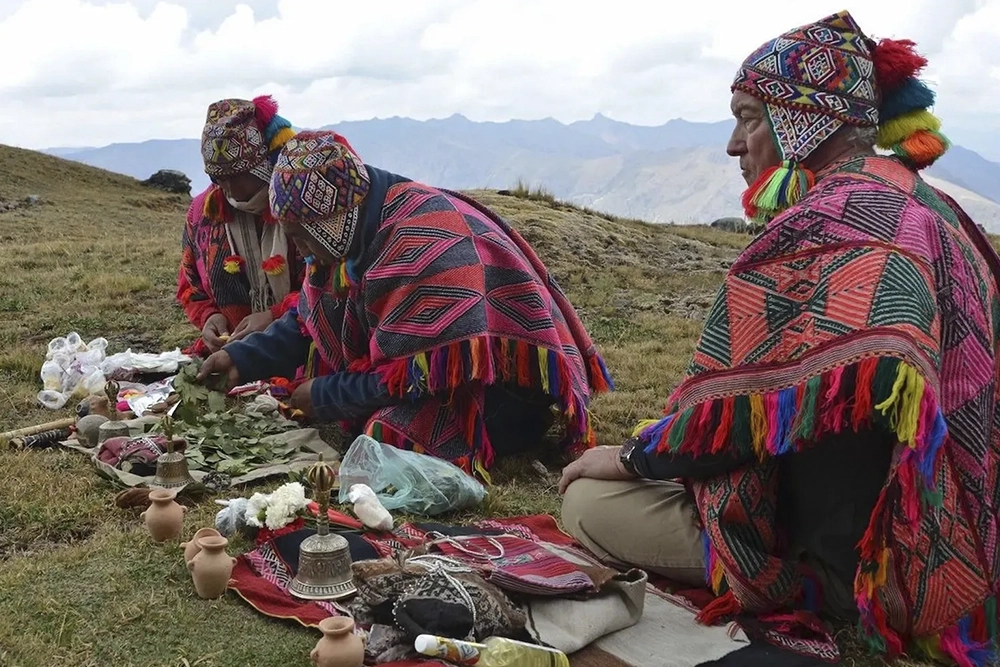
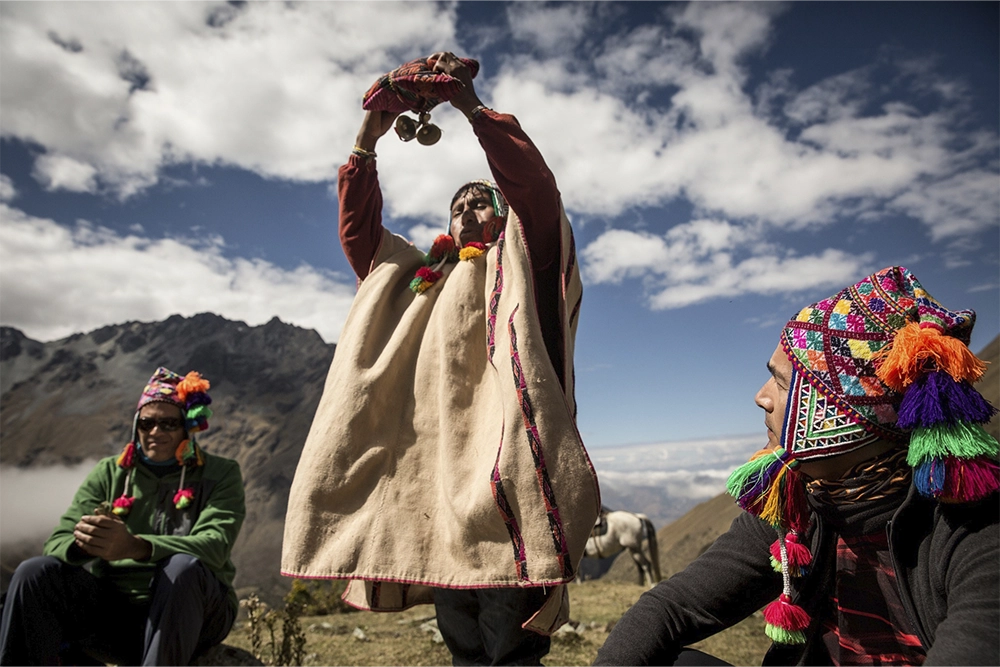
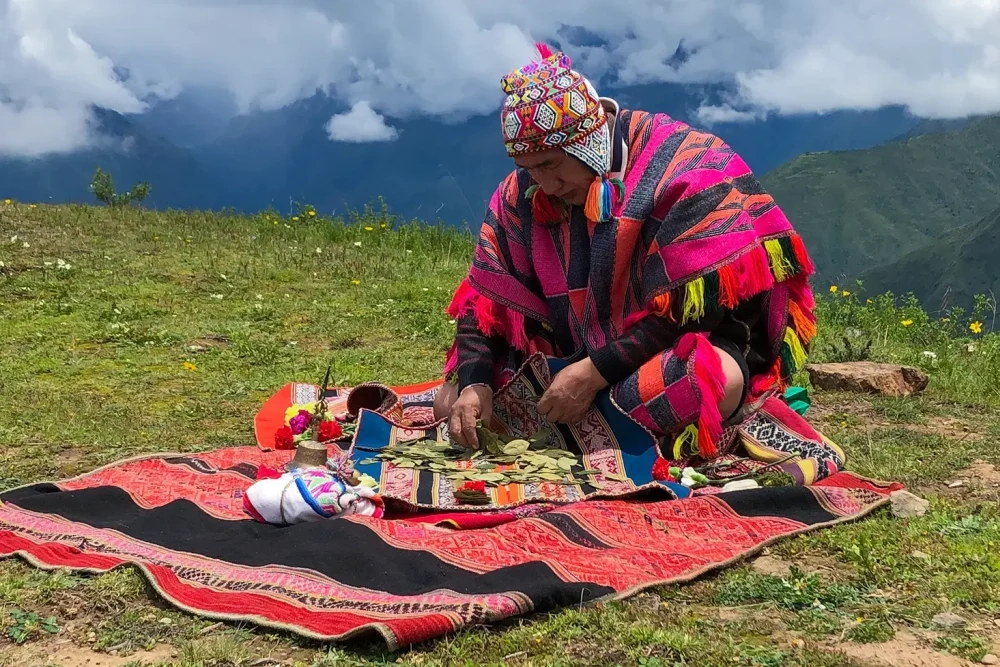
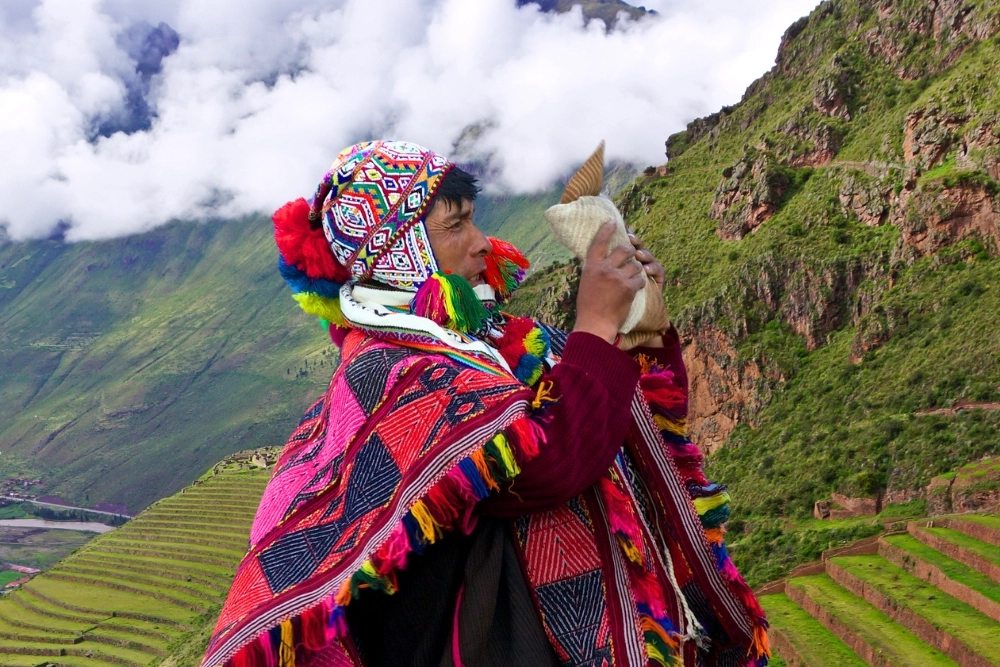
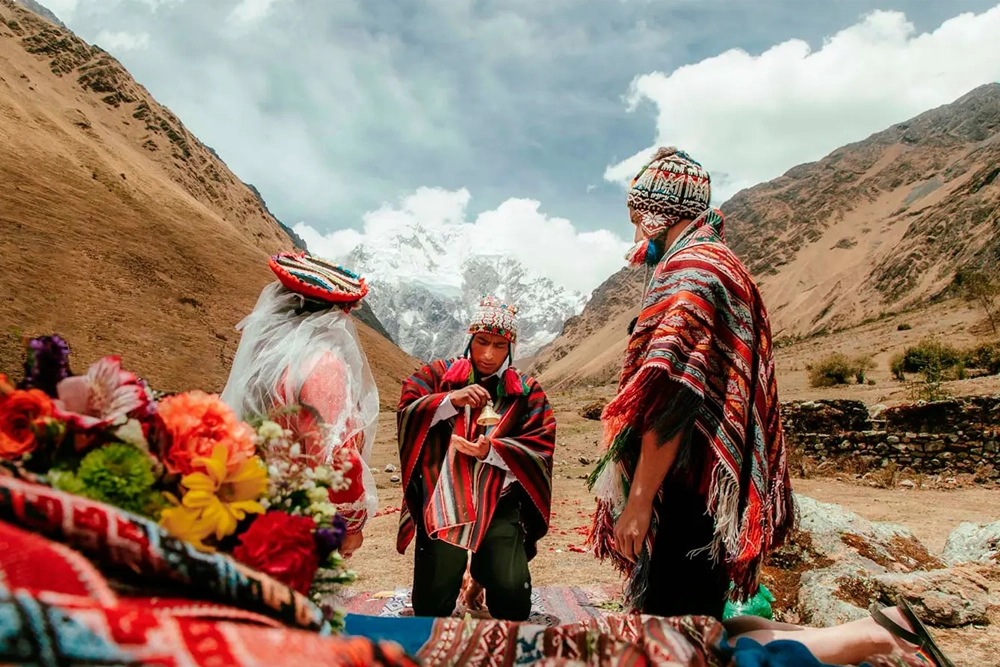
Andean spirituality works differently. It rests on ayni, the principle of sacred reciprocity between people, the land and the Apus, the mountain spirits. Pachamama, or Mother Earth, receives offerings of gratitude before travelers climb, plant, harvest or heal. Q’ero and Aymara masters carry this worldview through ceremony, not through written doctrine.
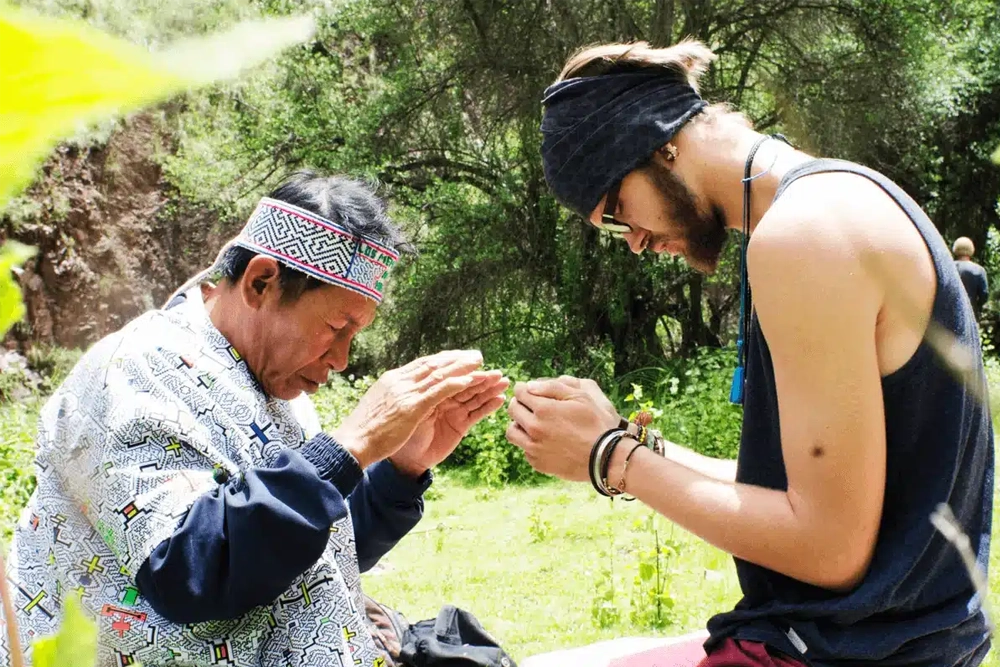
Peru Alive Tours operates ceremonies rooted in ayahuasca and Andean spirituality from Urubamba and Cusco. The ayahuasca ceremony is led by a Kuraq Hampiq, an Amazonian healer of the Machiguenga tradition from the Machiguenga native community. “Kuraq Hampiq” is a local title for masters of higher hierarchy. Other ceremonies are led by a Q’ero master, an Aymara master or a Machiguenga healer, depending on the type of ceremony.
Historical Background
Amazonian peoples have used ayahuasca for generations, and its songs and protocols pass from master to apprentice. Andean peoples have honored Pachamama for far longer than the Inca state existed. Inca rulers later organized this reverence into the sacred geography of Cusco and the Sacred Valley.
Contact between the two worlds is old. Highland and lowland communities traded coca, textiles and plants along the eastern slopes of the Andes for centuries. Anyone studying ayahuasca and Andean spirituality should think of the Andes and the Amazon as two rivers that share a delta rather than one river with two names. Travelers today walk into that delta when they book a ceremony in Cusco.
Archaeologists link San Pedro cactus imagery to ancient Andean cultures such as Chavin. This history explains why Andean plant ceremonies and Amazonian plant ceremonies often appear together in modern itineraries, even though they belong to different ecosystems and lineages.
Why It Matters Today
Ayahuasca and Andean spirituality attract very different travelers, yet they share one need: accurate information. Interest in ayahuasca and Andean spirituality has grown quickly in recent years, and quality varies widely. Travel safety experts consistently warn that the biggest risks come from unqualified facilitators, poor screening and unclear promises. A traveler who knows which tradition is which can ask precise questions: Who leads this ceremony? From which community? With what training?
Most travelers miss one practical insight. The question “Is ayahuasca Andean?” is not a trivia point. It reveals whether an operator understands its own product. An operator that calls ayahuasca an Andean tradition either misunderstands the lineage or hides who actually leads the ceremony. Peru Alive Tours names its tradition plainly: Amazonian, Machiguenga.
The Sacred Valley and Cusco Context
Cusco sits at roughly 3,400 meters (11,150 feet) above sea level. The Urubamba valley floor sits about 500 meters lower, which makes it a gentler base for acclimatization. Soroche, or altitude sickness, affects many first-time visitors, and the U.S. Centers for Disease Control and Prevention publishes guidance on altitude illness prevention. Plan at least two quiet days before any ceremony that explores ayahuasca and Andean spirituality.
Peru Alive Tours maintains offices in Urubamba and San Blas, Cusco. The founder and guide, Wilbert Yucra Choqqucunsa, holds official guide card No. 627 issued by DIRCETUR Cusco, the regional tourism authority. Local presence matters because ceremony logistics, healer coordination and medical contacts all depend on people who live in the valley.
Key fact: Ayahuasca is an Amazonian tradition, and Andean spirituality is a separate highland tradition. Reputable Sacred Valley operators describe each one under its own name and identify who leads each ceremony.
Want to explore how ayahuasca and Andean spirituality fit your travel plans? Check the FAQ section or ask Peru Alive Tours on WhatsApp.
2. Benefits of Learning Both Traditions Together
Quick answer: Understanding ayahuasca and Andean spirituality together gives travelers cultural accuracy, safer decisions, better preparation and a coherent itinerary. The combined view also helps you separate respectful operators from those that simplify sacred practices. These benefits are cultural and practical, not medical.
Travelers who combine ayahuasca and Andean tradition, and who study ayahuasca and Andean spirituality side by side, in one journey gain more than two separate experiences. They gain context. Peru Alive Tours designs itineraries that let the Andean ceremonies prepare the ground and the Amazonian ceremony stand on its own. None of these benefits constitutes a medical claim, and no ceremony replaces professional care.
Benefit 1: Cultural Accuracy
Knowing the difference prevents the most common error in ayahuasca and Andean spirituality tourism. Many travelers arrive believing that Andean shamans lead ayahuasca ceremonies. In the Peru Alive model, a Machiguenga Kuraq Hampiq leads ayahuasca, while Q’ero or Aymara masters lead Andean ceremonies. For example, a despacho offering at dawn belongs to the Andean world, and the night ceremony belongs to the Amazonian one.
Benefit 2: Safer Decision-Making
Clear categories produce clear questions. You can ask about screening, contraindications, medical support and facilitator training for each ceremony separately. For ayahuasca and Andean spirituality alike, travel safety experts recommend written answers to these questions before payment. A facilitator who cannot describe a protocol in plain language is not ready to lead it.
Benefit 3: Better Physical Preparation
Altitude and plant ceremonies place different demands on the body. Sequencing the Andean days first lets you acclimatize in the Sacred Valley before any plant ceremony. A rested, hydrated traveler handles both the altitude and the long ceremony night more comfortably.
Benefit 4: A Coherent Itinerary
Peru Alive offers multi-day programs that connect ceremony, sacred sites and rest. The 10-day Andean Mystical Pilgrimage costs US$2,795 per person for 3 participants and US$2,475 per person for 4 or more. The 15-day Spiritual Connection Tour (15 days and 14 nights) costs US$3,775 per person for 3 participants and US$3,395 per person for 4 or more. Larger groups lower the per-person price.
Benefit 5: Respectful Participation
Participation in ayahuasca and Andean spirituality becomes respectful when you understand what you are joining. Offerings to Pachamama express gratitude, and they are not photo opportunities. A traveler who knows the meaning of ayni arrives with humility instead of expectation. Hosts notice that difference immediately.
Benefit 6: A Reflective Frame for Integration
Ayahuasca and Andean spirituality offer different structures for reflection, and Andean ceremonies give the gentler one. Many travelers use the quiet days between ceremonies to journal, walk and talk with their guide. Peru Alive’s team includes Mick Stemborski, whom the company presents as a Licensed Clinical Therapist (license BBH-LCPC-LIC-1103, Montana). He is not a doctor or a physician, so medical screening remains a task for your own doctor.
Benefit 7: Insight Most Travelers Miss
The deepest benefit of studying ayahuasca and Andean spirituality is comparative. When you experience both traditions, you notice that each one asks for something different. Andean practice asks you to give first: you offer before you request. Amazonian ceremony asks you to follow the healer’s structure: you surrender control of the schedule. Practicing both attitudes in one trip teaches humility faster than reading about ayahuasca and Andean spirituality.
Verified data: Peru Alive Tours prices every program in US dollars per person, and the per-person price falls as group size rises. Each service requires a minimum of two or three participants.
Want to maximize these benefits on your trip? Let Peru Alive Tours plan your experience.
3. How to Choose and Prepare for Ayahuasca and Andean Spirituality: Step-by-Step Guide
Quick answer: The six steps to prepare for ayahuasca and Andean spirituality are: 1. Define your intention. 2. Complete medical screening with your own doctor. 3. Verify who leads each ceremony. 4. Plan acclimatization days. 5. Match ceremonies to a program. 6. Confirm terms in writing. Follow them in order, and never skip step two.
Step 1: Define Your Intention
Goal: Clarify why you want to explore ayahuasca and Andean spirituality. Honest intentions help your facilitators guide you well.
- Write three reasons for coming to Peru.
- Separate cultural curiosity from personal healing goals.
- Share your intention with your guide in advance.
Estimated time: 1 to 2 hours. Tools: a notebook and a quiet evening.
Expert tip: Choose an intention you can state in one sentence. Vague intentions tend to produce vague preparation.
Step 2: Complete Medical Screening With Your Own Doctor
Goal: Identify health factors before you travel.
- List every medication and supplement you take.
- Ask your doctor about interactions and altitude risks.
- Disclose mental health history to your facilitators.
Estimated time: 1 to 3 weeks. Tools: your doctor and a written medication list.
Medical literature commonly flags antidepressants, other serotonergic medications, heart conditions, pregnancy and certain psychiatric histories as reasons for caution with ayahuasca. Your doctor decides what applies to you. Peru Alive does not diagnose or prescribe.
Step 3: Verify Who Leads Each Ceremony
Goal: Confirm the facilitator’s tradition and community.
- Ask for the leader’s tradition and community of origin.
- Confirm that ayahuasca leadership is Amazonian, not Andean.
- Request the guide’s official credentials.
Estimated time: 30 minutes. Tools: email and WhatsApp.
At Peru Alive Tours, a Kuraq Hampiq of the Machiguenga tradition leads ayahuasca. A Q’ero master, an Aymara master or a Machiguenga healer leads other ceremonies, depending on the type. Wilbert Yucra Choqqucunsa’s DIRCETUR Cusco guide card No. 627 is verifiable.
Common mistake and solution: Travelers often accept the phrase “traditional shaman” without further detail. Ask instead: “Which community, which lineage, and who vouches for this person?” A credible operator answers in specifics.
Step 4: Plan Acclimatization Days
Goal: Let your body adapt to altitude before any ceremony.
- Sleep your first nights in the Sacred Valley.
- Walk gently and drink water throughout the day.
- Avoid alcohol until after your ceremonies.
Estimated time: 2 to 3 days. Tools: hydration, rest and local guidance.
Expert tip: Urubamba sits well below Cusco, so many travelers sleep better there during the first nights.
Step 5: Match Ceremonies to a Program
Goal: Place each ceremony inside a realistic itinerary.
- Compare the 7-day Kawsay, 10-day and 15-day programs.
- Check the group size that applies to each price.
- Confirm which ceremonies each program includes.
Estimated time: 1 hour. Tools: the program pages and a WhatsApp conversation.
The 7-day Kawsay starts from US$1,375 per person, depending on group size [TO BE CONFIRMED BY CLIENT]. Ayahuasca and San Pedro ceremonies include various herbal teas before the ceremony and a light breakfast at dawn. They do not include lunch or dinner on the following day, so plan those meals yourself.
Step 6: Confirm Terms in Writing
Goal: Remove surprises before payment.
- Request a written itinerary and inclusions list.
- Read the cancellation policy completely.
- Buy personal travel insurance for adventure activities.
Estimated time: 30 minutes. Tools: email confirmation.
Peru Alive’s cancellation policy states that no refund applies when you cancel 30 days or fewer before the start date. Peru Alive’s insurance does not cover adventure activities such as rafting or horseback riding, so travelers should carry personal travel insurance that covers them.
Need help choosing the right tour for your trip?
Skip the trial and error. Peru Alive Tours designs personalized ceremony itineraries.
Contact Peru Alive Tours on WhatsApp
No commitment · Offices in Urubamba and Cusco
4. Key Factors in Ayahuasca and Andean Spirituality Programs
Quick answer: Seven factors decide whether an offer on ayahuasca and Andean spirituality is trustworthy: the facilitator’s tradition, official credentials, medical screening, group size, inclusions, safety protocols and cancellation terms. Evaluate each one in writing before you pay, and treat any vague answer as a reason to keep asking.
| Key Factor | Importance | How to Evaluate | Expected Impact |
|---|---|---|---|
| Facilitator tradition | Critical | Ask for the leader’s tradition and native community in writing. | You know exactly who leads your ceremony. |
| Official credentials | Critical | Request the guide card number and confirm it with DIRCETUR Cusco. | You verify the operator before paying. |
| Medical screening | Critical | Complete a health questionnaire and consult your own doctor first. | Risks surface before you travel, not during the ceremony. |
| Group size | High | Ask the minimum and maximum participants per ceremony. | Smaller groups allow closer facilitator attention. |
| Inclusions and meals | High | Read what the price covers, including teas and breakfast. | No surprise costs for the following day’s meals. |
| Safety protocols | High | Ask who supports participants and how emergencies are handled. | You understand the response plan in advance. |
| Cancellation terms | Medium | Read the policy and the refund deadline before booking. | You know the financial commitment from day one. |
How to Prioritize Based on Your Situation
When you compare offers on ayahuasca and Andean spirituality, rank the first three factors above everything else. Tradition, credentials and screening protect you, and no discount compensates for weakness in any of them. Price comparisons only make sense after those three pass.
Peru Alive Tours publishes per-person prices tied to group size. The 10-day Andean Mystical Pilgrimage costs US$2,795 per person for 3 participants and US$2,475 for 4 or more. The 15-day Spiritual Connection Tour costs US$3,775 for 3 participants and US$3,395 for 4 or more. A longer program spreads the ceremony days across more acclimatization and rest, which is the structure that Sacred Valley practitioners generally recommend.
How Peru Alive Programs Fit the Factors
The Lake Titicaca program, which covers Uros, Taquile and Amantani, is a multi-day journey that starts in Cusco and reaches Puno on day 7. Travelers who want both highland and lake traditions can ask about this route. Adventure add-ons such as rafting and horseback riding cost US$150 per person for groups of 3 or more [TO BE CONFIRMED BY CLIENT for smaller groups]. The rafting guide is certified by DIRCETUR Cusco, and helmets and life jackets are NRS (Northwest River Supplies) equipment.
If the river runs high, Peru Alive reschedules the activity or changes the route. Remember that Peru Alive’s insurance does not cover adventure activities, so personal travel insurance is essential.
Need a personalized recommendation for your trip? Request a free consultation from Peru Alive Tours.
5. Illustrative Traveler Scenarios in the Sacred Valley
Quick answer: Three composite scenarios show how different travelers approach the meeting of ayahuasca and Andean spirituality: the first-time visitor, the experienced seeker and the couple on a short trip. These profiles are illustrative, not testimonials, and they contain no invented statistics.
These scenarios about ayahuasca and Andean spirituality are composite examples built from common situations that Sacred Valley operators describe. They are not reviews, and they do not report measured results. To read verified traveler feedback, visit the Peru Alive channels on Facebook, Instagram and YouTube.
Scenario 1: The First-Time Visitor Who Needs Structure
Context: A traveler arrives with strong curiosity about ayahuasca and Andean spirituality and little background. Challenge: Online pages describe ayahuasca as Andean, and the traveler cannot tell which source is accurate. Solution: The traveler asks who leads each ceremony and learns that a Machiguenga Kuraq Hampiq leads ayahuasca. The itinerary begins with Andean offering days at lower altitude.
- Clear understanding of each tradition.
- Medical screening completed before arrival.
- Two acclimatization days before the first ceremony.
Key lesson: Accurate vocabulary is the first safety tool. Travelers who name the traditions correctly ask better questions.
Scenario 2: The Experienced Seeker Comparing Operators
Context: A traveler has attended ceremonies elsewhere and compares three Cusco operators. Challenge: Every site promises authenticity, and none lists facilitator communities. Solution: The traveler requests credentials, tradition and inclusions in writing, then chooses the operator that answers each point specifically.
- Written answers on tradition and leadership.
- Guide credential verified with the regional authority.
- Meal inclusions understood before payment.
Key lesson: Specificity signals experience. An operator that names its facilitators’ community has less to hide than one that uses generic labels.
Scenario 3: The Couple on a Shorter Trip
Context: Two travelers have one week and want cultural depth without rushing. Challenge: A short schedule leaves little room for acclimatization. Solution: They ask about a 7-day program, confirm that pricing depends on group size and keep ceremonies away from their arrival days.
- Realistic expectations for a one-week program.
- Rest days protected between ceremonies.
- Personal insurance arranged for any adventure activity.
Key lesson: Time is the scarcest resource on a short trip. Fewer ceremonies, done with proper rest, outperform a crowded schedule.
Common mistakes observed:
- Booking without asking who leads the ceremony; request the leader’s tradition.
- Skipping medical screening; consult your doctor first.
- Arriving at altitude and ceremonizing the next day; rest first.
- Assuming insurance covers adventure; buy personal coverage.
- Ignoring the refund deadline; read terms before paying.
Want a similar experience? Discover how Peru Alive Tours can help you.
6. Best Practices and Mistakes to Avoid
Quick answer: For ayahuasca and Andean spirituality alike, respect the tradition, screen your health, rest before ceremony, bring a sincere offering and keep your expectations modest. Avoid mixing substances, rushing the schedule or treating ceremony as entertainment. Responsible travelers treat both ayahuasca and Andean practices as living cultures, not attractions.
What You Should Do
- Disclose your full health history. Facilitators can only protect you from what they know. Tell them about medications and mental health.
- Follow the preparation guidance you receive. Ceremony diets and abstinence guidance vary by tradition. Peru Alive confirms its own protocol before your arrival [TO BE CONFIRMED BY CLIENT].
- Arrive early and rest. Your body needs time at altitude. A calm nervous system supports a safer ceremony.
- Bring a respectful offering mindset. Andean practice values giving before asking. Ask your guide what is appropriate.
- Ask questions before, not during. Raise concerns in advance. The ceremony space is not the place for negotiation.
- Carry personal travel insurance. Peru Alive’s insurance does not cover adventure activities. Your own policy fills that gap.
- Respect photo and recording rules. Many ceremonies prohibit cameras. Honor the guidance you receive.
- Plan integration days. Leave space after ceremony to rest, eat and reflect. Do not schedule a long transfer the next morning.
What You Should Not Do
- Do not combine ceremonies with other substances. Mixing increases risk and disrespects the tradition. Follow your facilitator’s guidance.
- Do not hide a medication. A hidden interaction can become an emergency. Disclose everything in writing.
- Do not buy plant medicine from street vendors. Unknown preparations carry unknown risks. Use only established, accountable operators.
- Do not treat ceremony as a performance. Sacred practices are not entertainment. Participate with attention and humility.
- Do not rely on legal assumptions. Peru Alive does not provide legal advice. Rules on traditional plant medicines differ from country to country, so check the regulations of your home country, including what you may carry or bring back, and consult your own doctor and, if needed, a legal adviser before you travel.
- Do not expect guaranteed outcomes. No ceremony promises a result. Honest operators say so.
Advanced strategy: Sequence your journey from Andean to Amazonian. Start with offerings and coca leaf reading in the Sacred Valley, then move toward the longer, more demanding ceremony. The Andean days double as acclimatization, which protects your sleep and hydration.
Safety note: Plant medicine ceremonies carry real risks. Peru Alive Tours does not diagnose, prescribe or replace professional medical advice. Consult your doctor, answer every screening question honestly and stop the booking process if any health concern is unresolved.
Quick Checklist
- Doctor consulted and screening completed.
- Leader’s tradition and community confirmed.
- Guide credential verified with DIRCETUR Cusco.
- Personal travel insurance purchased.
- Written itinerary and terms received.
Want expert guidance for your Sacred Valley itinerary? Request a free review from Peru Alive Tours.
7. Current Trends
Quick answer: Current trends in ayahuasca and Andean spirituality tourism favor transparency, smaller groups, indigenous leadership, longer programs and stronger safety screening. Travelers increasingly ask who leads a ceremony and where that person comes from, and responsible operators answer in detail.
Innovations in Adventure and Spiritual Tourism
Currently, travelers research ayahuasca and Andean spirituality more carefully than they once did. They compare operators, read about facilitators and ask for credentials. The World Tourism Organization, through UN Tourism, promotes responsible and community-benefiting travel as a general principle, and that principle shapes how spiritual tourism develops.
Operators now present ayahuasca and Andean spirituality inside longer programs. The reason is practical: altitude, rest and integration need time. A 10-day or 15-day itinerary gives each ceremony room, while a two-day package rarely does.
Market Evolution in Cusco and the Sacred Valley
Local analyses of Sacred Valley tourism point toward quality over volume. Visitors increasingly choose Urubamba and Ollantaytambo as bases, and they pair cultural days with sites protected under UNESCO World Heritage listing for Machu Picchu. The Peruvian Ministry of Foreign Trade and Tourism publishes official tourism guidance for visitors.
Peru Alive Tours adapts by keeping its offices in Urubamba and San Blas, Cusco, and by naming its ceremony leaders. Research on ayahuasca and Andean spirituality housed at institutions such as the Smithsonian Institution documents how Andean and Amazonian cultures shaped each other through trade and travel, which supports the modern interest in both traditions.
Short- and Medium-Term Outlook
- Greater facilitator transparency. Travelers will expect named leaders and communities.
- Longer, slower itineraries. Rest and acclimatization will become standard inclusions.
- Stricter screening. Written health questionnaires will become routine.
- More attention to cultural accuracy. Pages that mislabel ayahuasca as Andean will lose credibility.
- Integration as a product. Support after ceremony will matter as much as the ceremony itself.
Strategic advice: Choose operators that name their facilitators, publish prices per person with group size, and put safety terms in writing. These three signals predict a more professional experience.
Expected Impact in Cusco and the Sacred Valley
Indigenous leadership in ayahuasca and Andean spirituality keeps tourism income and cultural authority inside native communities. Operators that work directly with a Machiguenga community, a Q’ero master or an Aymara master support that model. Travelers who ask these questions strengthen the practice of ayahuasca and Andean spirituality.
Ready to experience the latest in Sacred Valley tourism? Let Peru Alive Tours design your trip.
Frequently Asked Questions
Peru Alive Tours compiled the most common questions about ayahuasca and Andean spirituality in the Sacred Valley and Cusco:
What is the connection between ayahuasca and Andean spirituality?
Short answer: They are separate traditions, Amazonian and Andean, that meet in Cusco through travel, trade and modern ceremony programs.
Ayahuasca belongs to Amazonian peoples such as the Machiguenga. Andean spirituality belongs to Quechua and Aymara highland communities. Peru Alive Tours presents them in distinct ceremonies led by distinct masters, so you always know which tradition you are joining and who guides it.
Is ayahuasca an Andean tradition?
Short answer: No. Ayahuasca is an Amazonian tradition that travelers can experience in the Cusco region.
The vine and leaf used in the brew grow in the rainforest, and Amazonian healers hold the songs and protocols. Peru Alive’s ayahuasca ceremony follows the Machiguenga tradition. Andean masters lead the separate offering and despacho ceremonies that surround it.
Who leads the ayahuasca ceremony at Peru Alive?
Short answer: A Kuraq Hampiq, an Amazonian healer of the Machiguenga tradition, leads the ceremony.
The healer comes from the Machiguenga native community. “Kuraq Hampiq” is a local title for masters of higher hierarchy. Other ceremonies are led by a Q’ero master, an Aymara master or a Machiguenga healer, depending on the type of ceremony.
What is a despacho ceremony?
Short answer: A despacho is an Andean offering to Pachamama and the Apus, prepared with coca leaves and symbolic items.
The master arranges the offering with intention, prays over it and then returns it to the earth, often by burying or burning it. Participants contribute their own intentions. The ritual expresses ayni, the Andean principle of reciprocity, and it makes a gentle first ceremony before any plant medicine.
How do I prepare for an ayahuasca ceremony in Cusco?
Short answer: Consult your doctor, disclose your medications, rest at altitude for two to three days and follow your facilitators’ written guidance.
Peru Alive confirms its own preparation protocol before arrival [TO BE CONFIRMED BY CLIENT]. Also arrange personal travel insurance and leave the following day free. Never start a ceremony with an unresolved health concern.
Is ayahuasca safe for everyone?
Short answer: No. Some medications, heart conditions, pregnancy and certain psychiatric histories require caution or exclusion.
Only your own doctor can assess your situation. Peru Alive does not diagnose or prescribe. Complete the screening honestly, share your full medication list and accept the facilitators’ decision if they advise against participation.
Is ayahuasca legal in Peru?
Short answer: Peru Alive does not provide legal advice, so confirm the rules yourself before you travel.
Rules on traditional plant medicines differ from country to country. Check the regulations of your home country, including what you may carry or bring back, and consult your own doctor and, if needed, a legal adviser before you travel.
What meals are included with ayahuasca and San Pedro ceremonies?
Short answer: Various herbal teas before the ceremony and a light breakfast at dawn are included.
Lunch and dinner of the following day are not included. Plan those meals in advance and keep them light. Ask your guide for simple options in Urubamba or Cusco so you can rest properly after the ceremony.
How much does a spiritual program with Peru Alive cost?
Short answer: Prices run from US$1,375 per person for the 7-day Kawsay to US$3,775 per person for the 15-day tour.
The 10-day Andean Mystical Pilgrimage costs US$2,795 per person for 3 participants and US$2,475 for 4 or more. The 15-day Spiritual Connection Tour costs US$3,775 for 3 participants and US$3,395 for 4 or more. The Kawsay figure depends on group size [TO BE CONFIRMED BY CLIENT]. All prices are in USD per person.
How long should I stay in the Sacred Valley before a ceremony?
Short answer: Plan at least two to three days of acclimatization before your first ceremony.
Cusco sits near 3,400 meters, and Urubamba sits roughly 500 meters lower. Many travelers sleep better in the valley. Drink water, avoid alcohol and walk gently. Rest protects both your comfort and your safety.
Is Peru Alive’s insurance valid for rafting and horseback riding?
Short answer: No. Peru Alive’s insurance does not cover adventure activities, so buy personal travel insurance.
The rafting guide is certified by DIRCETUR Cusco, and helmets and life jackets are NRS equipment. If the river runs high, the activity is rescheduled or the route changes. Adventure activities cost US$150 per person for groups of 3 or more.
What is the cancellation policy for Peru Alive programs?
Short answer: No refund applies when you cancel 30 days or fewer before the start date.
Read the full policy before you pay a deposit, and consider travel insurance that covers trip changes. Contact the team on WhatsApp if your plans are uncertain so they can suggest realistic dates.
Which is better for a first visit: ayahuasca or an Andean ceremony?
Short answer: Most first-time travelers drawn to ayahuasca and Andean spirituality begin with Andean ceremonies and decide about ayahuasca afterward.
Andean offerings are gentler, they help you acclimatize and they build context. Ayahuasca demands medical screening, rest and a longer commitment. Neither is better in general. Your health, time and intention decide which fits.
Do not see your question here?
The Peru Alive Tours team is ready to answer your specific questions.
Message Peru Alive Tours on WhatsApp
We explain everything before you decide · Offices in Urubamba and Cusco
Common Voice Search Queries
Hey Google, what is the difference between ayahuasca and Andean shamanism?
Quick answer: Ayahuasca is an Amazonian plant medicine tradition. Andean shamanism is a highland tradition built on offerings, coca leaves and respect for Pachamama and the mountains. They have different origins, different leaders and different ceremonies, although both are available around Cusco.
In ayahuasca and Andean spirituality, ayahuasca ceremonies revolve around a brewed drink and the healer’s songs. Andean ceremonies revolve around offerings, prayer and the landscape. A responsible operator separates the two and names the master who leads each one. Ask for that detail before you book.
Where can I find an ayahuasca ceremony near Cusco?
Quick answer: Peru Alive Tours offers an ayahuasca ceremony in the Cusco and Sacred Valley region, led by a Kuraq Hampiq of the Machiguenga tradition. Contact the team through WhatsApp to confirm dates, group size and the screening process before you decide.
Offices in Urubamba and San Blas, Cusco, handle bookings and questions about ayahuasca and Andean spirituality. Ask for the written itinerary, the screening questionnaire and the cancellation policy. Compare any operator by tradition, credentials and transparency rather than by price alone.
How many days do I need to prepare for a ceremony in the Sacred Valley?
Quick answer: Plan two to three days of acclimatization in the Sacred Valley before your first ceremony, and start medical screening with your doctor weeks earlier. Longer programs of seven, ten or fifteen days give ceremonies more rest and reflection time.
Altitude affects sleep, appetite and energy. Arriving early lets you adapt gradually. Use the first days for gentle walks, water and simple meals, and save demanding activities until you feel steady.
Hey Google, what does a despacho offering mean in Andean spirituality?
Quick answer: A despacho is an Andean offering that thanks Pachamama and the Apus. A master prepares it with coca leaves and symbolic items, prays over it and returns it to the earth. It expresses reciprocity, which Andean communities call ayni.
Travelers exploring ayahuasca and Andean spirituality often join a despacho as their first ceremony. It teaches the logic of giving before asking and sets a respectful tone for everything that follows in the Sacred Valley.
Do I need travel insurance for rafting and horseback riding near Cusco?
Quick answer: Yes. Peru Alive’s insurance does not cover adventure activities, so you should carry personal travel insurance that includes rafting and horseback riding. Check the policy wording for altitude and adventure exclusions before you travel.
Rafting equipment includes NRS helmets and life jackets, and the guide is certified by DIRCETUR Cusco. Even so, insurance protects you against costs that no operator can absorb. Buy it when you book your flights.
Conclusion: Your Next Step
Ayahuasca and Andean spirituality meet in Cusco as neighbors, not as twins. The Amazon gives one tradition, the Andes gives the other, and a traveler who respects both walks away with more than a ceremony. You gain a clearer map of Peru’s living cultures, from the Machiguenga community to the Q’ero and Aymara masters of the highlands.
That clarity about ayahuasca and Andean spirituality pays off in practical ways. You ask better questions, you screen yourself more honestly and you choose operators that answer in specifics. Think of the preparation as packing for a mountain: the lighter and more deliberate your pack, the farther you travel.
Peru Alive Tours supports that approach to ayahuasca and Andean spirituality with named ceremony leaders, verifiable credentials, transparent per-person prices and written terms. Contact the team, share your health and travel details, and ask every question on the checklist above.
Recommended action for today: Book a doctor visit and message Peru Alive.
Where ayahuasca meets Andean spirituality, the safest path combines preparation, humility and clear information. Peru Alive Tours operates its ceremonies from Urubamba and Cusco under identified Machiguenga, Q’ero and Aymara leadership, and it invites every traveler to verify each detail before committing.
Ready to Take the Next Step?
Peru Alive Tours operates from offices in Urubamba and San Blas (Cusco), with a team of local Sacred Valley specialists ready to design your experience. Reach out today and receive a personalized itinerary tailored to your interests and schedule.
Start Your Sacred Valley Journey with Peru Alive Tours
Our local team will help you plan the right ceremonies from Cusco or Urubamba.
Chat with Peru Alive Tours on WhatsApp
No commitment · No hidden fees · Offices in Urubamba and Cusco
+51 999 878 807 · info@perualive.com · www.perualive.com